Managing daily tasks, finding information, and keeping up with work can quickly become overwhelming. A personal AI agent makes things easier by understanding your goals, handling tasks, and completing different steps with less guidance. From organizing information to creating reports and presentations, these agents can take care of many tasks and save valuable time. In this article, we'll explore how personal AI agents work, their key features, benefits, and everyday use cases.
What is a personal AI agent
A personal AI agent is an AI-powered assistant that can understand your goals, make decisions, and complete tasks with minimal human guidance. Unlike a basic chatbot that mainly answers questions, it can plan steps, use different tools, and take action to get things done. It can help with tasks such as managing schedules, finding information, creating reports, and organizing daily work.
Key features of a personal AI agent
A personal AI agent does more than answer questions or follow simple instructions. It combines several features to understand your needs, manage tasks, and work with different tools. Here are the key features that make an AI agent helpful in everyday life:
Personalized context and memory
A personal AI agent can remember your preferences, goals, and previous interactions to provide relevant help. It uses this information to understand your needs without asking the same questions repeatedly. This makes its responses more useful over time.
Autonomous task planning and execution
An AI agent can break complex tasks into smaller steps and decide how to complete them. It can plan workflows, perform actions, and adjust its approach when needed. This reduces manual work and the need for constant guidance.
Tool and app integration
AI agents can connect with different apps and online tools to complete tasks. For example, they can use calendars to manage schedules and spreadsheets to organize data. These integrations help a personal AI agent work across multiple platforms.
Proactive assistance
An AI agent can identify tasks that need your attention and offer helpful suggestions. It can send reminders, highlight important updates, and keep you informed about upcoming activities. This helps you stay organized and avoid missing important tasks.
Multimodal information processing
A personal AI agent can understand different types of information, including text, images, audio, and documents. It can read files, process voice instructions, and gather information from different sources. This makes it useful for handling a wider range of tasks.
User control and security
A reliable AI agent should let users manage its permissions, actions, and access to personal information. Users can review important decisions and approve sensitive actions. Strong privacy and security measures also help protect personal data.
Personal AI agent vs. Chatbot vs. AI agent
Although personal AI agents, chatbots, and AI assistants may seem similar, they differ in how they understand requests and complete tasks. Chatbots mainly respond to questions, while agents help with specific tasks and personal AI agents can manage more complex workflows with greater independence. The table below highlights their key differences:
| Comparison aspect | Personal AI agent | Chatbot | AI agent |
|---|---|---|---|
| Primary role | Pursues personal goals | Answers questions | Helps with specific tasks |
| Interaction | Can take initiative | Responds to prompts | Assists when requested |
| Personal context | Uses personalized context | Limited | May retain context |
| Memory | Supports persistent memory | Usually session-based | Varies by tool |
| Task execution | Manages multi-step workflows | Mainly generates responses | Handles discrete tasks |
| Tool access | Uses connected tools to take action | Limited | Available in some tools |
| Autonomy | Higher | Low | Moderate |
| Human involvement | Less continuous supervision | Frequent | Regular guidance |
Personal AI agent use cases
A personal AI agent can help with many everyday activities, from managing routine tasks to handling complex work. Here are some common use cases of an AI agent for personal use.
Daily planning and task management
A personal AI agent can organize your daily schedule, set reminders, and manage to-do lists. It can also prioritize tasks based on deadlines and importance. This helps you stay organized, manage your workload, and make better use of your time.
Email and communication management
Handling a crowded inbox can take up valuable time. An AI agent can sort emails, highlight important messages, and draft replies based on your instructions. It can also organize meetings and prepare responses for different situations, making everyday communication faster and easier.
Research and knowledge management
Finding useful information across multiple sources can be time-consuming. AI agents can collect relevant details, summarize lengthy documents, and organize research notes. They can also help retrieve previously saved information, making it easier to manage knowledge and find answers.
Shopping and travel planning
From comparing products to organizing trips, AI agents can simplify everyday planning. They can check prices, suggest products based on your preferences, find flights, and explore destinations. They can also prepare travel itineraries and help manage bookings, saving time and effort.
Writing and creative work
Creating content becomes easier when an AI agent can help with different writing tasks. It can draft emails, articles, reports, and social media posts while also brainstorming ideas and improving existing content. It can even assist with presentations, helping you produce creative work more efficiently.
Coding and technical assistance
Developers and students can use AI agents to write code, explain programming concepts, and identify errors. They can also suggest fixes, assist with debugging, and break complex projects into smaller steps. This makes technical tasks easier to understand and helps speed up development.
Meet Kimi AI Agent: Turn personal goals into completed tasks
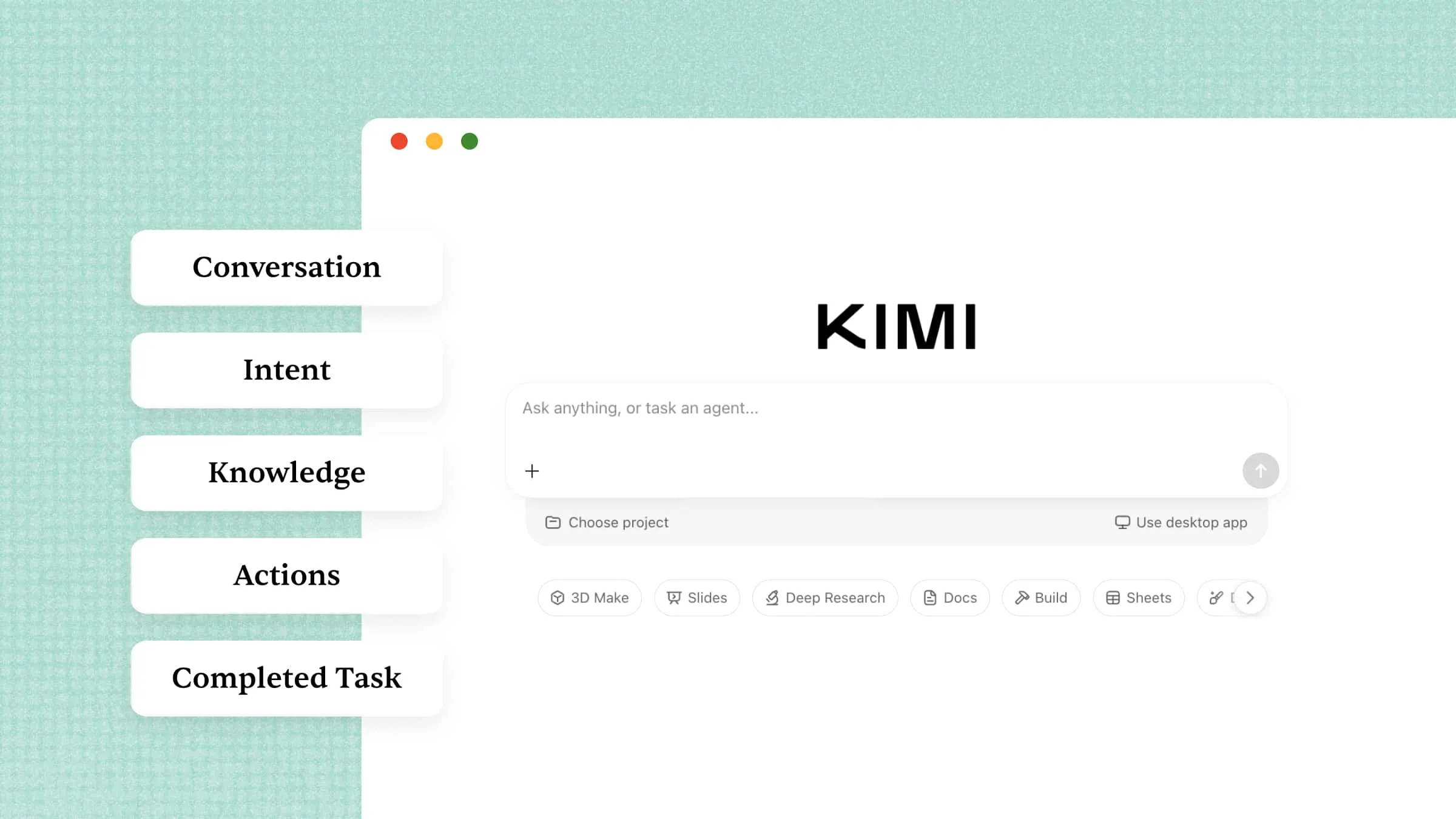
Kimi AI Agent takes personal AI assistance further by turning ideas and goals into completed tasks. It can handle complex instructions, manage multiple steps, and create research reports, presentations, and websites. Its autonomous execution and multi-agent collaboration support personal and professional work. Kimi offers limited free credits to try its features before purchasing additional access.
Key features
Autonomous task execution: Kimi AI Agent understands user goals and breaks complex requests into manageable steps. It can call relevant tools to conduct research, analyze data, create designs, and develop websites, adjusting its approach based on task progress and results.
Multi-agent collaboration: Kimi's Agent Swarm mode coordinates multiple specialized sub-agents to tackle different parts of a complex task in parallel. Each sub-agent can focus on a specific objective, such as gathering information, analyzing data, or processing content, while Kimi brings their results together into a cohesive deliverable.
Skills and plugin extensibility: Kimi AI Agent can call relevant Skills and Plugins to access specialized capabilities and complete tasks more effectively. Users can also create custom skills to define specific workflows, instructions, and reusable capabilities, adapting the agent to their individual needs and work requirements.
Multimodal understanding: Kimi AI Agent processes different types of input, including text, images, PDFs, and spreadsheets. It extracts relevant information from multiple sources and connects different data points to support comprehensive research, analysis, and content creation.
Versatile task capabilities: Kimi AI Agent supports a wide range of tasks, including Deep Research, document processing, data analysis, presentation creation, and website development. It can turn user instructions and source materials into practical deliverables such as research reports, office documents, data visualizations, presentations, and websites.
How to use Kimi AI Agent
Kimi AI Agent makes it easy to turn your ideas into finished work. Follow these steps to get started.
Step 1: Describe your goal and provide context
Open Kimi AI Agent and describe what you want it to create. Explain the purpose, target audience, required content, preferred style, and final format. The more context you provide, the better it can understand your goal and plan the work.
Example prompt:
Step 2: Let the AI agent plan and execute the task
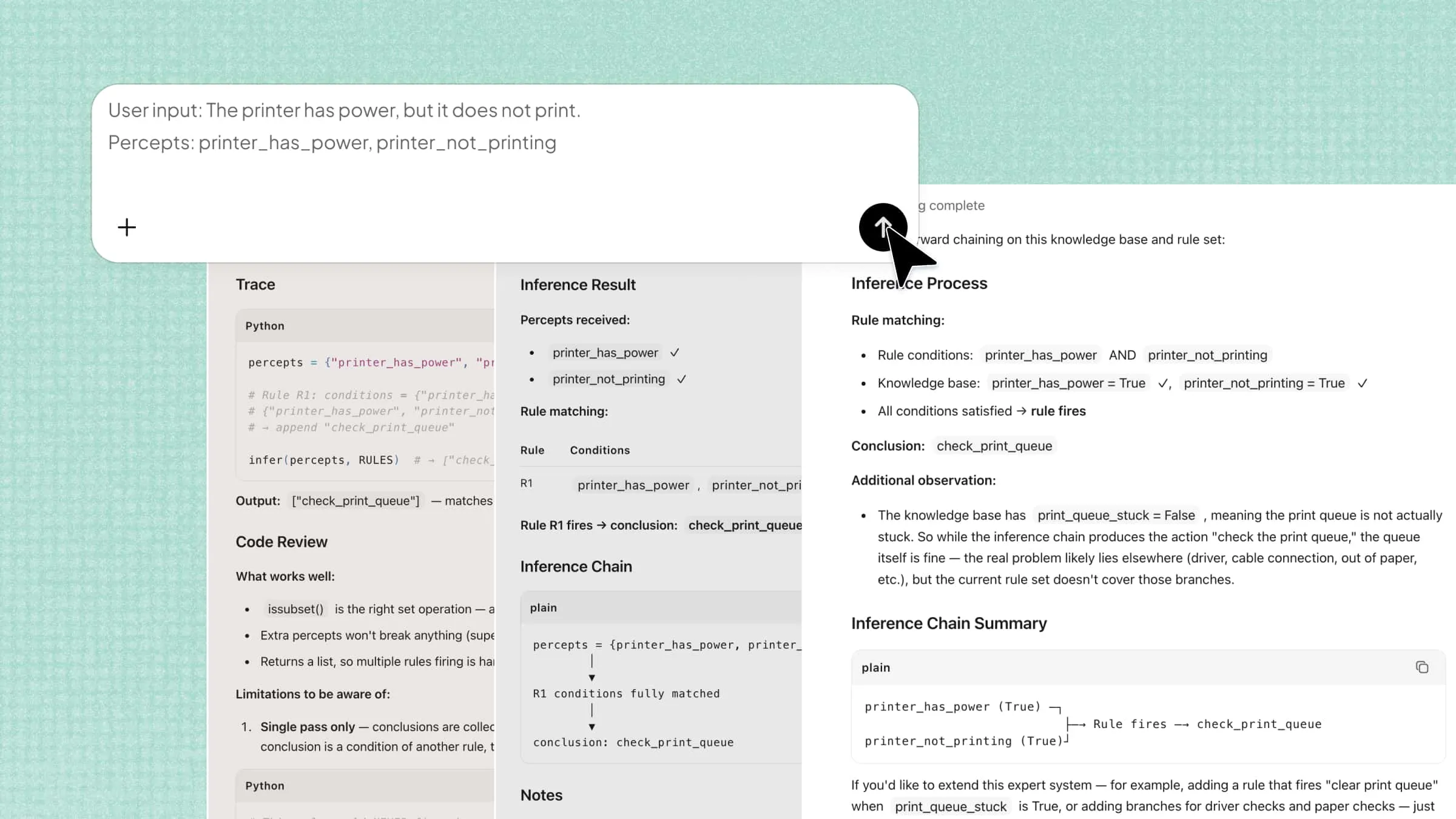
Once you submit the prompt, Kimi AI Agent analyzes your requirements and breaks the work into smaller tasks. It uses autonomous execution and multi-agent collaboration to research information, organize findings, and prepare the requested report and presentation. You can follow its progress as it works through each stage.
Step 3: Review and refine the deliverables
After completing the task, Kimi provides the generated report and presentation for review. Check the information, structure, visuals, and overall quality. If you want changes, give Kimi additional instructions to refine the content, improve the design, or add missing details.
Challenges and considerations when using personal AI agents
While personal AI agents can make everyday tasks easier, they also come with a few challenges. Since they can access information, use connected tools, and perform actions independently, users need to understand their limitations. Here are some important considerations to keep in mind.
Task scope and instructions
Personal AI agents work based on the goals and instructions users provide. Vague requests or unclear requirements can lead to irrelevant results or unexpected outputs. Define the task scope, provide sufficient context, and specify the expected deliverables to help the agent stay focused. For complex tasks, break requirements into smaller steps when necessary.
Accuracy and reliability
AI agents can sometimes misunderstand instructions, provide incorrect information, or make mistakes while completing tasks. Their results may also depend on the quality of the information they access. Always verify important details before relying on their outputs.
Third-party integrations & extension capabilities
Personal AI agents can extend their capabilities through third-party integrations, but the available tools and supported functions may vary. Kimi supports Plugins that allow its agent to access specialized external tools and services for tasks such as data analysis, research, and content creation. However, not every third-party app or service is supported, and some Plugins may have specific usage requirements or limitations. Check available integrations and their capabilities to ensure they meet your needs.
Human oversight
Even when an AI agent can complete tasks independently, human involvement remains important. Review its decisions, check important outputs, and approve sensitive actions when necessary. This helps prevent mistakes and keeps you in control of the work.
Conclusion
Personal AI agents are changing how people approach everyday tasks by making complex work easier to manage. However, getting the best results still depends on clear instructions, reliable tools, and human oversight. Choosing the right AI agent can help you work more efficiently without losing control of important decisions. Kimi AI Agent is worth exploring if you want to experience autonomous task execution and multi-agent collaboration.