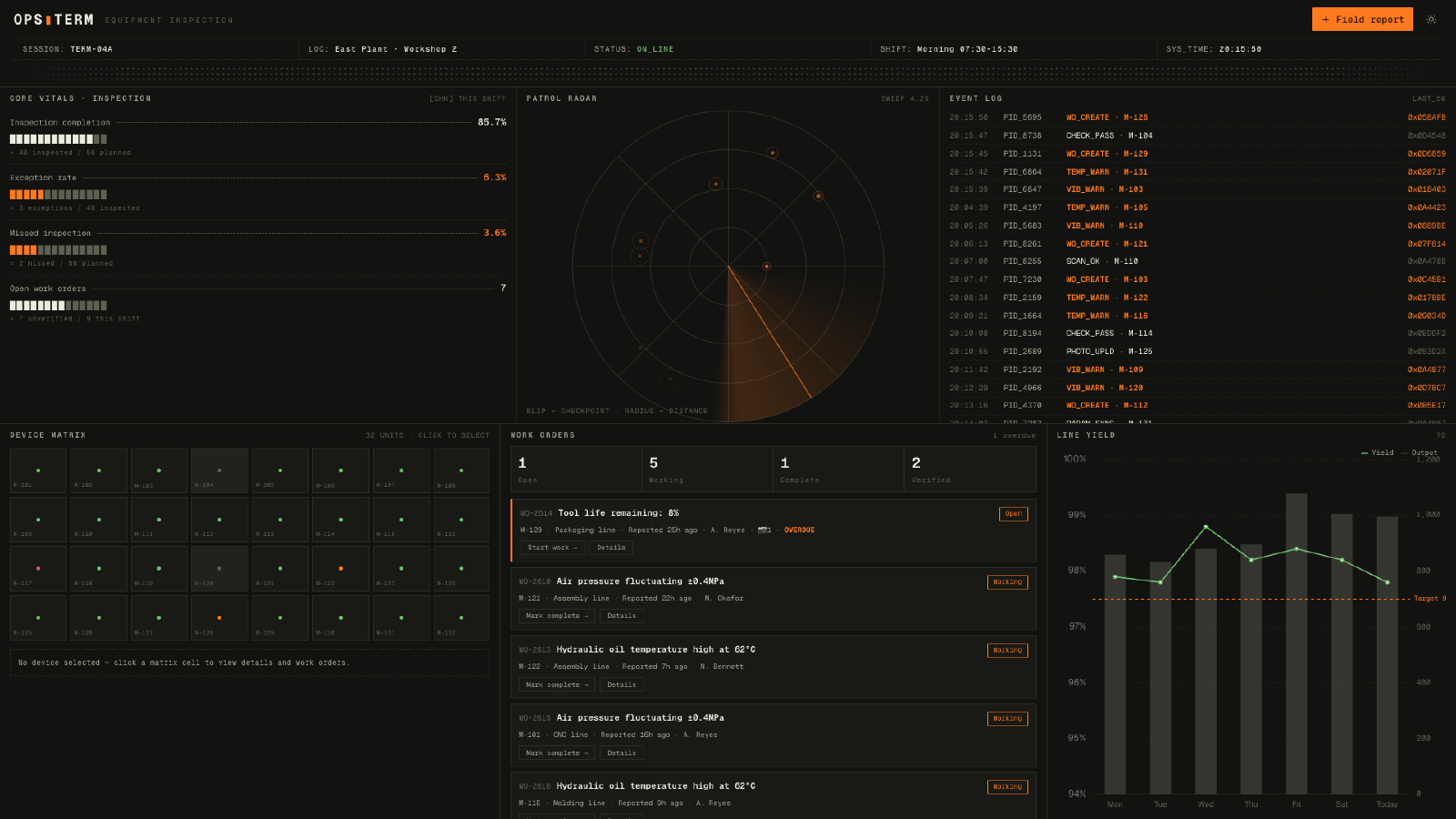
Field Lab · GPU Simulations
Three GPU field simulations in one page — curl-advected dye, reaction–diffusion, and a wave equation you can poke.
Three GPU field simulations in one page — curl-advected dye, reaction–diffusion, and a wave equation you can poke.
Try Websites AgentBuild a field-simulation laboratory where three experiments all run on the GPU. The first is curl advection: dye is advected along a divergence-free curl-noise field, so it only ever gets stirred apart and never gathers out of nowhere. The second is reaction–diffusion: two chemicals trade off as v feeds on u, and the feed-rate F and kill-rate k sliders reshape the pattern the moment you drag them, from spots to stripes to coral-like curls. The third is the wave equation: click anywhere on the canvas to drop a wave source and watch reflection, superposition, and interference; turn the damping to zero and the wave never stops, raise it and the ripples die out on their own. Substeps per frame, wave speed, and the color band are all adjustable, and optional contour lines make the fields look as if they had been measured. When WebGL2 is unavailable, the page says honestly that these simulations have no fallback. Single-file static page.
On top of the manual sliders, three ready-made parameter presets are included, so one click switches the whole lab between three already-tuned looks.
Try Websites AgentBuild a field-simulation laboratory where three experiments all run on the GPU. The first is curl advection: dye is advected along a divergence-free curl-noise field, so it only ever gets stirred apart and never gathers out of nowhere. The second is reaction–diffusion: two chemicals trade off as v feeds on u, and the feed-rate F and kill-rate k sliders reshape the pattern the moment you drag them, from spots to stripes to coral-like curls. The third is the wave equation: click anywhere on the canvas to drop a wave source and watch reflection, superposition, and interference; turn the damping to zero and the wave never stops, raise it and the ripples die out on their own. Substeps per frame, wave speed, and the color band are all adjustable, and optional contour lines make the fields look as if they had been measured. When WebGL2 is unavailable, the page says honestly that these simulations have no fallback. Single-file static page.
Contour lines are joined by live field-strength readouts, making the simulation feel even more like a measuring instrument whose values can be read directly.
Try Websites AgentBuild a field-simulation laboratory where three experiments all run on the GPU. The first is curl advection: dye is advected along a divergence-free curl-noise field, so it only ever gets stirred apart and never gathers out of nowhere. The second is reaction–diffusion: two chemicals trade off as v feeds on u, and the feed-rate F and kill-rate k sliders reshape the pattern the moment you drag them, from spots to stripes to coral-like curls. The third is the wave equation: click anywhere on the canvas to drop a wave source and watch reflection, superposition, and interference; turn the damping to zero and the wave never stops, raise it and the ripples die out on their own. Substeps per frame, wave speed, and the color band are all adjustable, and optional contour lines make the fields look as if they had been measured. When WebGL2 is unavailable, the page says honestly that these simulations have no fallback. Single-file static page.
The dye advected through the curl-noise field can switch to an oscilloscope-green color band, turning the flow into glowing phosphor-style traces.
Try Websites AgentBuild a field-simulation laboratory where three experiments all run on the GPU. The first is curl advection: dye is advected along a divergence-free curl-noise field, so it only ever gets stirred apart and never gathers out of nowhere. The second is reaction–diffusion: two chemicals trade off as v feeds on u, and the feed-rate F and kill-rate k sliders reshape the pattern the moment you drag them, from spots to stripes to coral-like curls. The third is the wave equation: click anywhere on the canvas to drop a wave source and watch reflection, superposition, and interference; turn the damping to zero and the wave never stops, raise it and the ripples die out on their own. Substeps per frame, wave speed, and the color band are all adjustable, and optional contour lines make the fields look as if they had been measured. When WebGL2 is unavailable, the page says honestly that these simulations have no fallback. Single-file static page.
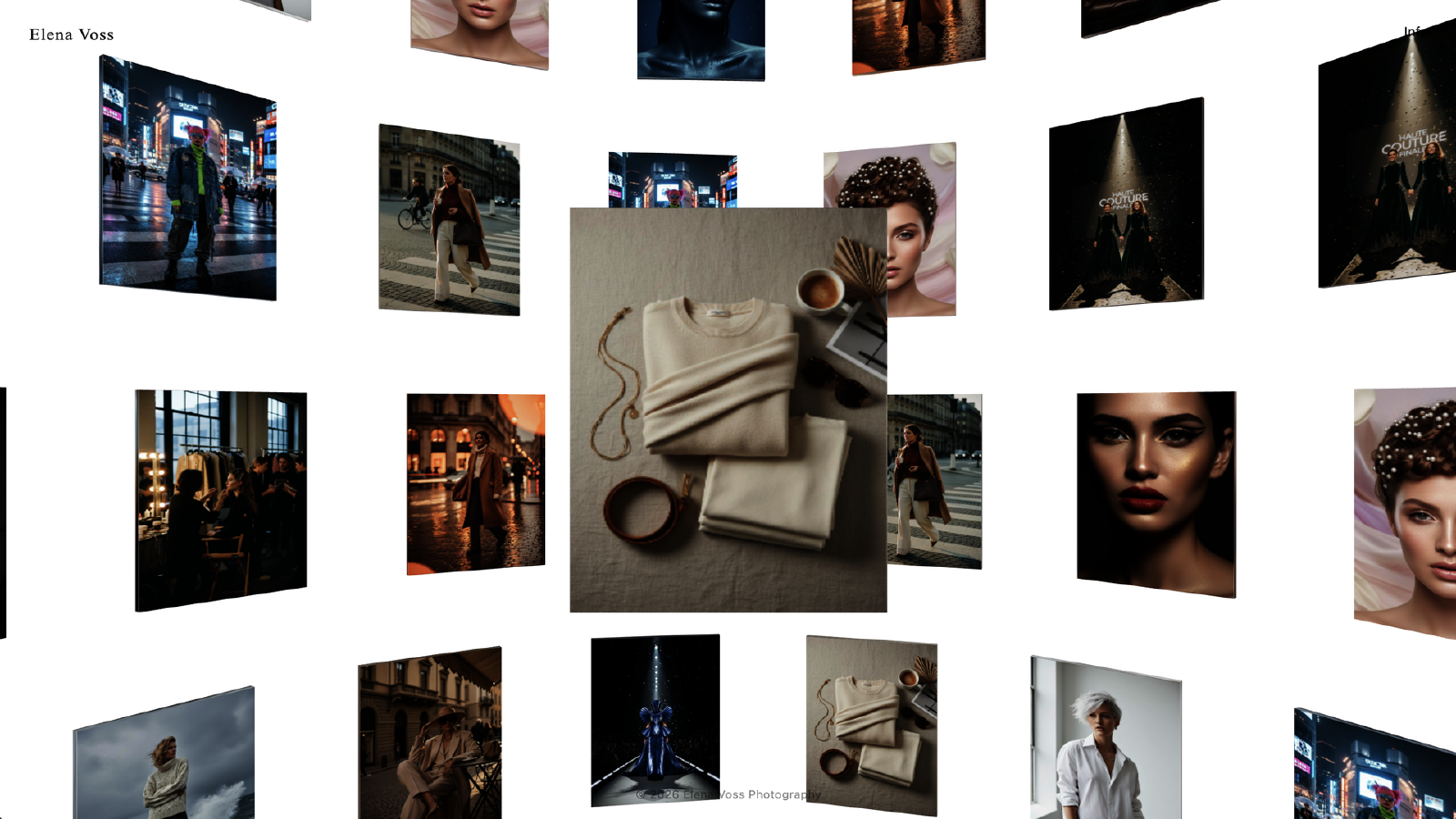
A full magazine-cover wall and eight complete shoots: the portfolio of an independent fashion photographer.
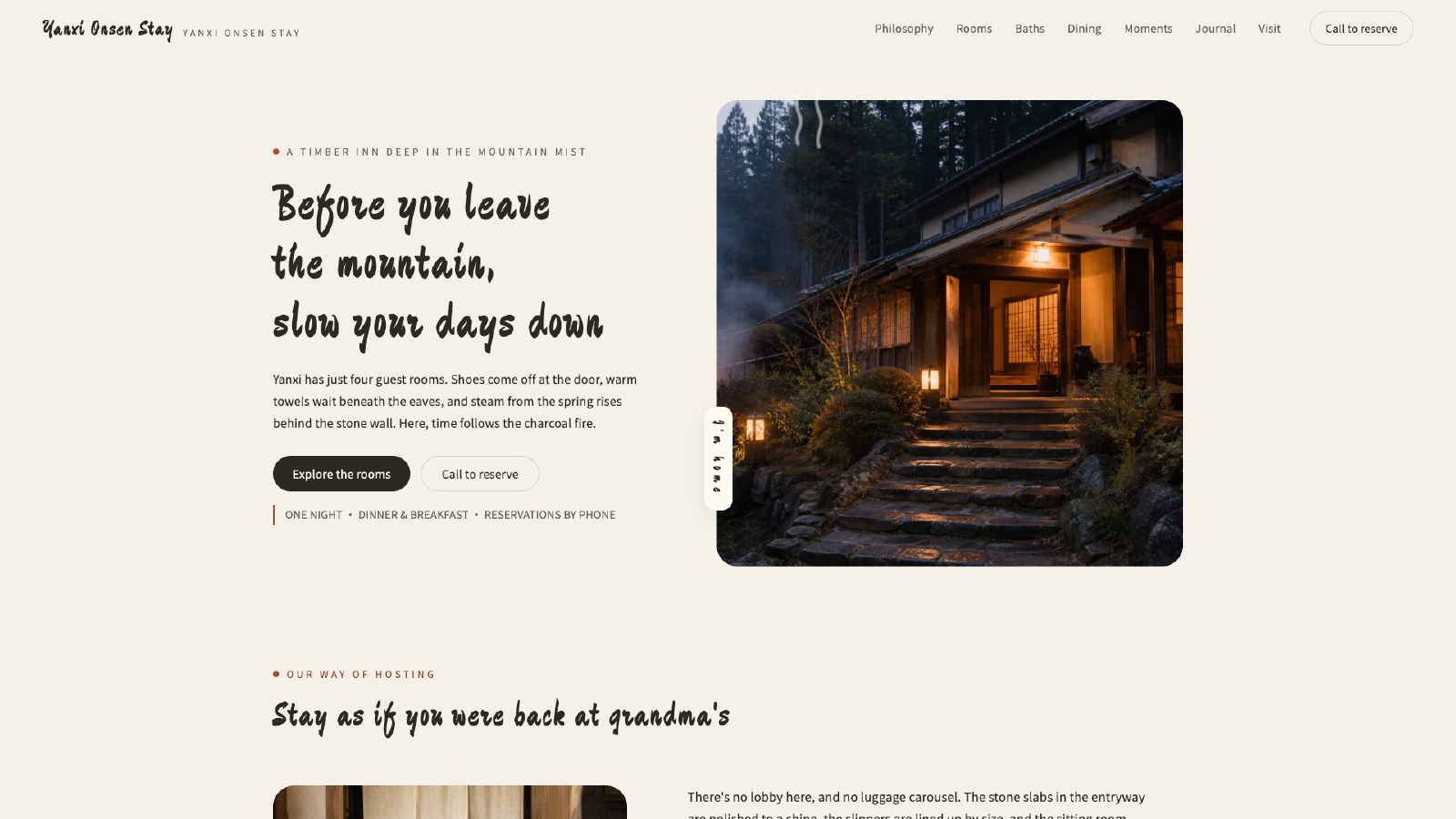
Four rooms each facing their own mountain, one open-air stone bath: a quiet onsen inn in the mist.