A good business plan needs more than ideas. You also need to understand your market, find growth opportunities, and know where to focus your resources. AI business strategy tools can help you turn scattered information into useful insights and make strategic planning faster and easier. Keep reading to discover the tools that can help you create a smarter business strategy.
Overview of 10 advanced AI business strategy generators
The following table provides a side-by-side overview of 10 AI business strategy tools, highlighting their primary focus, key capabilities, and the types of teams or businesses they can support. Use it to quickly understand how each tool approaches business planning, research, analysis, and execution.
| AI business strategy tool | Primary focus | Key capabilities | Suitable for |
|---|---|---|---|
| Kimi Deep Research | In-depth research and strategic insights | Multi-source research, structured research plans, traceable sources, business-ready reports, follow-up research, multiple export formats | Market research, competitor analysis, business strategy, opportunity analysis |
| ChatGPT | General business research, analysis, and planning | Deep Research, data analysis, connected business information, interactive strategy development | Research, data analysis, strategic planning, decision support |
| Claude | Detailed analysis and strategic thinking | Artifacts, document analysis, interactive prototypes, iterative planning | Business documents, strategy brainstorming, long-form planning |
| Microsoft Copilot | AI assistance within Microsoft business tools | Microsoft 365 integration, content generation, information summarization, workflow assistance | Team productivity, business reporting, Microsoft-based businesses |
| Salesforce Einstein AI | CRM-driven sales and customer insights | Lead scoring, opportunity scoring, sales forecasting, CRM-based analysis | Sales strategy, pipeline analysis, customer growth |
| Glean | Finding and using internal business knowledge | Enterprise search, context-aware answers, knowledge graph, real-time information access | Internal research, knowledge management, cross-team planning |
| ThoughtSpot | Data analysis and business intelligence | Natural-language analytics, AI-powered insights, interactive dashboards, self-service data exploration | Performance analysis, business intelligence, executive reporting |
| Jasper AI | Marketing strategy and content operations | Brand Voice, marketing content creation, campaign consistency, enterprise marketing workflows | Marketing strategy, brand management, campaign execution |
| IBM watsonx | AI development, data, and governance | AI development, governed data, AI governance, model lifecycle management | Enterprise AI strategy, governance, data management |
| Google Gemini | Business research, productivity, and workflows | Deep Research, source-grounded notebooks, business data connections, workflow automation | Market research, knowledge management, Google Workspace teams |
10 AI business strategy tools for smarter planning
With the right tools in place, turning ideas and business data into a clear strategy becomes much easier. Here are 10 AI business strategy tools to help you plan smarter, uncover useful insights, and make more confident decisions while saving time and staying focused on growth.
Kimi Deep Research
Kimi Deep Research helps businesses turn complex information into clear, useful insights for strategic planning. It can research multiple sources, analyze business trends, and organize findings into a structured report. This makes it easier to understand markets and support decisions with relevant data. For businesses working on growth or long-term planning, it can reduce research time while keeping the strategy focused.
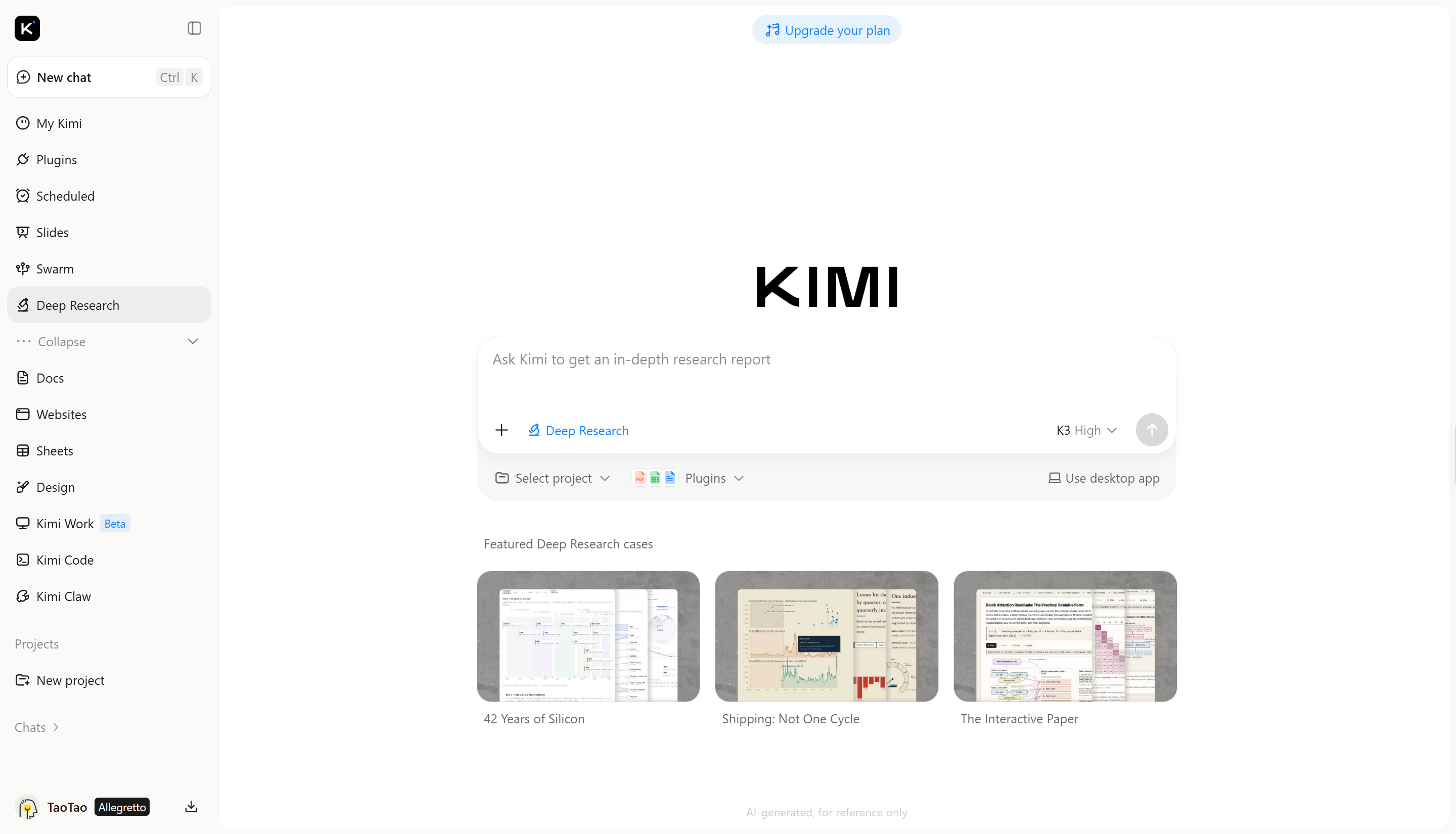
Main features
Define the research scope and plan the analysis
Kimi Deep Research can clarify a business question, define the research scope, and develop a structured research plan before analysis begins. It identifies the key questions and areas to investigate, helping keep research focused on the business objectives that matter most.
Search across diverse business information sources
Kimi Deep Research searches across the open web and professional databases to gather relevant business information. It can access news, government sources, academic publications, company databases, and real-time financial and economic data, helping research markets, competitors, industries, and business opportunities from multiple information sources.
Turn research into business-ready deliverables
Kimi Deep Research can tailor reports to the research topic and include charts when useful. Beyond standard research reports, it can generate interactive HTML reports, Word documents, PowerPoint presentations, Excel spreadsheets, and PDFs, making the research easier to use in planning, presentations, and business analysis.
Support refined strategic analysis through follow-up research
Continue asking questions after the initial report instead of starting a new research task. Kimi Deep Research retains the context, sources, and findings from the previous research, allowing you to explore a specific finding, investigate another angle, or deepen the analysis as your strategy develops.
Protect business data with enterprise-level privacy controls
For Kimi Business users, data submitted to Kimi and generated through features such as Deep Research is not used to train models. This helps businesses conduct research and work with company information while maintaining greater control over how their data is handled.
Suitable for
Market and competitor research
Business strategy and planning
Opportunity and trend analysis
Data-driven decision-making
How to plan a business strategy with Kimi Deep Research
Once you have a clear business goal, Kimi Deep Research can help turn it into a structured strategy backed by relevant research. Follow these steps to move from an initial idea to a more focused and actionable business plan.
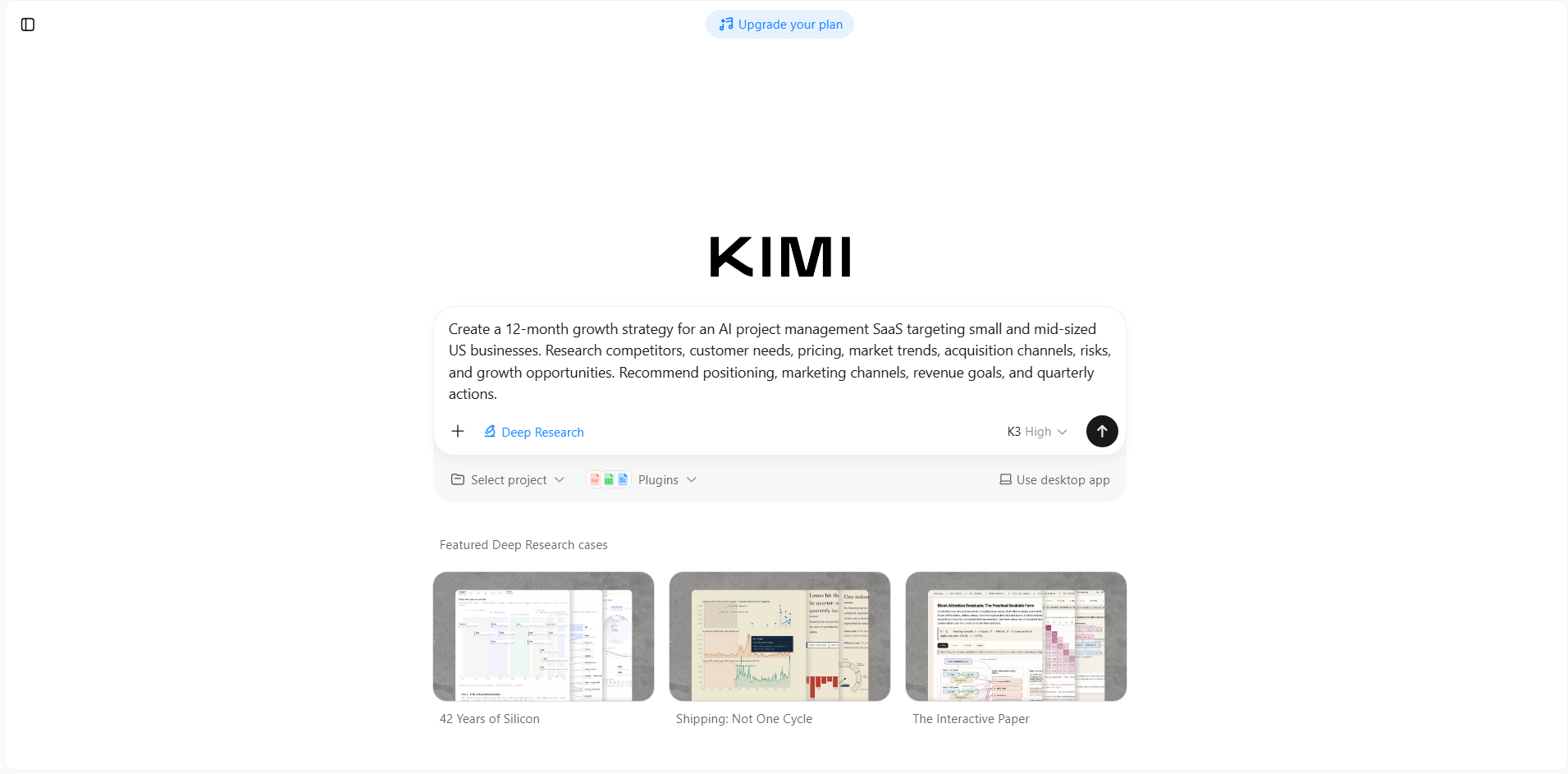
Step 1: Enter a detailed business strategy prompt
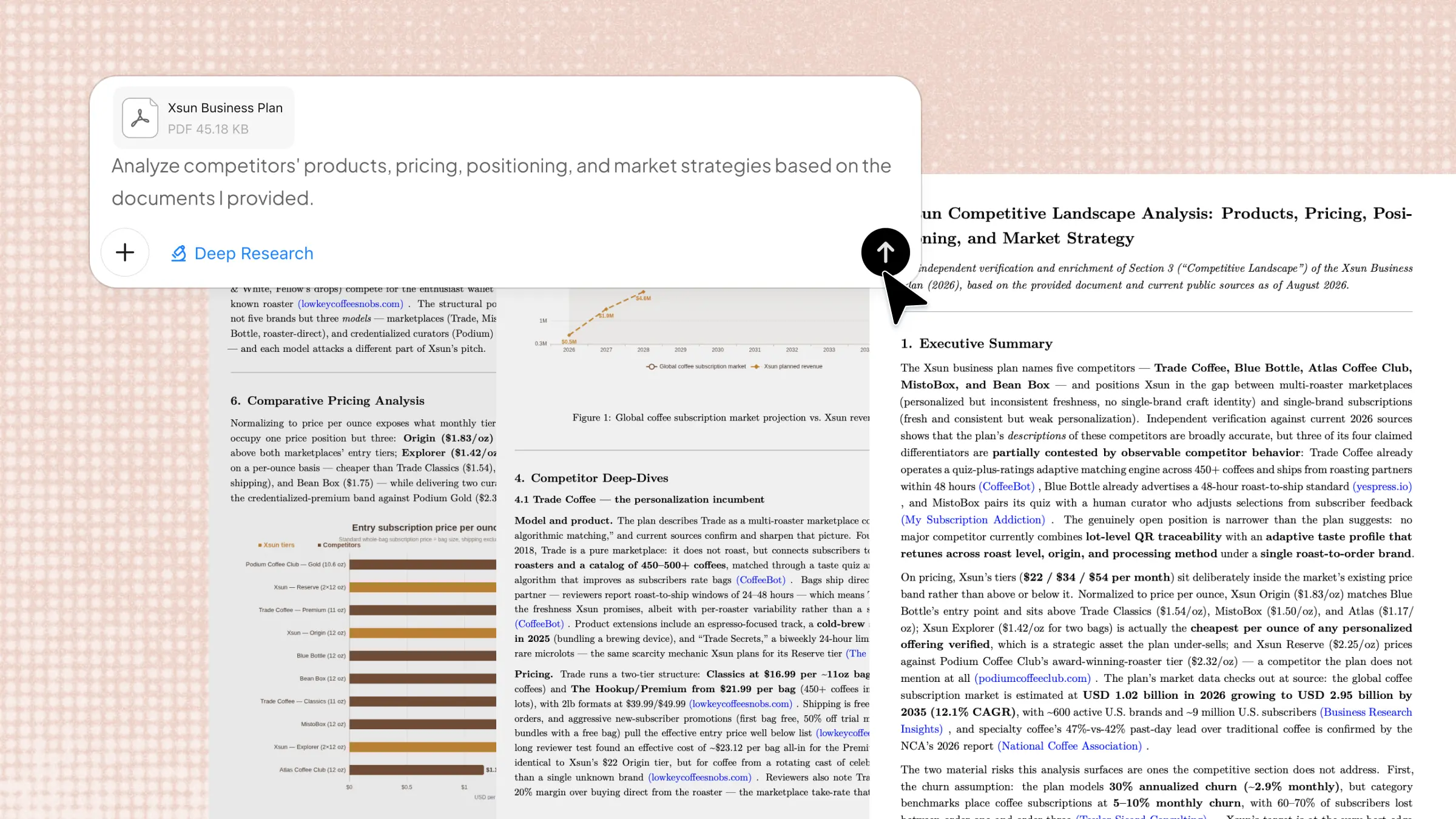
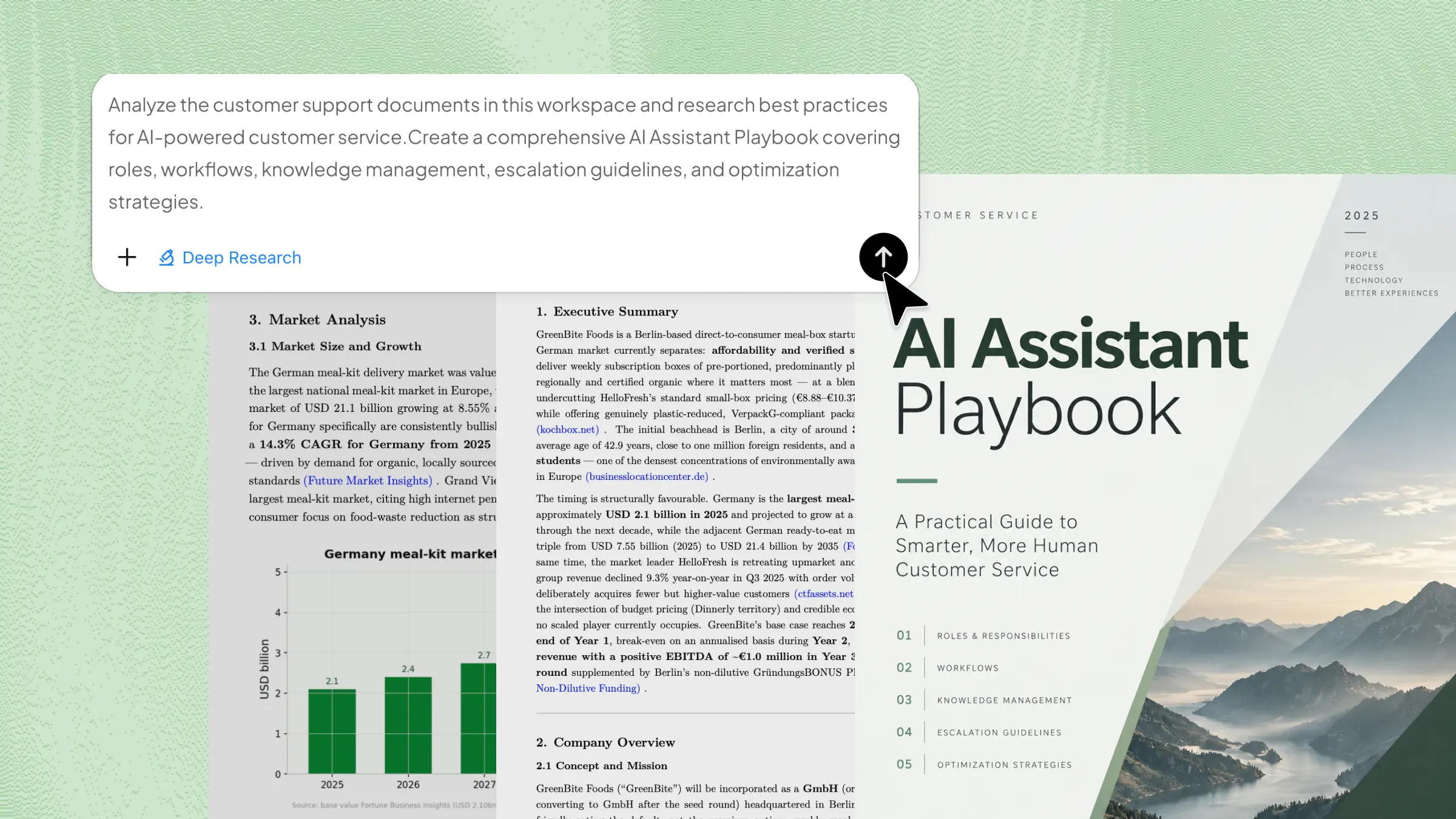
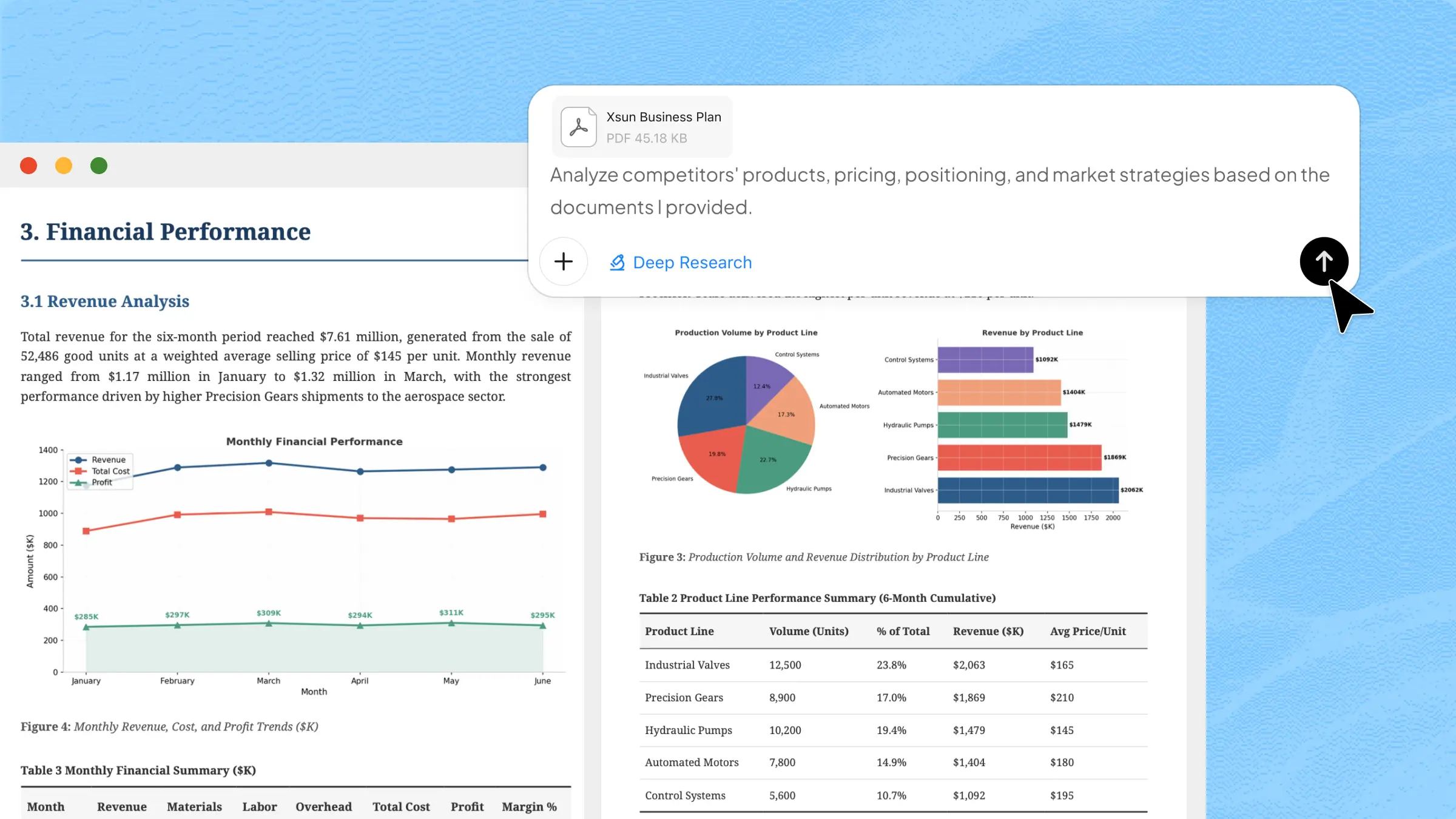
Start by telling Kimi exactly what you want to achieve, who your target customers are, and what you need to research. A specific prompt gives the research a clear direction and helps Kimi focus on the most useful information.
Example prompt:
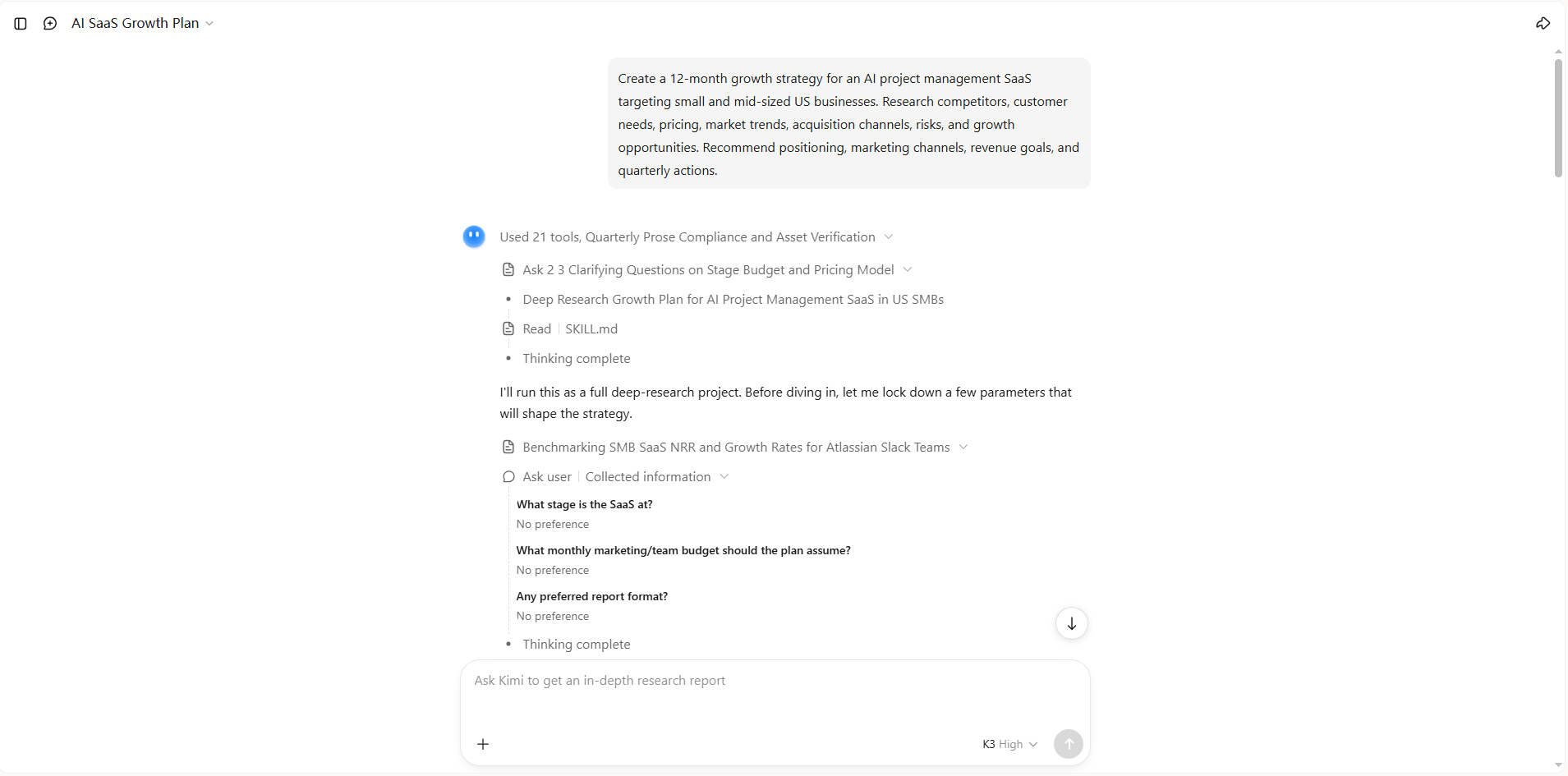
Step 2: Let Kimi research and generate your business strategy
Submit your prompt and let Kimi Deep Research investigate the topic across relevant sources. It will connect the findings and organize them into a strategy instead of leaving you with scattered research.
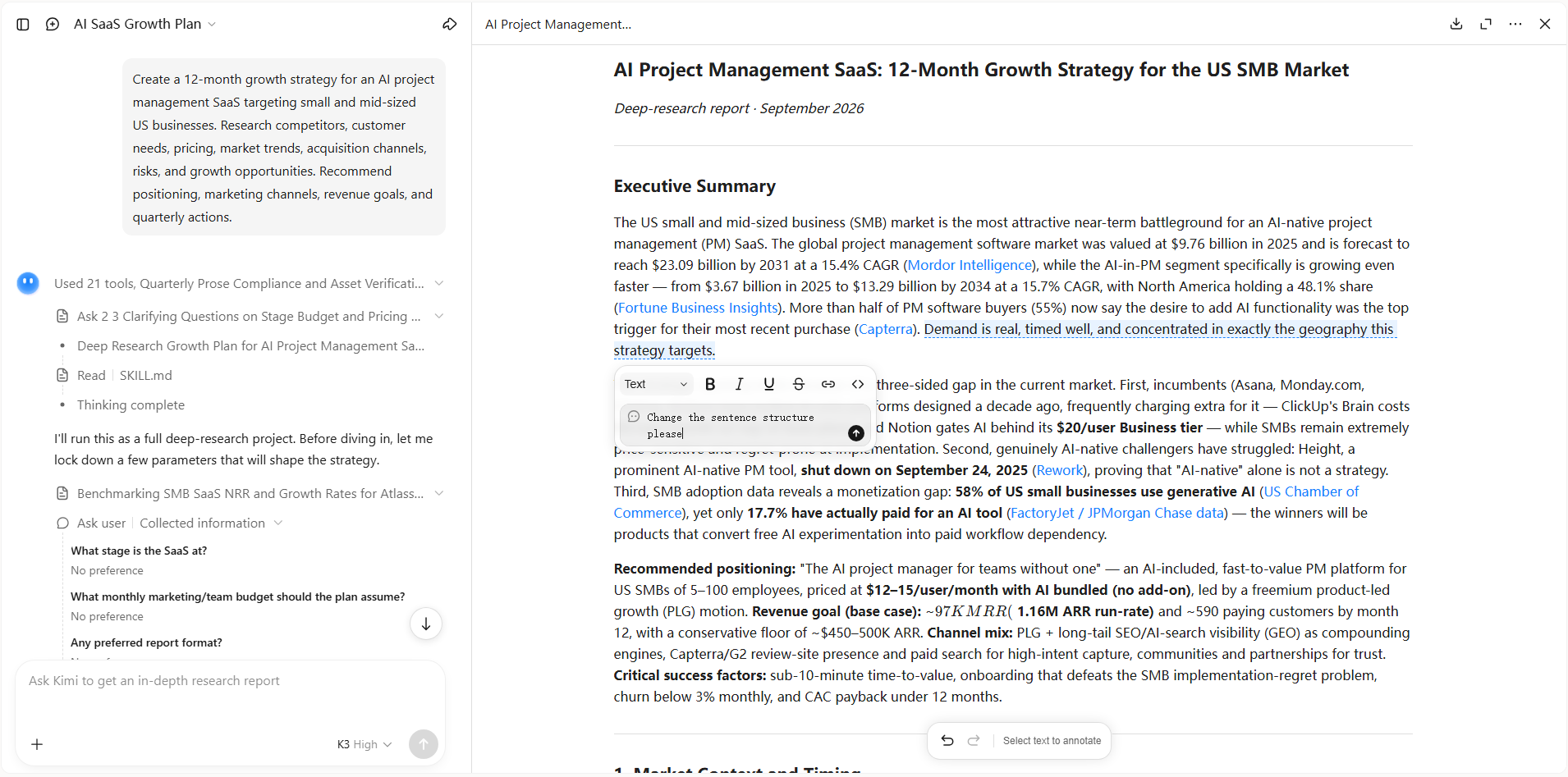
Step 3: Refine your business strategy
Go through the results and identify areas that need more detail or a different direction. Use follow-up questions to test ideas, explore alternatives, or dig deeper into specific competitors, customers, markets, or risks.
Step 4: Review and export the output
Once you are satisfied with the findings, review the sources and recommendations for accuracy and relevance. You can then export the finished strategy into a suitable format for presentations, planning documents, or further business analysis.
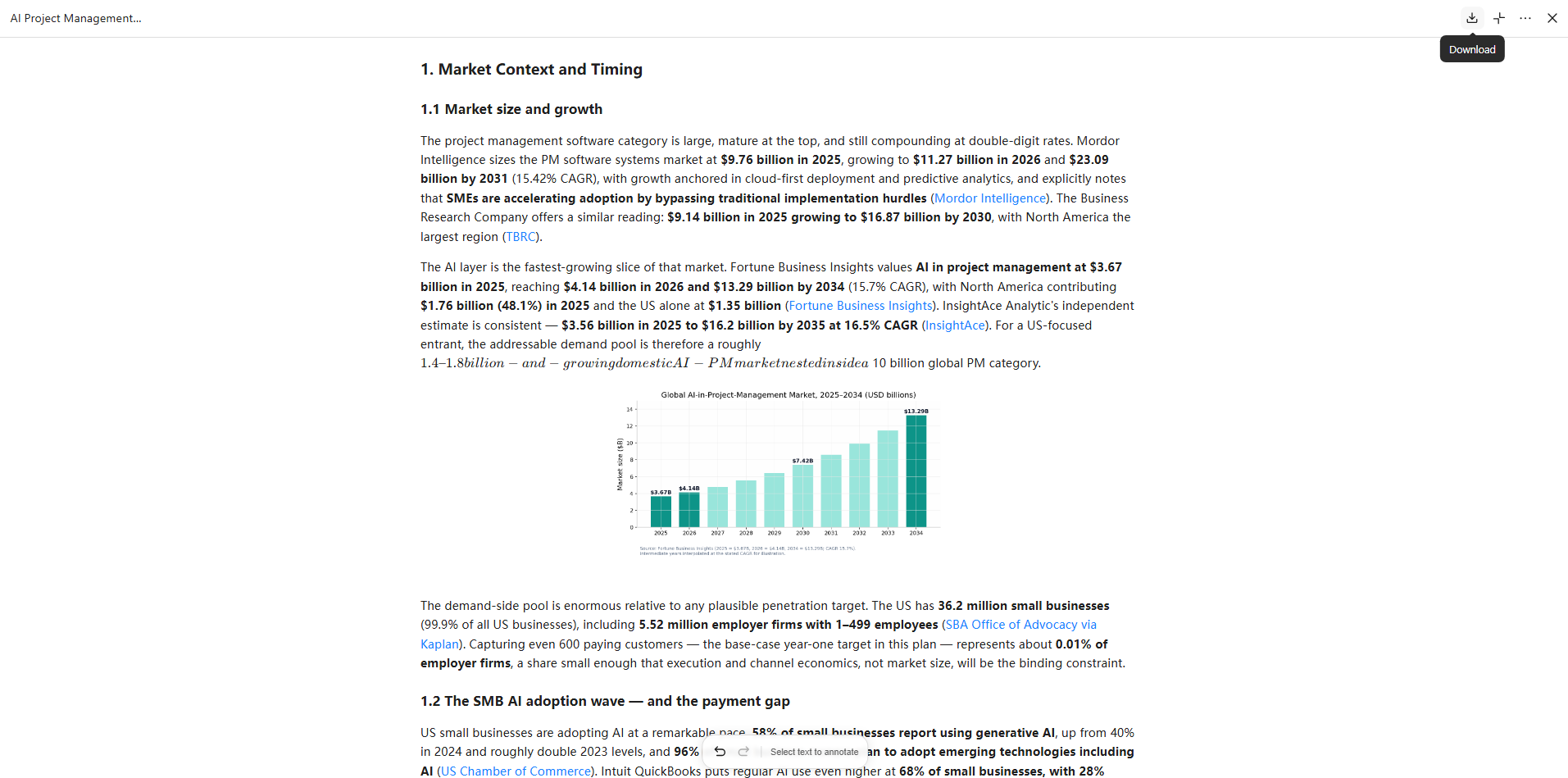
ChatGPT (OpenAI)
ChatGPT is a general-purpose AI assistant that can support business planning, research, analysis, and content creation. Its Deep Research feature can investigate complex questions across multiple sources and produce cited reports. It can also analyze spreadsheets and business data using natural-language questions. For teams, connected apps and business data sources can bring internal information into the workflow.
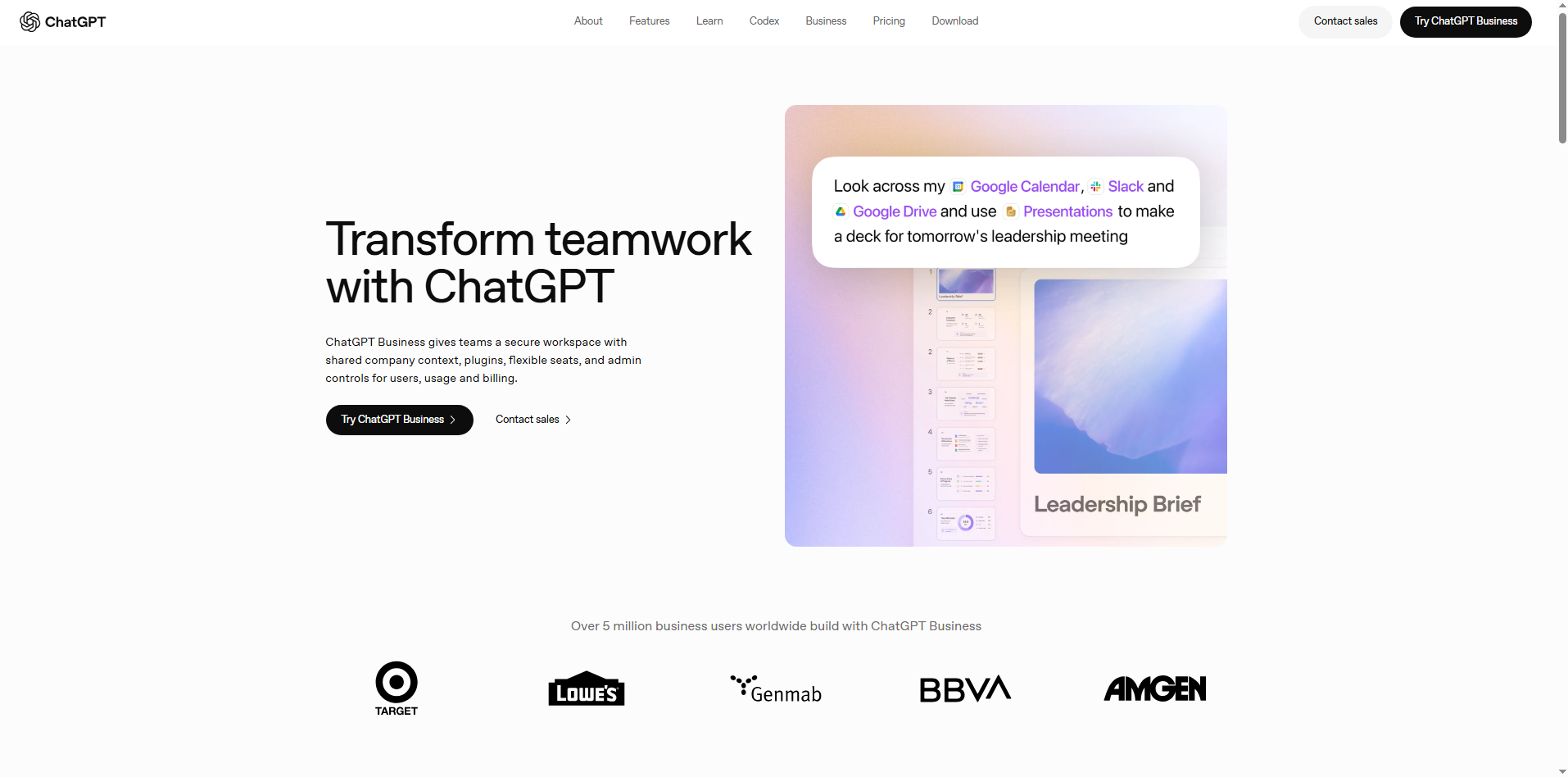
Main features
Deep research for strategic questions: ChatGPT can create a research plan, investigate multiple sources, compare findings, and produce a structured report with citations. This is useful when a strategy needs more than quick answers.
Business data analysis: Upload spreadsheets or connect supported data sources and ask questions in plain language. ChatGPT can identify trends, investigate changes, create visualizations, and turn findings into useful business insights.
Connected business information: Supported connectors can bring information from tools such as Google Drive, SharePoint, Gmail, GitHub, and other business systems into research workflows. This allows analysis to combine internal context with external information.
Interactive strategy development: You can continue refining an analysis through follow-up prompts instead of starting over. This makes it practical for testing assumptions, changing priorities, and developing a strategy step by step.
Suitable for
Market and competitor research
Business data analysis
Strategic planning
Decision support
Claude
Claude is an AI assistant designed for working with detailed information, documents, and complex business tasks. Its Artifacts feature gives substantial outputs their own workspace, making them easier to edit and reuse. Claude can also help turn business ideas into structured documents, analyses, tools, and interactive outputs. This makes it useful when strategy work involves both thinking and building.
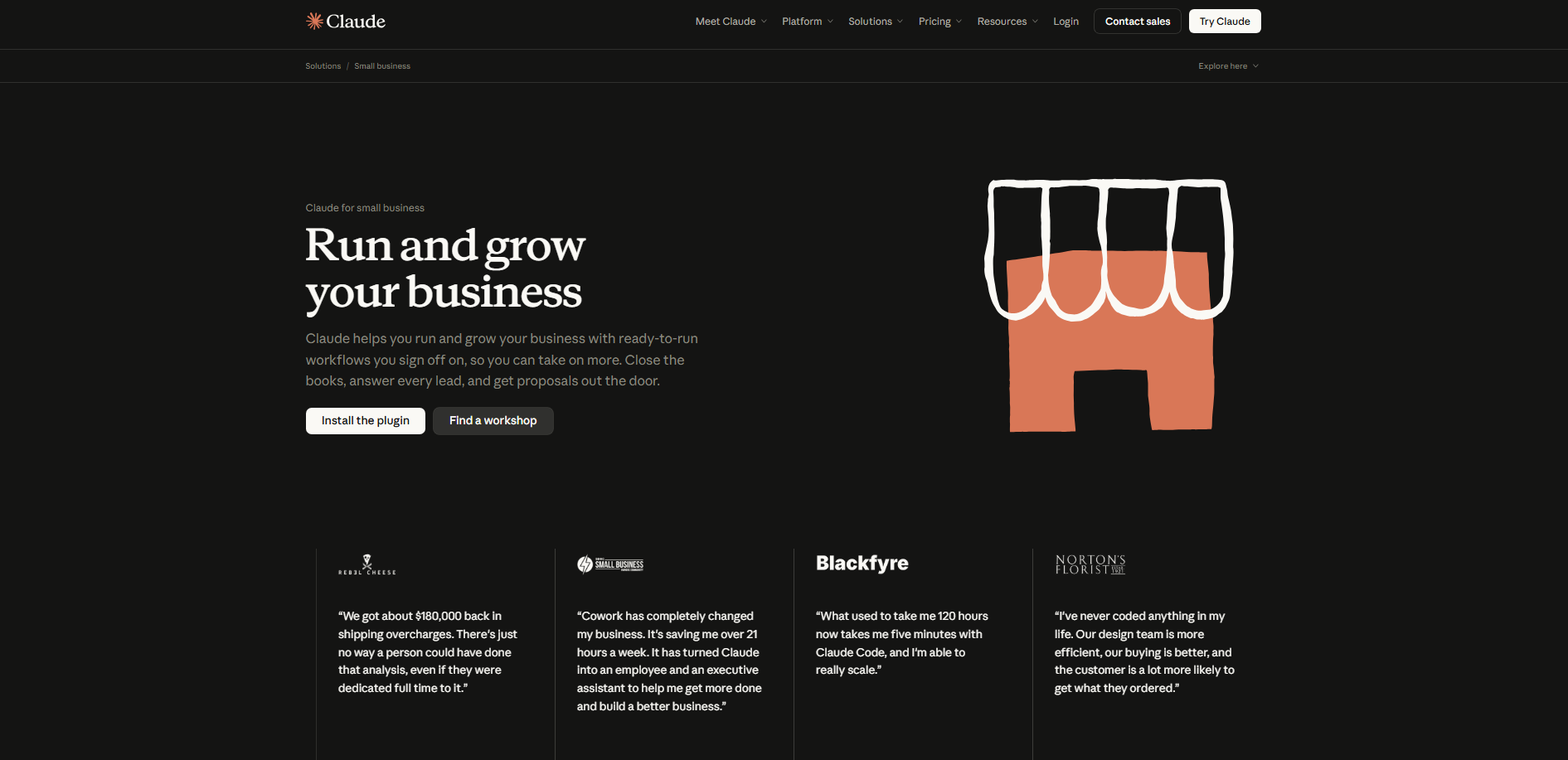
Main features
Artifacts for working outputs: Claude can place substantial, reusable content into a dedicated workspace rather than leaving everything inside the chat. You can then edit, refine, and build on that output.
Interactive prototypes and tools: You can describe a business tool, calculator, dashboard, or other experience and have Claude create an artifact around the idea. This can help turn a strategy concept into something more tangible.
Document-focused analysis: Claude can work through long documents and extract important information for reports, planning, and analysis. This is useful when business decisions depend on detailed source material.
Iterative strategic thinking: Follow-up conversations can be used to challenge assumptions, compare approaches, and improve an existing plan. This supports a more conversational approach to strategy development.
Suitable for
Business document analysis
Strategy brainstorming
Prototype development
Long-form planning
Microsoft Copilot
Microsoft Copilot brings AI assistance into Microsoft's business ecosystem and can work alongside productivity and workplace tools. It can help users summarize information, create content, analyze work, and complete everyday business tasks. Its value for strategy planning comes from combining AI assistance with information already used across an organization.
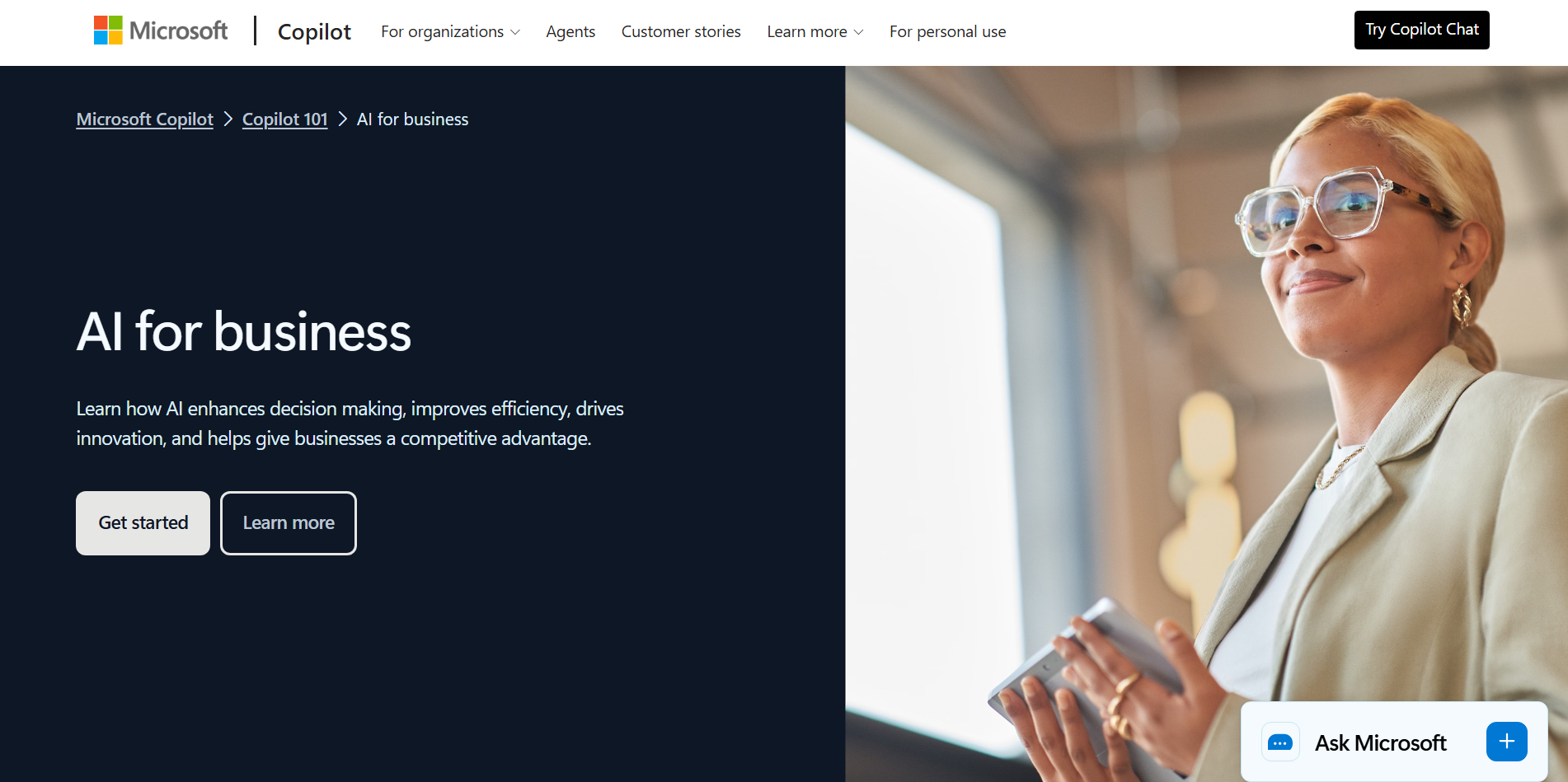
Main features
Microsoft 365 integration: Copilot can work within familiar Microsoft productivity environments, helping users use AI while working with business documents, emails, meetings, and other workplace content.
Business content generation: It can help draft reports, presentations, emails, and other business materials. This makes it easier to turn strategic ideas into documents that teams can review and share.
Information summarization: Copilot can condense lengthy business content into key points and action items. Teams can use these summaries to quickly understand discussions, documents, or project updates.
Workflow assistance: AI support can help with recurring workplace tasks and information handling. This allows teams to spend more time on planning and decisions rather than routine work.
Suitable for
Microsoft-based businesses
Team productivity
Business reporting
Everyday strategic work
Salesforce Einstein AI
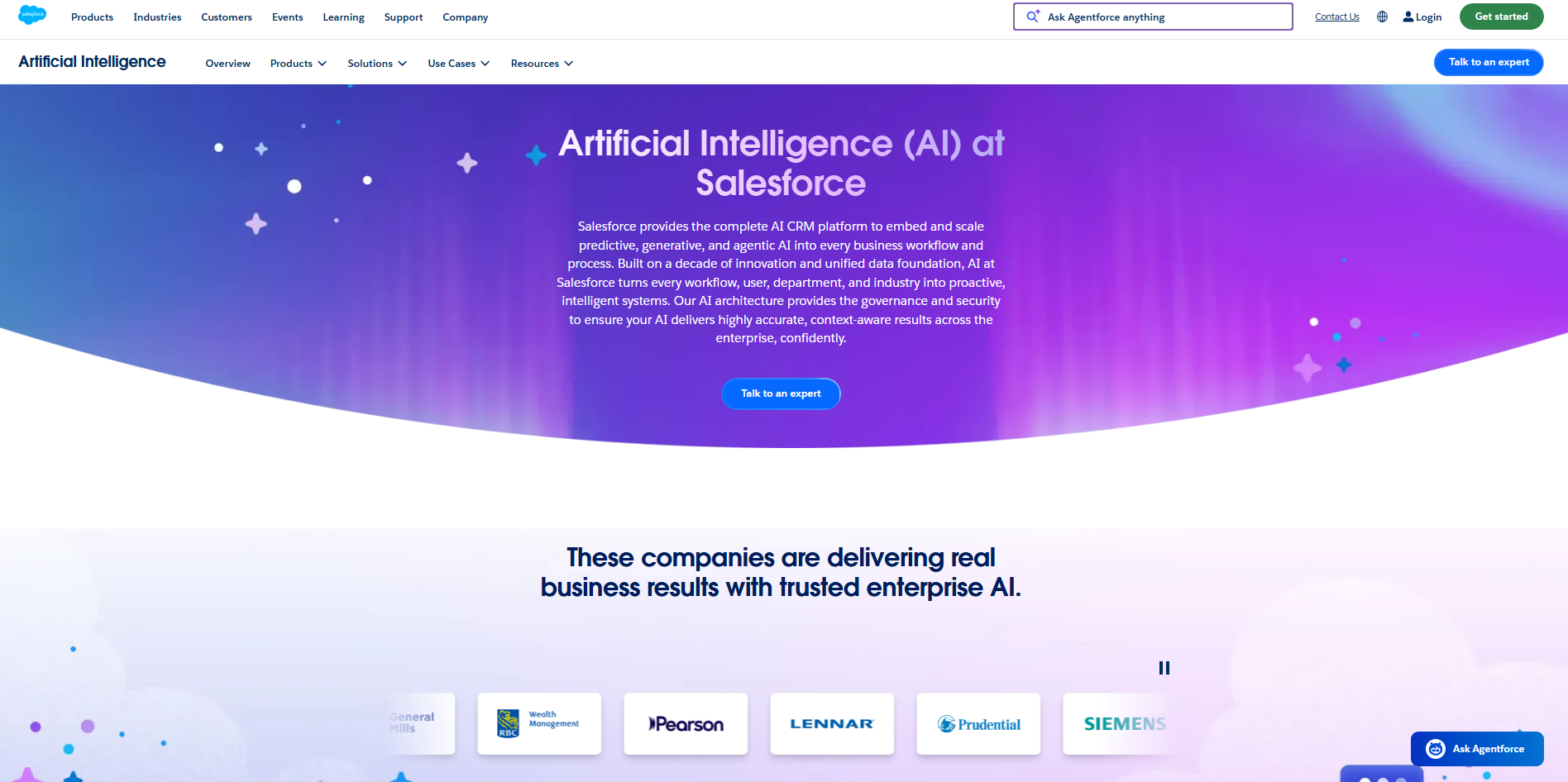
Salesforce Einstein AI adds AI capabilities directly to CRM workflows, making it particularly relevant to customer and sales strategy. It can use CRM information to support activities such as lead scoring, opportunity analysis, forecasting, and customer interactions. Rather than operating as a separate research tool, it works around the customer data already stored in Salesforce.
Main features
Lead scoring: Einstein can score leads using AI and machine learning capabilities available within Salesforce. This helps sales teams identify which prospects may deserve closer attention.
Opportunity scoring: Sales teams can use AI-based opportunity scoring to assess deals within their pipeline. This provides another layer of information when deciding where to focus sales efforts.
Sales forecasting: Einstein includes forecasting capabilities that can help teams analyze expected sales performance. This gives managers additional information for planning targets and resources.
CRM-based insights: Because the AI operates within Salesforce, customer and sales information can support analysis without requiring teams to move everything into another system.
Suitable for
Sales strategy
CRM-driven planning
Pipeline analysis
Customer growth
Glean
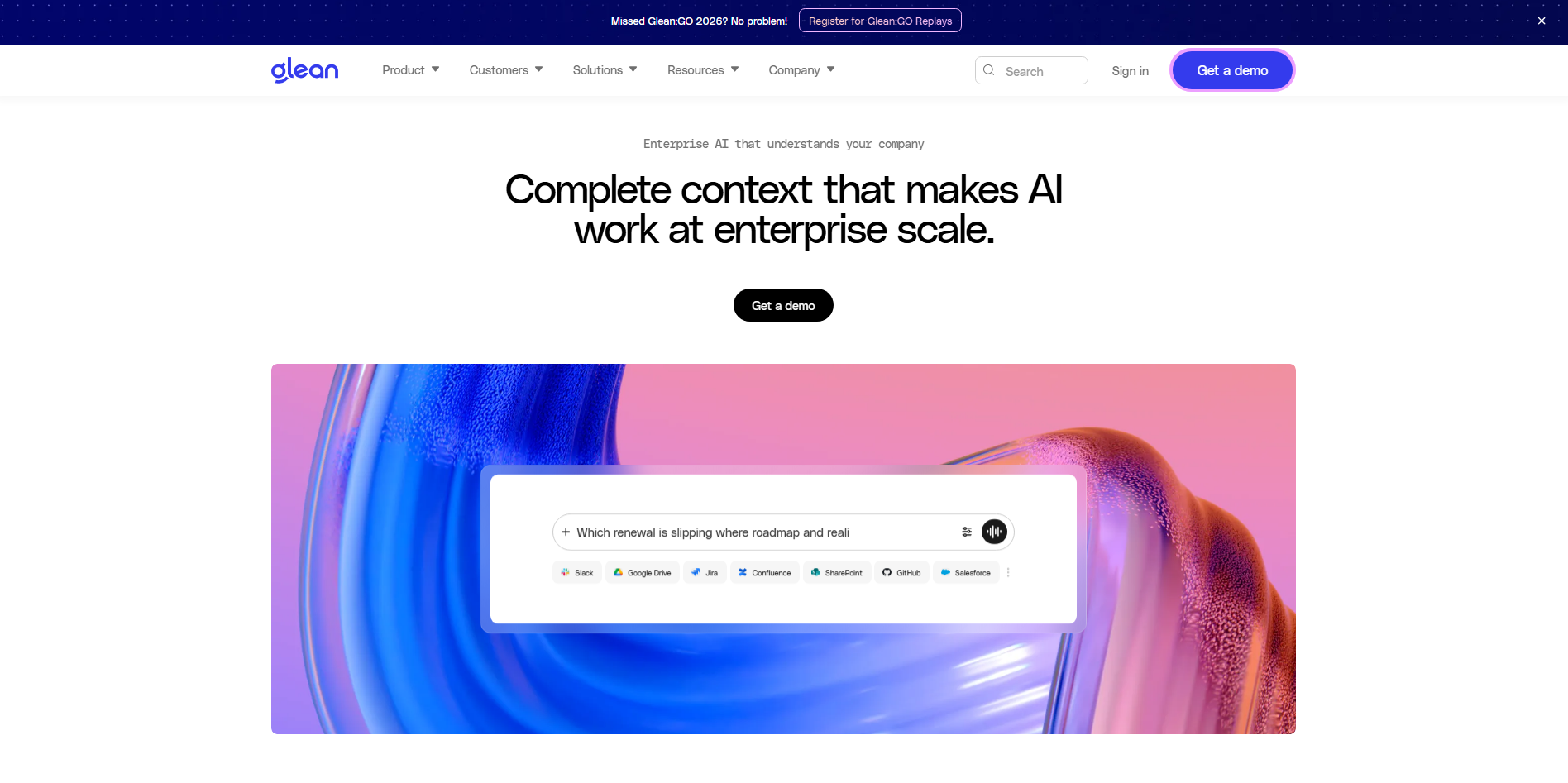
Glean is an enterprise AI platform focused on finding and using information across a company's internal tools. It connects business applications and uses AI to understand company-specific context, people, and content. Its enterprise search can return answers from documents, conversations, and other sources. This makes Glean useful when strategic planning depends on information scattered across many workplace systems.
Main features
Unified enterprise search: Glean can search across connected business applications from one place. It supports more than 100 connectors and respects existing access permissions.
Context-aware answers: Its AI uses company knowledge and user context to make search results more relevant. This helps employees find information based on their role and the way their organization works.
Knowledge graph: Glean maps relationships between people, content, and interactions across the organization. This provides additional context when finding information or identifying internal expertise.
Real-time information access: Glean indexes information in real time and maintains source permissions. Teams can therefore work with current internal information while keeping access controls in place.
Suitable for
Enterprise knowledge management
Internal research
Cross-team planning
Finding business information
ThoughtSpot
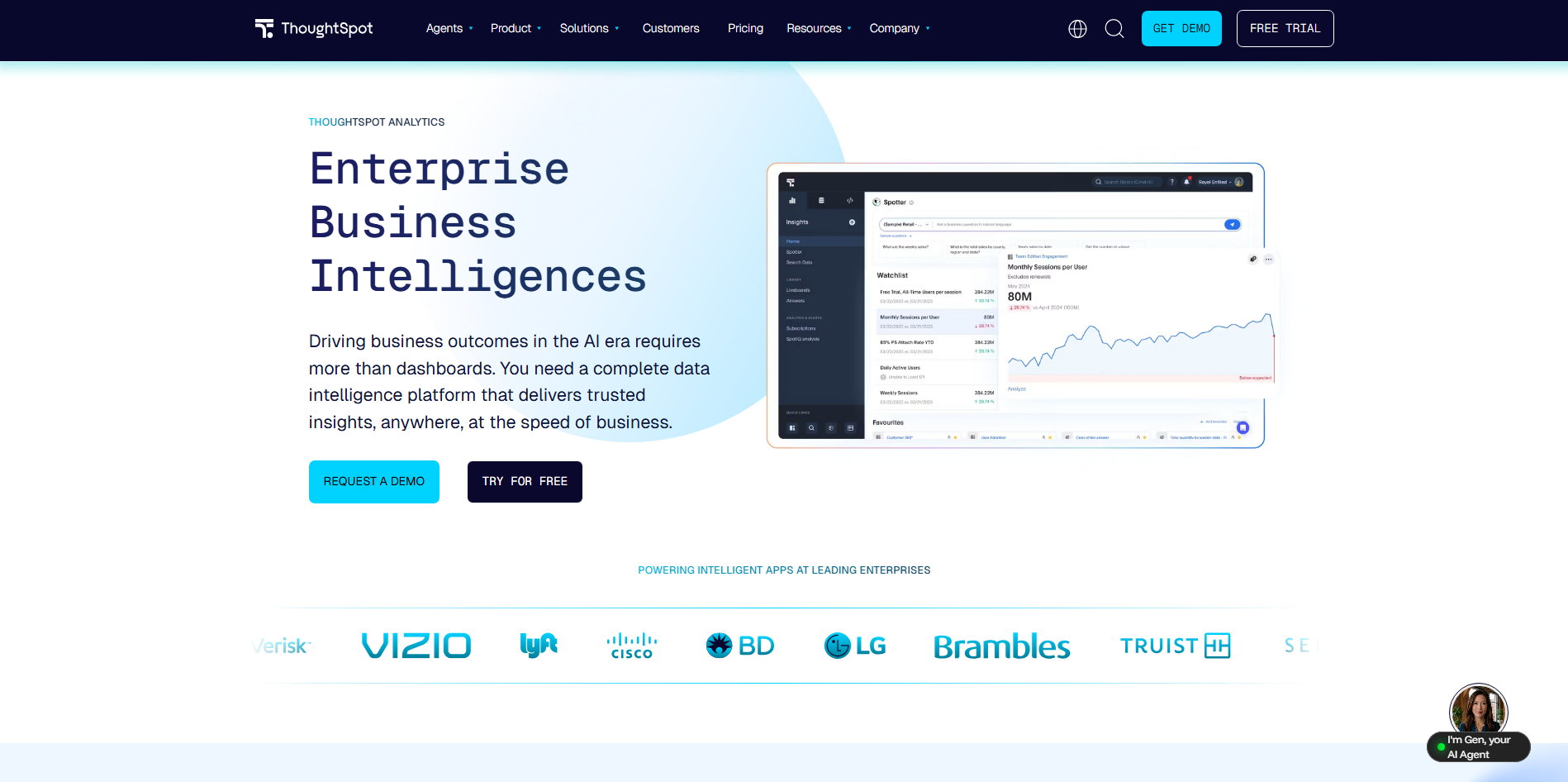
ThoughtSpot is an AI-powered analytics platform designed to help businesses explore data and uncover insights. Its approach centers on asking questions about business data using natural language rather than relying only on traditional dashboards. It can help teams investigate trends, metrics, and performance without requiring every user to be an analytics specialist.
Main features
Natural-language analytics: Users can ask business questions in everyday language and explore the data behind them. This can make analytical work more accessible to people outside traditional data teams.
AI-powered insights: ThoughtSpot can help users identify patterns and important changes in business data. These insights can support planning around revenue, customers, operations, and performance.
Interactive dashboards: Teams can turn analytical findings into visual dashboards for ongoing monitoring. This gives decision-makers a clearer view of important business metrics.
Self-service data exploration: Business users can investigate their own questions without relying entirely on analysts for every request. This can shorten the path from a business question to an evidence-based discussion.
Suitable for
Business intelligence
Performance analysis
Data-driven planning
Executive reporting
Jasper AI
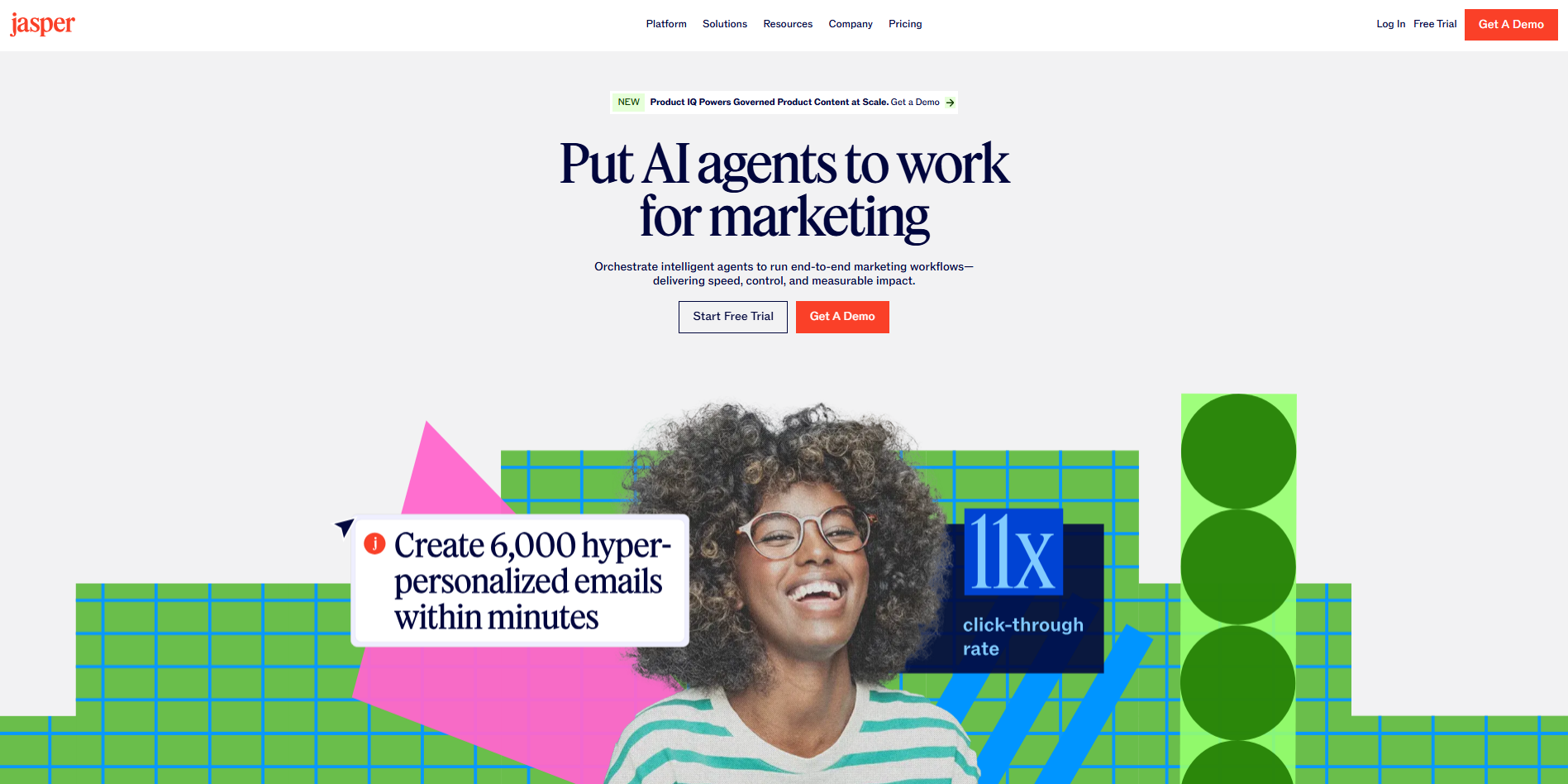
Jasper is an AI platform built specifically around marketing work and enterprise content operations. It helps marketing teams create and manage content while maintaining consistency across campaigns and channels. Its Brand Voice feature can analyze examples of existing content and create a personalized voice for future work. This makes Jasper more focused on marketing strategy and execution than general business research.
Main features
Brand Voice: Jasper can analyze examples of a company's existing writing to understand its tone, style, and characteristics. That voice can then guide future content creation.
Marketing content creation: Teams can use Jasper to produce content for campaigns and other marketing activities. This helps turn marketing plans into actual content more quickly.
Campaign consistency: Jasper is designed to help enterprises maintain consistent messaging across marketing work. This can be useful when several people or teams create content for the same brand.
Enterprise marketing workflows: Jasper positions its platform around AI agents that can execute marketing work at scale. This supports larger teams that need repeatable processes, personalization, localization, and governance.
Suitable for
Marketing strategy
Content planning
Brand management
Campaign execution
IBM watsonx
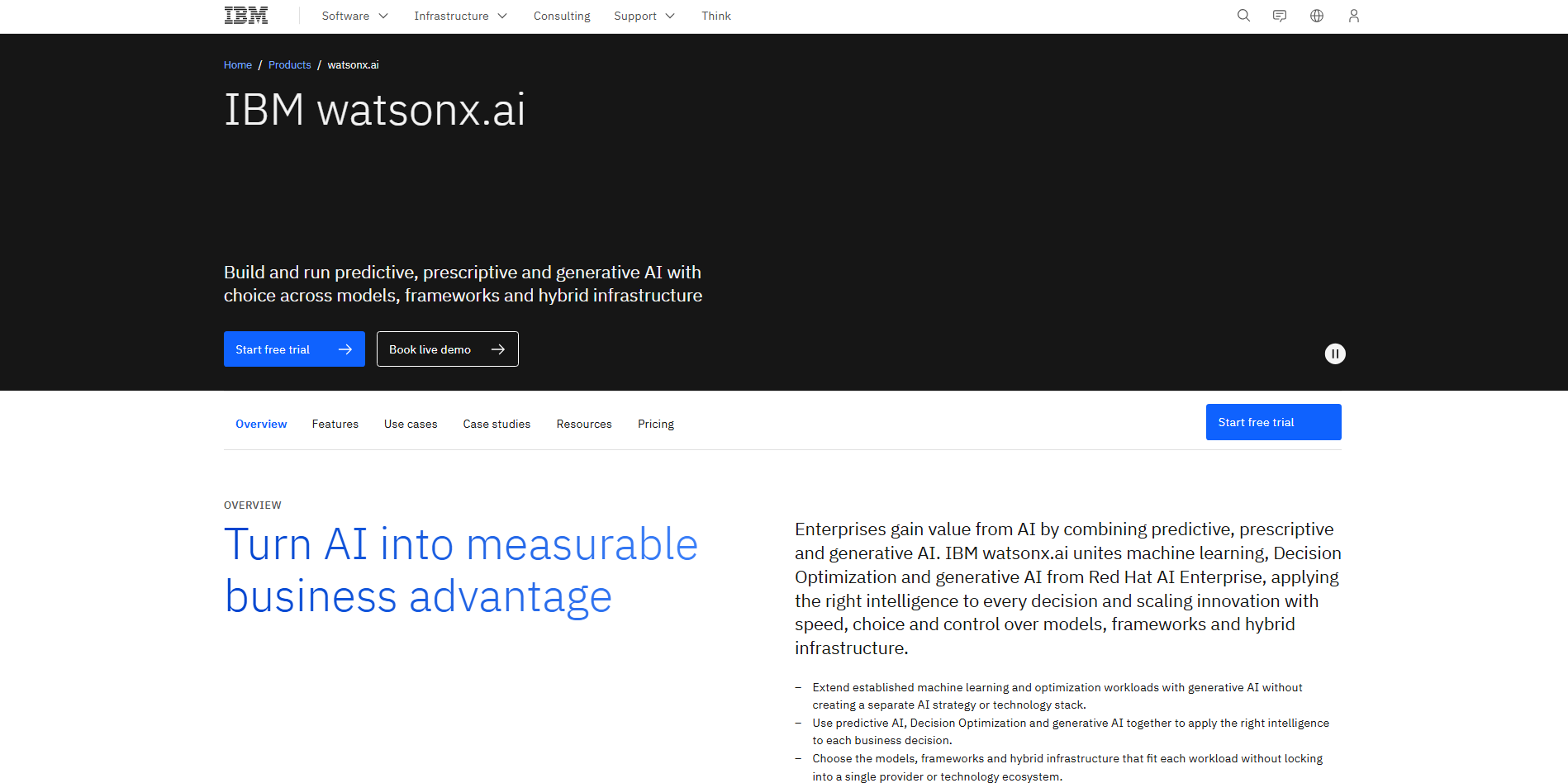
IBM watsonx is an enterprise AI portfolio covering AI development, data management, and governance. Its components include watsonx.ai for building AI applications, watsonx.data for working with governed data, and watsonx.governance for managing AI risks and compliance. Together, these capabilities support organizations that need to develop and manage AI within larger business environments.
Main features
AI development with watsonx.ai: Watsonx.ai provides an AI studio for developing and managing AI applications across the lifecycle. It supports both traditional machine learning and generative AI workflows.
Governed enterprise data: Watsonx.data helps organizations prepare and integrate data from different sources. This provides a foundation for building AI applications around trusted business information.
AI governance: Watsonx.governance provides visibility, controls, risk management, and compliance capabilities for AI systems. It can help organizations track AI use and manage governance requirements.
Model lifecycle management: The platform supports governance across generative AI and machine learning models, including monitoring, transparency, and risk controls. This is useful for businesses managing AI across multiple teams or systems.
Suitable for
Enterprise AI strategy
AI governance
Data management
Responsible AI planning
Google Gemini
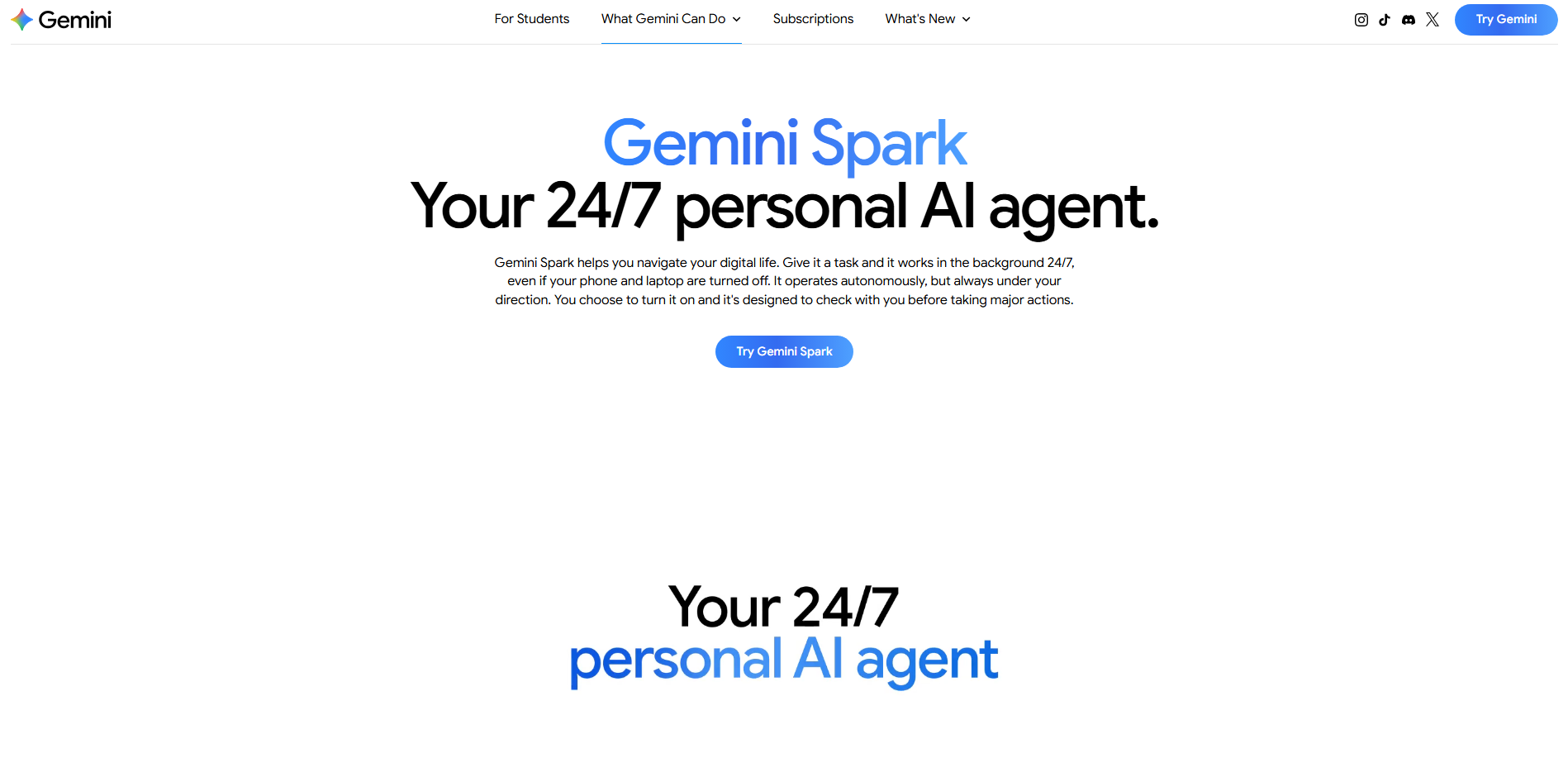
Google Gemini provides AI capabilities across business productivity, research, content creation, and enterprise workflows. Gemini Enterprise can connect with business applications and company data, while Gemini Notebook provides source-grounded workspaces for documents and other information. Its Deep Research agent is designed for multi-step investigation and can support planning and market research.
Main features
Deep Research: Gemini's Deep Research agent is designed for complex investigative tasks involving planning and multi-source searching. It can produce a comprehensive report that supports research-heavy business decisions.
Gemini Notebook: Teams can create source-grounded notebooks from documents, websites, and other materials. Gemini can answer questions from those sources and provide citations for verification.
Business data connections: Gemini Enterprise can connect with services such as Microsoft 365, Google Workspace, HubSpot, and other business applications. This allows AI workflows to use information from multiple systems.
AI workflow automation: Gemini Enterprise includes no-code workflow capabilities for creating multi-step, multi-application processes. Teams can use these workflows to automate repeatable business tasks.
Suitable for
Market research
Google Workspace teams
Business knowledge management
Workflow automation
Tips to choose a suitable AI tool for business strategy
Choosing an AI tool becomes easier when you focus on your business goals, workflow, and budget rather than just its features. The right AI tools for business strategy should simplify planning and support better decisions. Here are the key factors to consider.
Match tool to your needs
Start by identifying the specific strategy tasks you want the tool to handle. Whether you need market research, competitor analysis, forecasting, or planning, choose a tool that supports those needs directly. A good AI business strategy generator should fit your workflow rather than forcing you to change how you work.
Check data accuracy carefully
AI-generated insights can be useful, but they should not be accepted without review. Check important facts, numbers, market trends, and recommendations against reliable sources before using them for major decisions. This is especially important when an AI tool is working with current or business-critical information.
Look for strong research features
Choose tools that can gather information from multiple reliable sources and show where their findings come from. Features such as source citations, web research, data analysis, and document analysis can make strategic research more useful.
Fit within your budget
Compare the tool's pricing with the value it can provide to your business. Consider whether you need advanced features or whether a simpler plan can handle your regular strategy work. Remember to account for extra users, usage limits, integrations, or other costs when comparing AI tools for business strategy.
Ensure ease of use
A powerful tool is less useful if your team struggles to understand or operate it. Look for a simple interface, clear instructions, and workflows that do not require extensive technical knowledge. Easy-to-use tools can also help more team members contribute to research and strategic planning.
Confirm strong data security
Check how the tool handles the information you provide, especially if you plan to upload internal documents or sensitive business data. Review its privacy policies, security controls, data retention practices, and enterprise protections before using it for confidential work.
Try before you commit fully
Test the tool with a real but low-risk business task before purchasing a long-term plan. This lets you see whether its research quality, output, speed, and features actually match your expectations. A short trial can help you compare an AI business strategy generator with other options before making a larger commitment.
Conclusion
A strong strategy comes from turning good information into clear actions that support your business goals. The right AI business strategy tools can make that process more focused without replacing human judgment. Choose a tool that fits how your business works and gives you useful insights you can act on. Kimi Deep Research can help you turn complex research into structured insights for more informed strategic planning. Subscribe to Kimi Business to bring more AI capabilities into your business workflows.