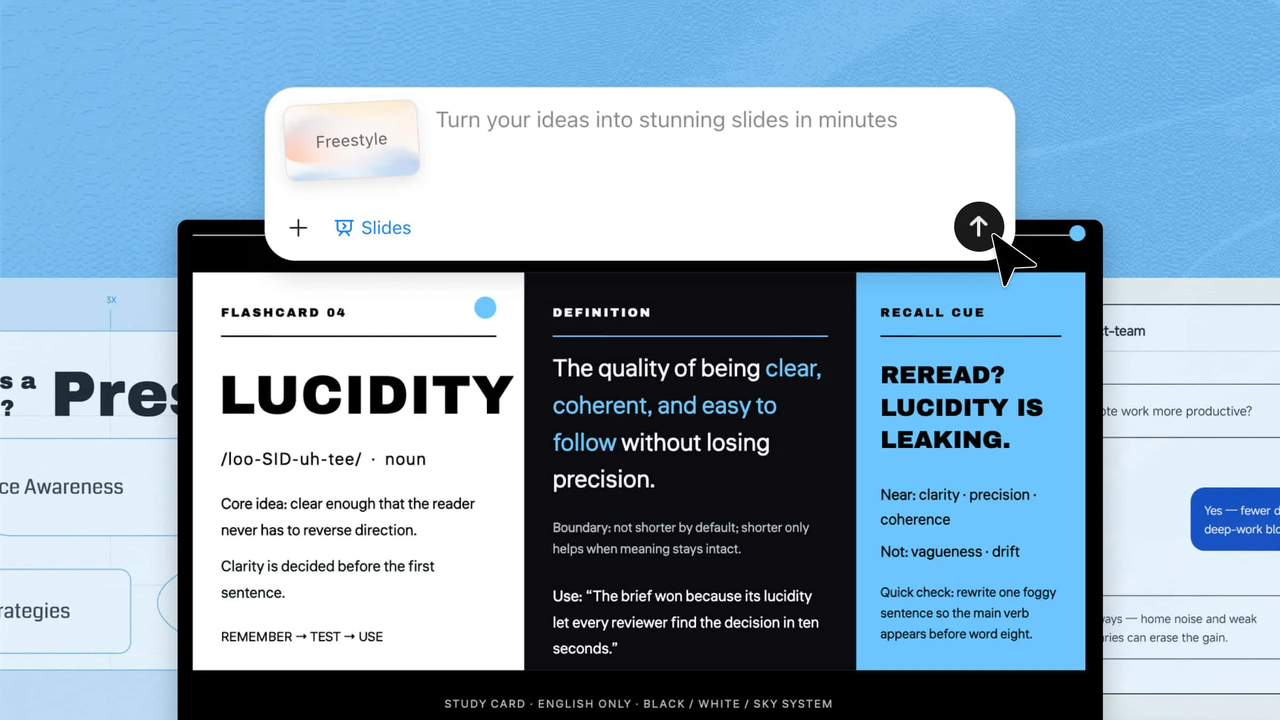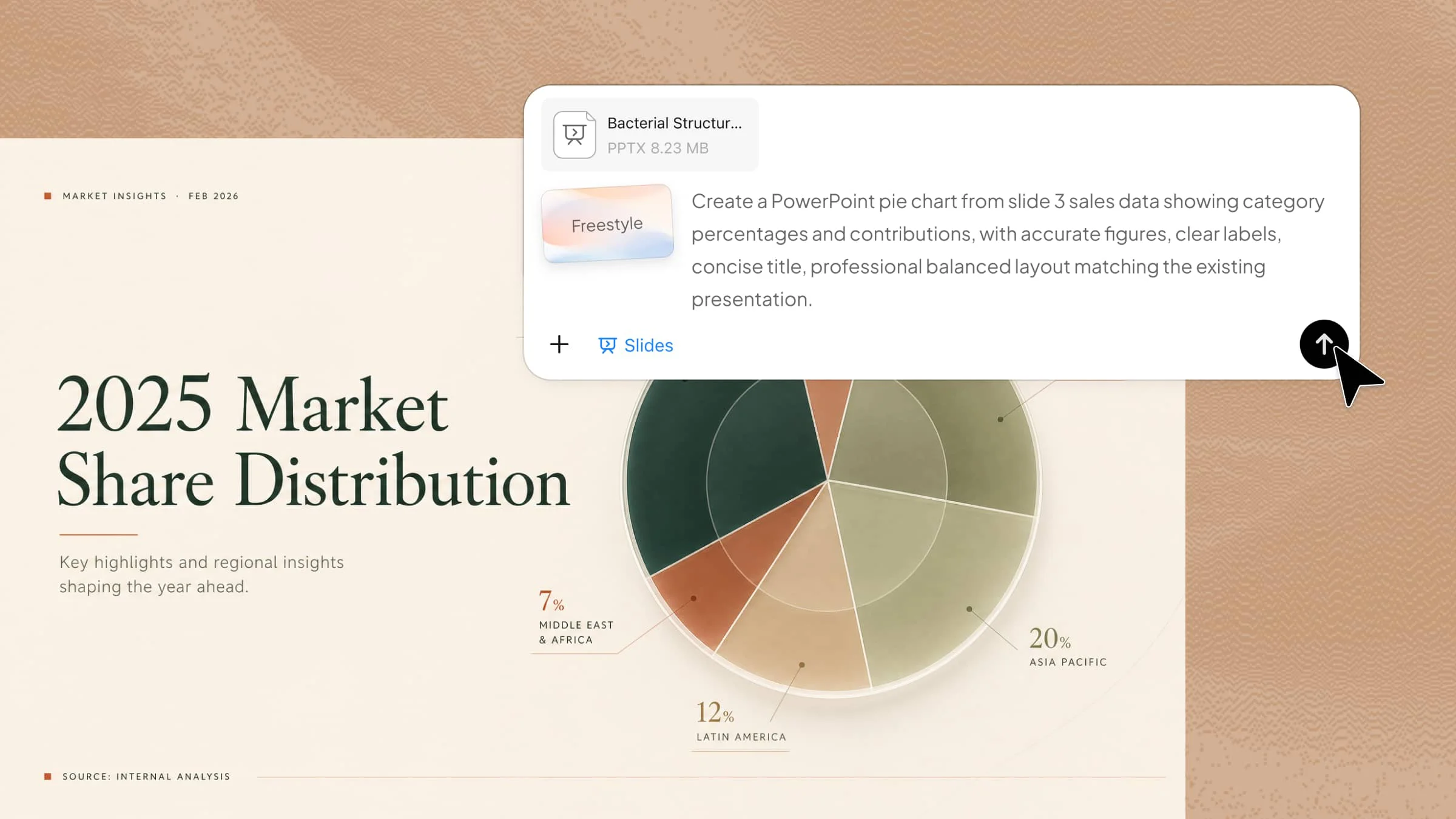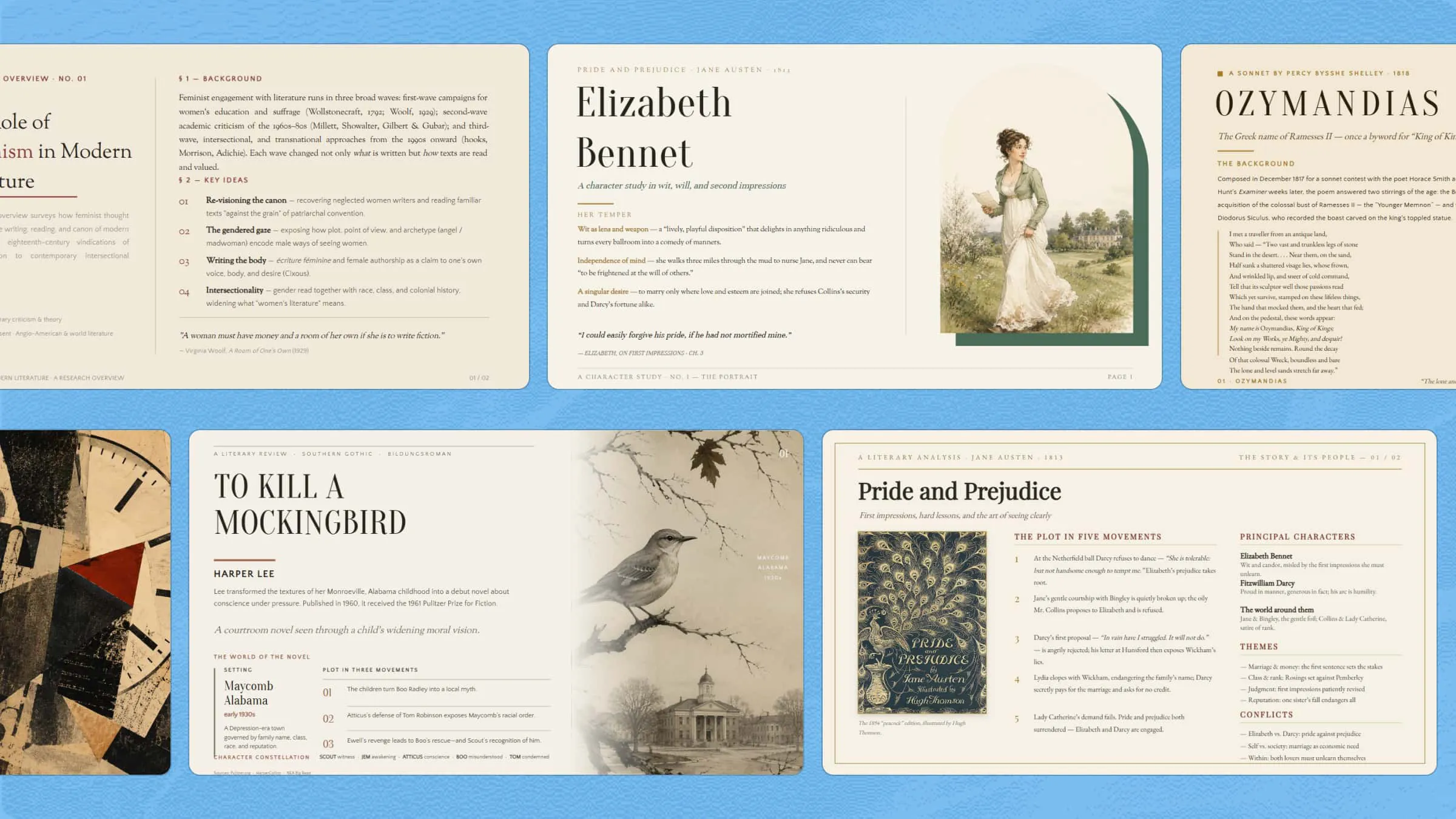
Literature presentations often involve complex themes, detailed analysis, quotations, and supporting research, making it difficult to present ideas clearly without overwhelming the audience. The right literature PowerPoint template can turn dense literary content into a well-structured and visually engaging presentation. This guide explores practical template ideas designed to make literary analysis, book discussions, author profiles, and research presentations easier to understand and more memorable.
Overview of 10 literature PPT templates
Literature presentations can cover everything from close reading and poetry analysis to book reviews, character studies, and literary research. The right template helps organize these ideas into a clear visual story without overwhelming the audience. Here are 10 presentation formats designed for different literature topics and academic needs.
| Template | Key content | Suitable for |
|---|---|---|
| Literary analysis presentation | Themes, characters, symbolism, conflicts, literary techniques | Analyzing a literary work |
| Classic literature book review | Plot, characters, themes, historical context, critical evaluation | Reviewing classic novels |
| Poetry presentation | Themes, imagery, symbolism, structure, rhyme, literary devices | Analyzing poems |
| Novel study presentation | Plot, setting, characters, conflicts, themes, writing style | Studying a novel in depth |
| Author profile presentation | Life, career, major works, influences, writing style | Introducing an author |
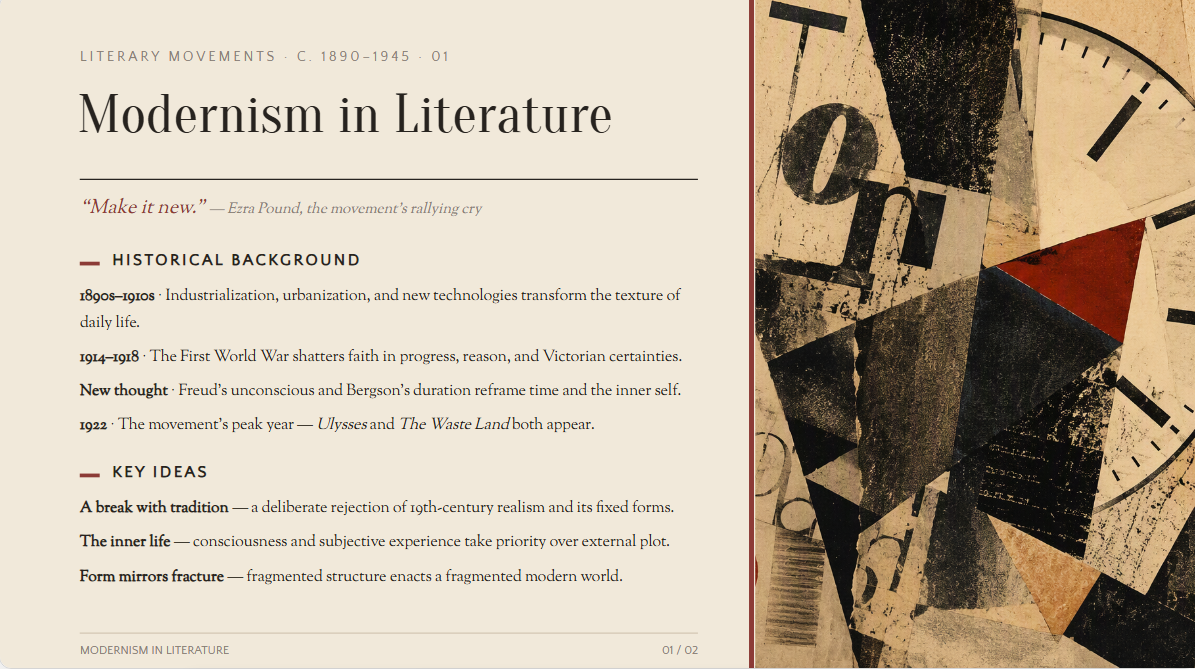
| Literary movements presentation | Background, key ideas, writers, major works, influence | Explaining literary movements |
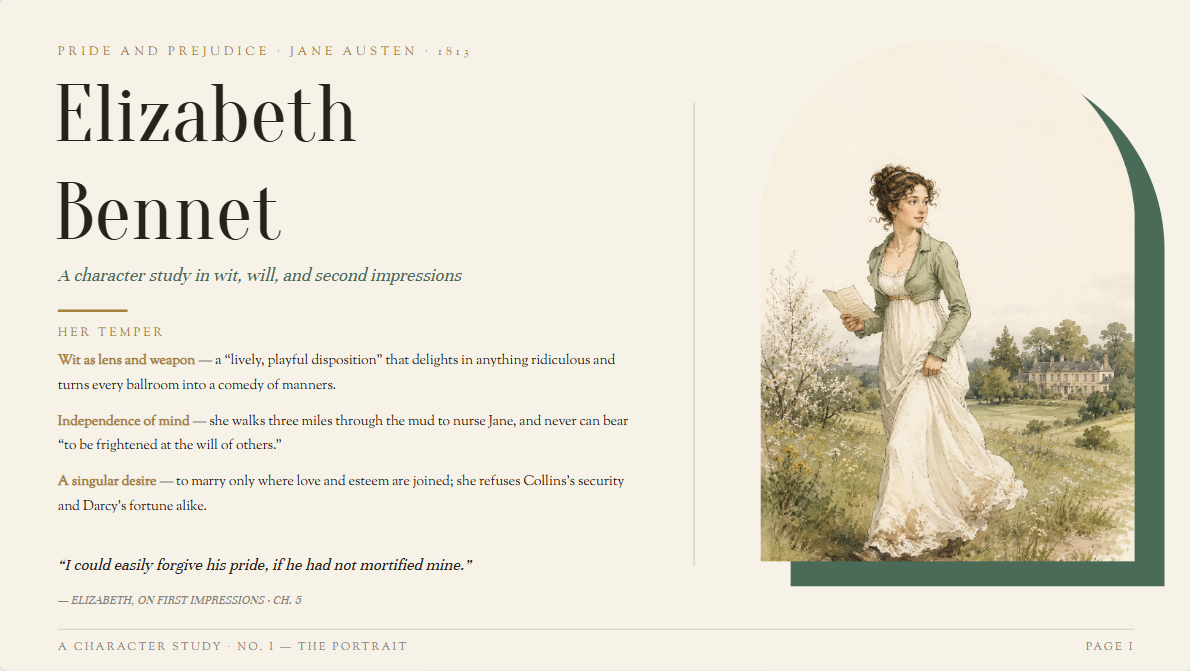
| Character analysis presentation | Personality, motivations, relationships, conflicts, character development | Analyzing a literary character |
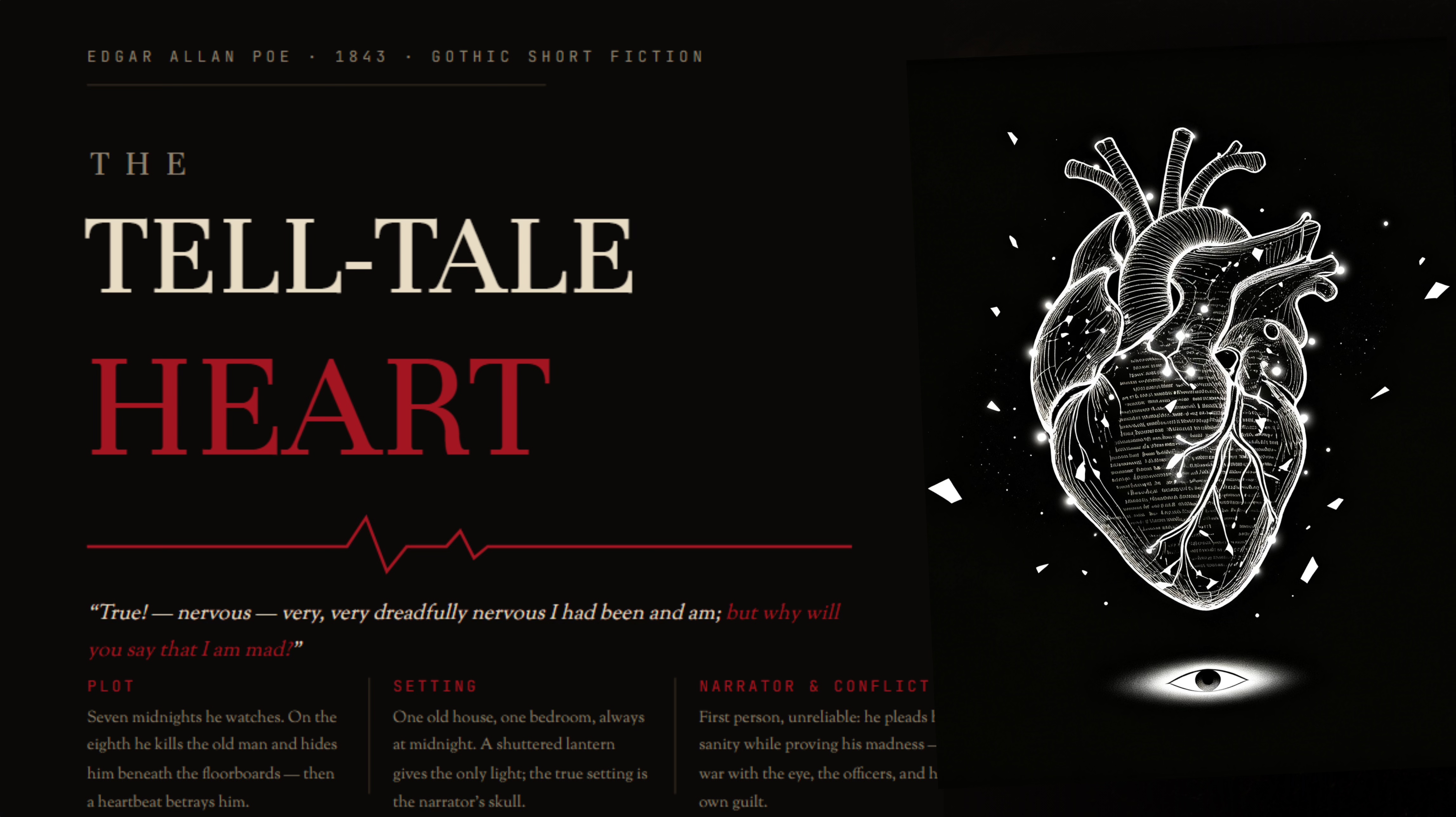
| Short story analysis presentation | Plot, setting, narrator, conflict, symbolism, themes | Analyzing short stories |
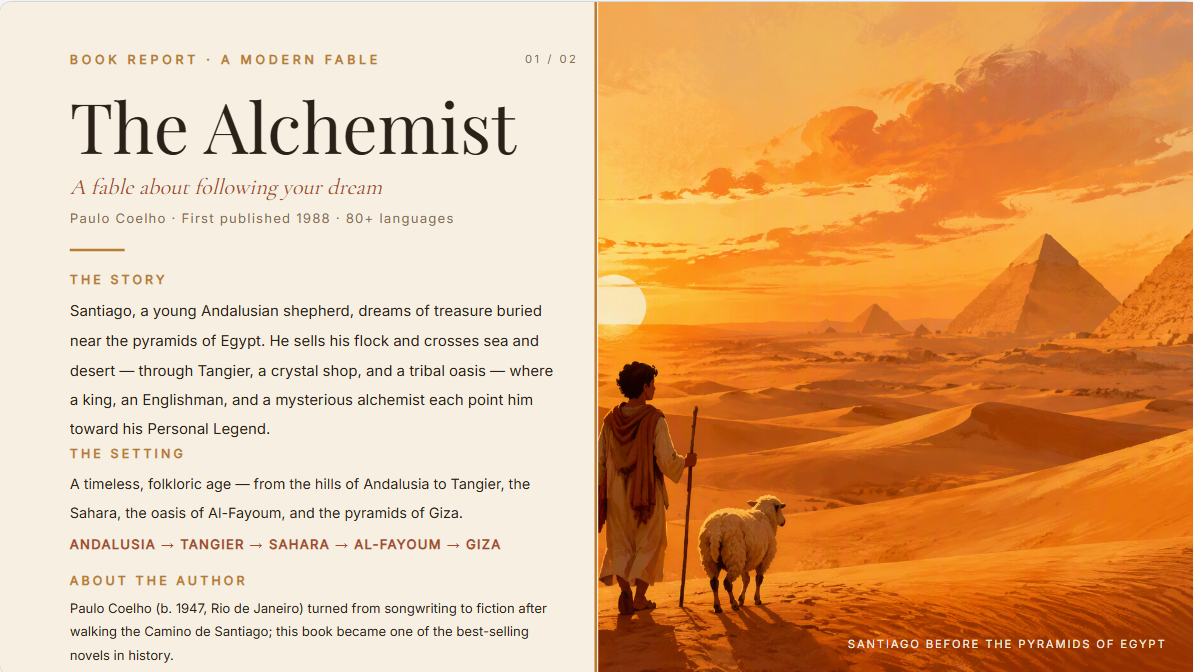
| Book report presentation | Author, story overview, characters, themes, key messages | Giving a concise book report |
| Literary research presentation | Research question, context, textual evidence, analysis, sources | Presenting literature research |
10 literature PowerPoint templates worth trying
Each literature presentation has different needs, whether you are analyzing themes, discussing a novel, or presenting an author's work. These 10 literature PowerPoint templates offer focused layouts to present literary ideas clearly without overcrowding your slides.
Kimi Slides is an AI presentation maker that can help you create these presentations faster by generating slides from your topic and requirements. Simply describe the literary work, content, and preferred style, then customize the generated presentation as needed.
Literary analysis presentation
A literary presentation explores how a story, poem, or novel builds meaning through its characters, themes, conflicts, symbols, and setting. It also examines the author's language, narrative style, and literary techniques to uncover deeper ideas. Relevant passages and examples support the interpretation and show how different elements work together to shape the overall message.
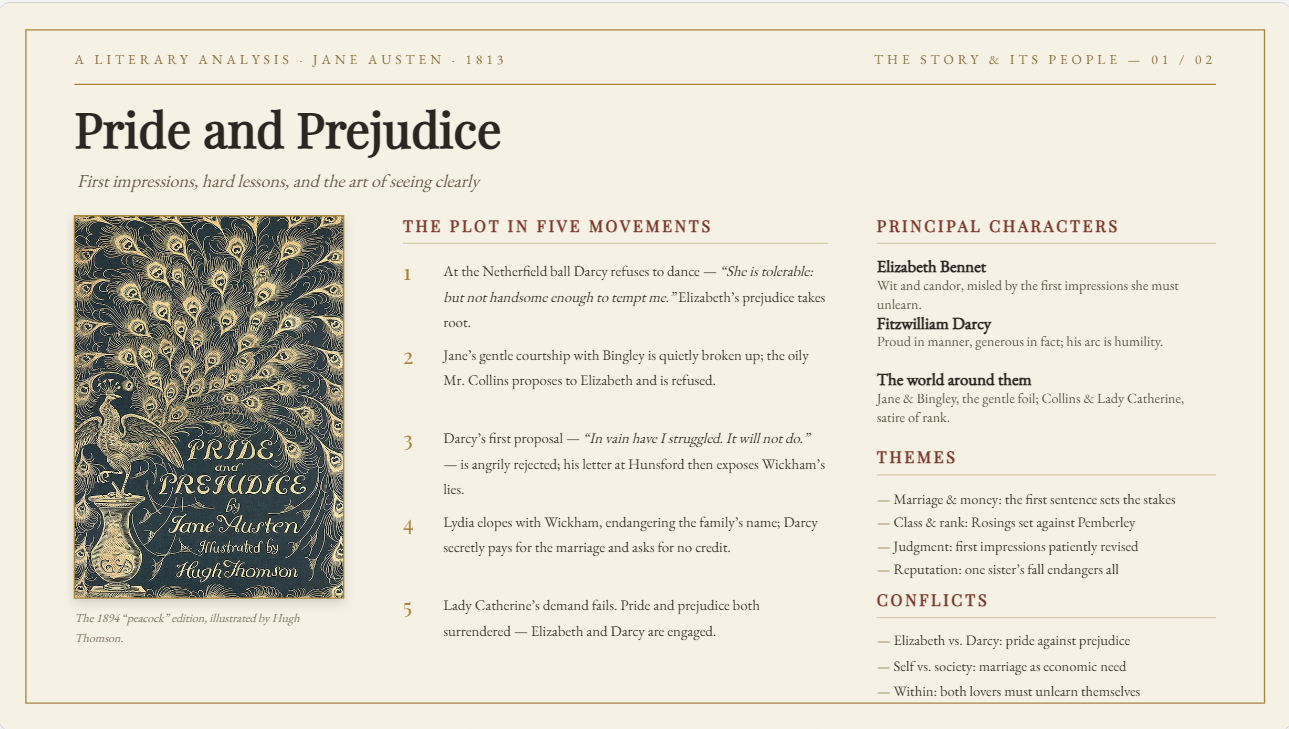
How to use
Step 1: Enter your prompt
Enter a clear prompt that includes the book title and the key sections you want to cover, such as the author, plot, characters, themes, literary elements, and overall review.
Prompt:
Step 2: Let AI generate your PPT
Submit the prompt and let Kimi Slides generate your presentation. It will organize the book content into slides and add relevant visuals and layouts.
Step 3: Review and export the PPT
Review the generated slides for accuracy, layout, and visuals. Make any necessary edits, then export the completed presentation.
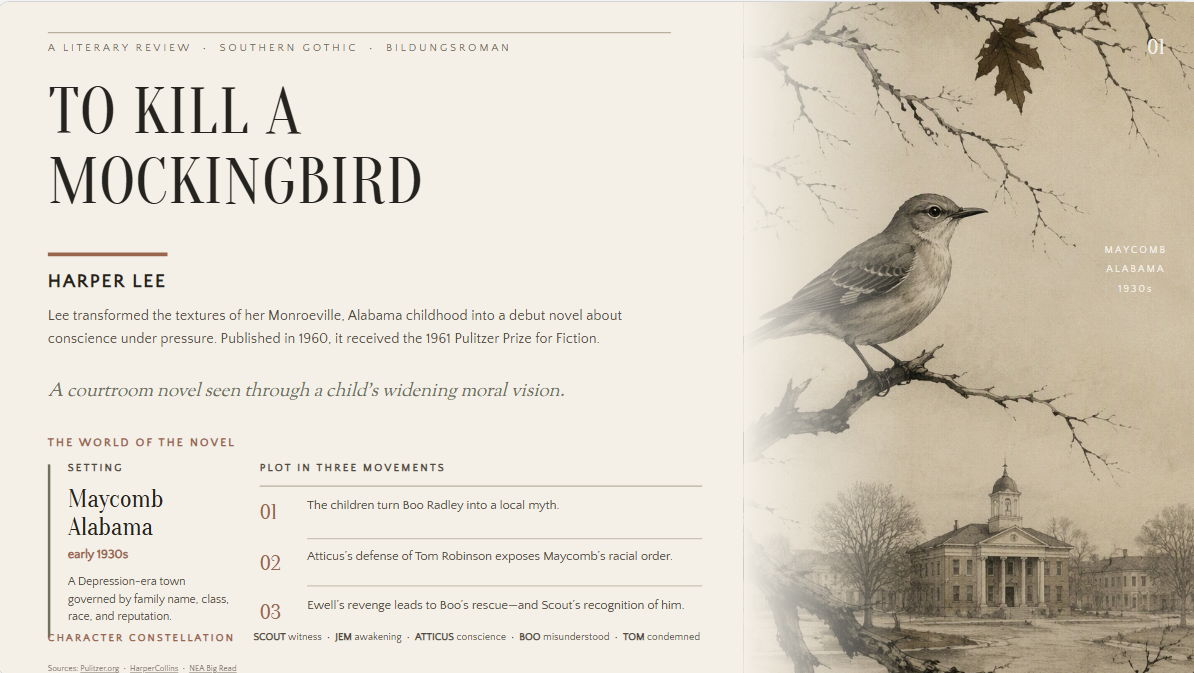
Classic literature book review
A classic literature review PowerPoint template introduces the work while giving the audience a clear understanding of its story, themes, characters, and historical significance. Beyond summarizing the plot, the presentation can evaluate the book's strengths, major ideas, and continuing relevance.
How to use
Step 1: Enter your prompt
Describe the book review you need, including the book title, audience, preferred slide count, and the main points you want to discuss.
Prompt:
Step 2: Let AI generate your PPT
Click "Send" and allow Kimi Slides to turn your instructions into a complete slide deck with organized sections and supporting visuals.
Step 3: Review and export the PPT
Read through each slide for accuracy and clarity, adjust any unsuitable details or designs, then export the final version in your preferred format.
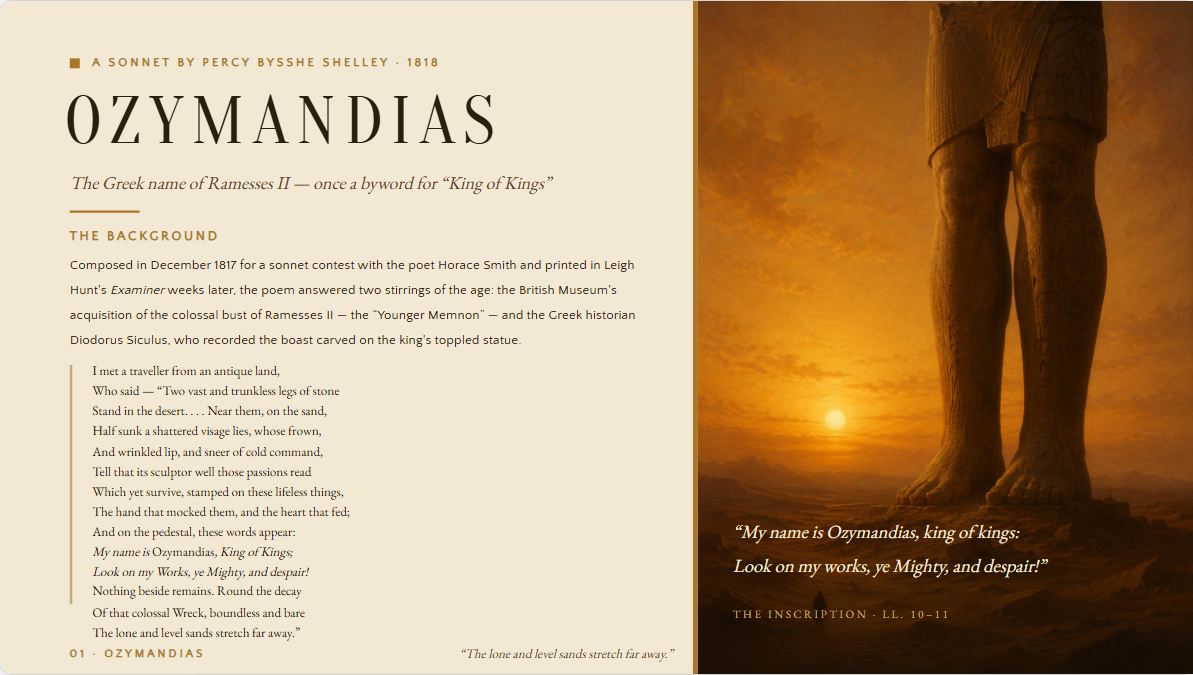
Poetry presentation
A literature presentation on poetry explores how a poem creates meaning through language, structure, sound, and imagery. It can examine themes, tone, symbolism, rhyme, rhythm, and literary devices such as metaphors and repetition. Short quotations can also show how the poet's choices shape the poem's meaning and overall effect.
How to use
Step 1: Enter your prompt
Tell Kimi Slides what type of poetry presentation you need. Mention the topic, target audience, number of slides, and any specific style or format you prefer.
Prompt:
Step 2: Let AI generate your PPT
Click to generate the deck and give the tool a moment to arrange the information. Kimi Slides turns your instructions into organized slides with suitable layouts and visual elements.
Step 3: Review and export the PPT
Read each slide to spot missing details or awkward wording. Adjust the layout, text, or visuals if needed, then export the finished deck for your presentation.
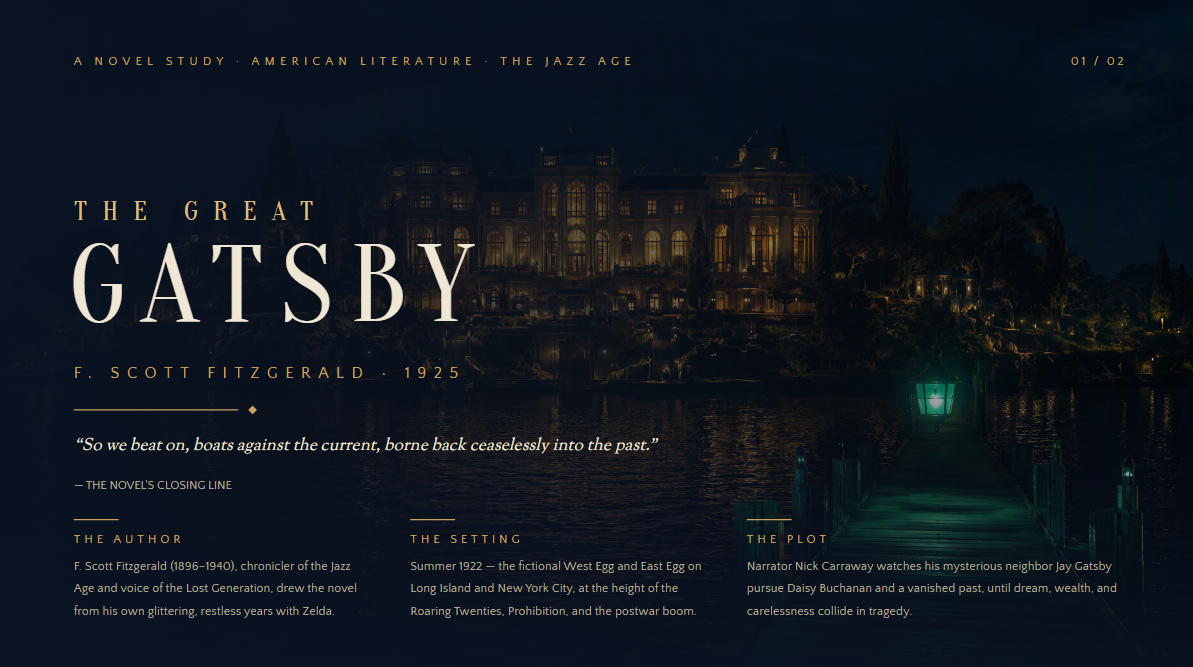
Novel study presentation
A literary presentation on a novel offers a structured look at its storyline, characters, setting, conflicts, and central themes. It can highlight key turning points and character development while showing how these elements work together to shape the narrative and its deeper meaning.
How to use
Step 1: Enter your prompt
Enter a detailed prompt that specifies the novel and the sections you want to include, such as the plot, setting, characters, conflicts, themes, key events, and literary analysis.
Prompt:
Step 2: Let AI generate your PPT
Send the prompt and let Kimi Slides organize the novel's information into structured slides with suitable layouts and visuals.
Step 3: Review and export the PPT
Check the generated content for accuracy and completeness, refine any slides as needed, and export the final presentation in your preferred format.
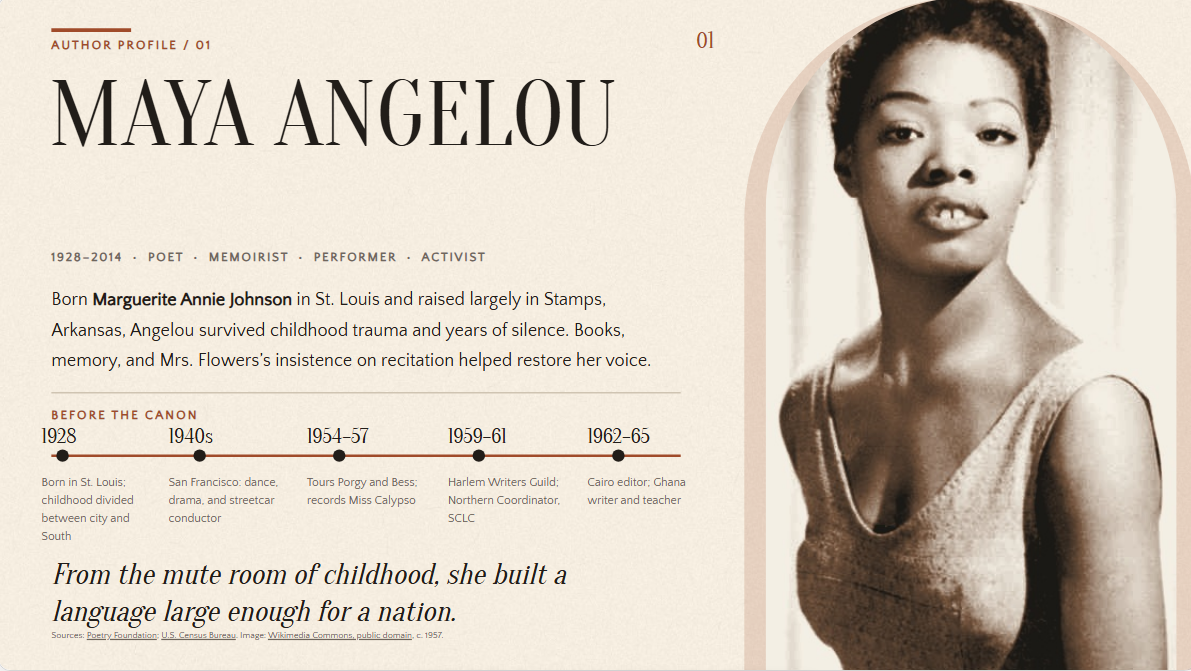
Author profile presentation
An English literature PowerPoint template can present an author's life, literary career, major works, influences, and contribution to literature in a clear, engaging format. A chronological structure helps connect key experiences with the development of the author's ideas and writing style.
How to use
Step 1: Enter your prompt
Enter the author's name and specify the key areas you want to cover, such as their early life, literary career, major works, writing style, influences, and achievements.
Prompt:
Step 2: Let AI generate your PPT
Send the prompt and let Kimi Slides organize the author's information into structured slides with relevant visuals and a consistent design.
Step 3: Review and export the PPT
Check the facts, slide order, text, and visuals. Make any necessary edits, then export the completed presentation in your preferred format.
Literary movements presentation
A literary theme PowerPoint can explain how literature evolves alongside social, cultural, political, and intellectual changes. It can cover a movement's origins, defining features, major writers, key works, and influence on later literature. Comparing different writers and texts can also help clarify the ideas and themes that shape each movement.
How to use
Step 1: Enter your prompt
Start with the literary movement's name and tell Kimi what you want to explore, which includes its background, key ideas, writers, major works, and lasting influence.
Prompt:
Step 2: Let AI generate your PPT
Submit the prompt and let Kimi Slides turn the information into organized slides with relevant examples, visuals, and a consistent design.
Step 3: Review and export the PPT
Go through the generated slides to check the information, flow, and visuals. Refine anything that needs improvement, then export your final presentation.
Character analysis presentation
A presentation on literature can examine a character's personality, motivations, relationships, choices, and conflicts throughout a story. Key scenes and dialogue can provide evidence of character development while showing how the character influences the plot and connects to the work's broader themes.
How to use
Step 1: Enter your prompt
Start with the character's name and the story title, then guide Kimi on what to examine, such as the character's personality, goals, relationships, struggles, choices, and growth.
Prompt:
Step 2: Let AI generate your PPT
Submit your prompt and let Kimi Slides turn the character's journey into a structured presentation, highlighting key moments, relationships, and changes with relevant visuals.
Step 3: Review and export the PPT
Read through the slides to ensure the analysis is accurate and easy to follow. Fine-tune the content or design where needed, then export your completed presentation.
Short story analysis presentation
A literature presentation on a short story explores how a writer builds a complete narrative through a focused plot, characters, and setting. It can examine conflict, point of view, tone, symbolism, and literary techniques while showing how these elements work together to develop the story's central theme.
How to use
Step 1: Enter your prompt
Type the story title and author, along with the key elements you want to analyze, such as plot, role, themes, symbolism, and literary techniques.
Prompt:
Step 2: Let AI generate your PPT
Click to submit the prompt and wait while Kimi Slides builds the presentation, turning the requested analysis into organized slides.
Step 3: Review and export the PPT
Review the finished slides and correct any missing details or formatting issues. Once satisfied with the result, export the presentation for use.
Book report presentation
A literature review PowerPoint template can help present a book's author, setting, plot, characters, themes, and key events in a clear structure. It can also summarize the book's main message and provide a concise evaluation, giving the audience an organized view of both the story and its overall impact.
How to use
Step 1: Enter your prompt
Enter the book title and author, then provide a detailed prompt outlining the sections and level of analysis you want for the presentation.
Prompt:
Step 2: Let AI generate your PPT
Send your prompt and give Kimi Slides a moment to turn the book details into a complete presentation with organized content and suitable visuals.
Step 3: Review and export the PPT
Check the generated slides for accuracy and clarity. Make quick edits to the content or design, then export the final report when it is ready.
Literary research presentation
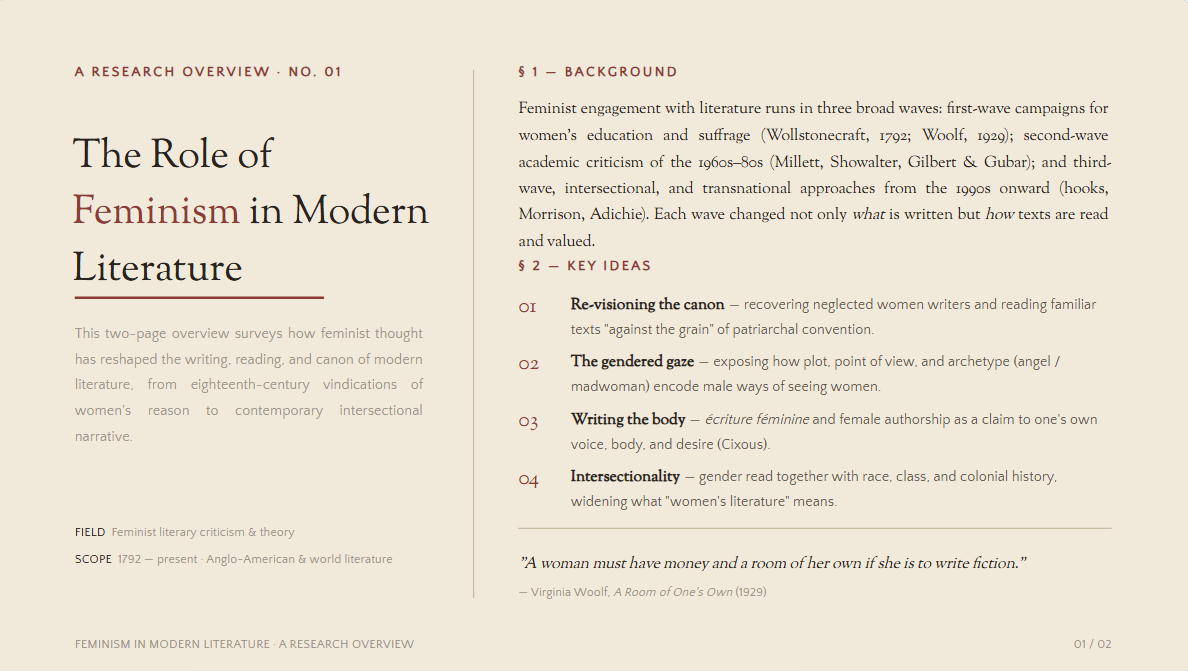
A literature review PowerPoint template can organize an evidence-based discussion around a specific author, theme, movement, question, or literary work. It can bring together historical context, close reading, scholarly sources, different interpretations, and textual evidence to present a clear and well-supported argument.
How to use
Step 1: Enter your prompt
Define your research topic, main question, preferred slide count, key sections, and source requirements.
Prompt:
Step 2: Let AI generate your PPT
Submit your instructions and let Kimi Slides organize the research into clear, well-structured slides. Review the generated content for relevance.
Step 3: Review and export the PPT
Check facts, sources, and supporting evidence. Refine the layout or wording where needed, then export the final presentation.
Why choose Kimi Slides for literature presentations?
As an AI PPT maker, Kimi Slides can streamline the process of turning literary research into a coherent presentation. It can also retrieve relevant, high-quality information about the chosen topic and supplement your existing material with useful context and supporting details. This helps bring themes, textual evidence, historical background, and critical insights together in a clear, well-organized deck.
Transform research materials into structured presentations
Kimi Slides transforms notes, papers, and reference materials into a structured presentation. It identifies important information, groups related ideas, and creates a coherent flow for complex literary topics.
Enhance presentations with AI-powered research
Kimi Slides can retrieve relevant, high-quality information related to the selected subject. Research may include historical context, author background, literary criticism, and other details that strengthen the overall presentation.
Present literary analysis with visual support
Artwork, timelines, character maps, and historical imagery can add context to complex ideas. These elements make themes, symbolism, relationships, and interpretations easier to understand.
Refine literary presentations through editing
Natural-language editing supports changes to written content, slide structure, layouts, and visuals. This allows the presentation to evolve without extensive manual redesign.
Preview and export editable PPTX files
Kimi Slides supports export in editable PPTX format, preserving the main elements of the deck. Further changes to text, images, and layouts can be made in PowerPoint before sharing or presenting.
Tips for creating an effective literature PowerPoint presentation
A well-planned deck can make literary topics more engaging and easier to discuss. Choosing relevant material, arranging ideas logically, and using suitable visuals can strengthen the overall presentation. Keep these practical tips in mind to create a polished and effective literature theme PowerPoint presentation.
Build your presentation around a clear literary argument
Introduce one focused interpretation and use the slides to develop it. Connect each major point to evidence that strengthens your viewpoint.
Balance text with literary evidence
Combine brief explanations with relevant quotes, scenes, or examples from the work. Explain how each piece of evidence supports your interpretation.
Use visuals to enhance literary understanding
Add timelines, artwork, character maps, or historical images when they clarify an idea. Choose visuals that provide context rather than simple decoration.
Organize the story and analysis in a logical sequence
Begin with essential background before moving into plot details and interpretation. End with key insights that bring the discussion together.
Match the design with the tone of the literary work
Choose fonts, imagery, and layouts that suit the text's mood, genre, or period. Keep these elements consistent for a cohesive presentation.
Keep literary analysis focused and accessible
Explain complex literary terms in simple language and support them with examples. Remove details that do not contribute to the main discussion.
Present historical and cultural context effectively
Explain social conditions, traditions, or events that influenced the work. Include only background that helps the audience understand the text.
Review quotations and references carefully
Verify each quotation and make sure it accurately represents the source. Use consistent citations, so your research remains credible.
Conclusion
The right literature PowerPoint template can make complex literary ideas easier to organize and explain. Whether you are analyzing a novel, reviewing a classic book, exploring a poem, studying an author, or presenting literary research, choosing a structure that matches your topic helps keep the audience focused on the main ideas. Choose and create a template with Kimi Slides that suits your assignment, customize the content, and refine the slides before presenting.