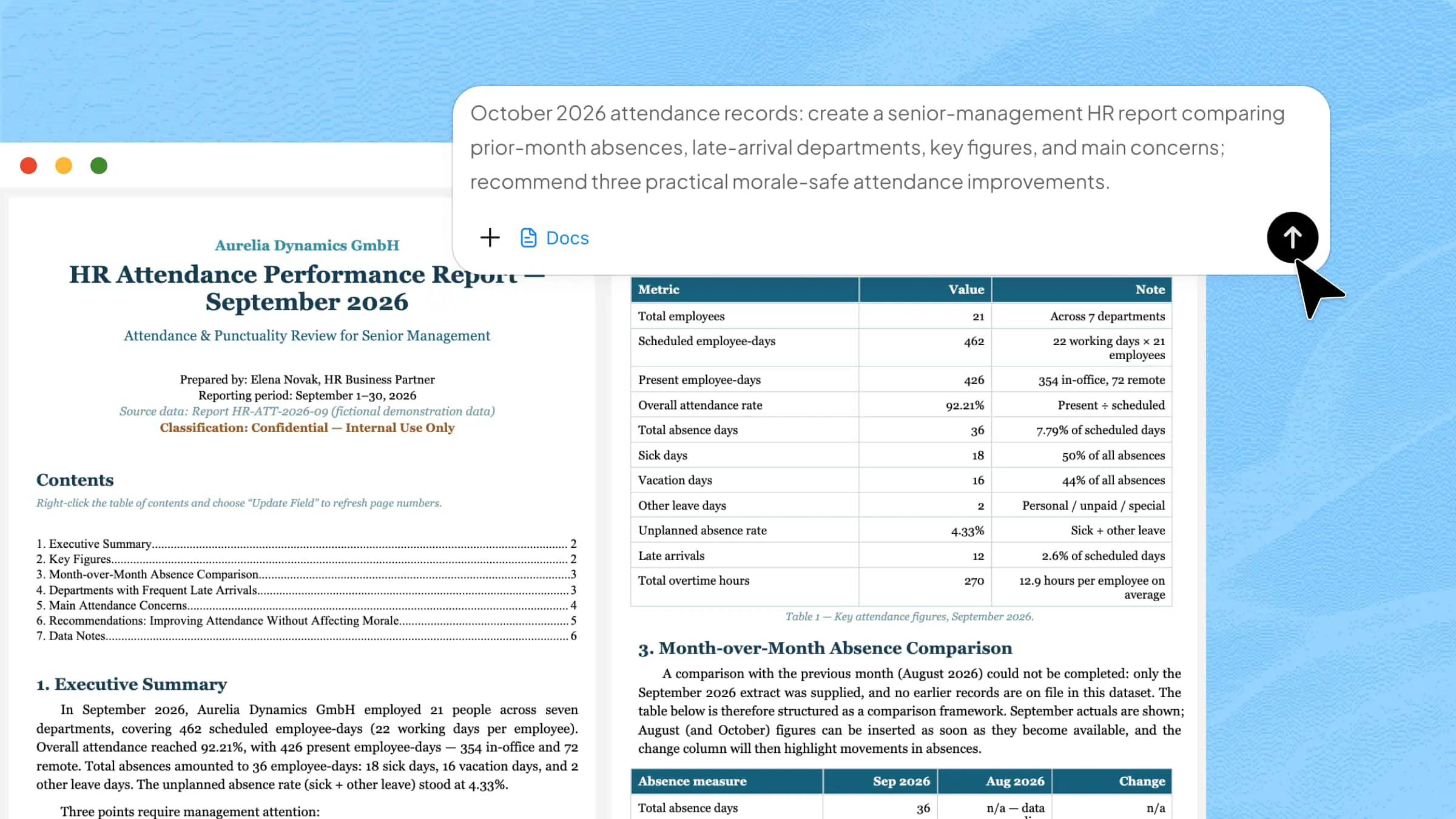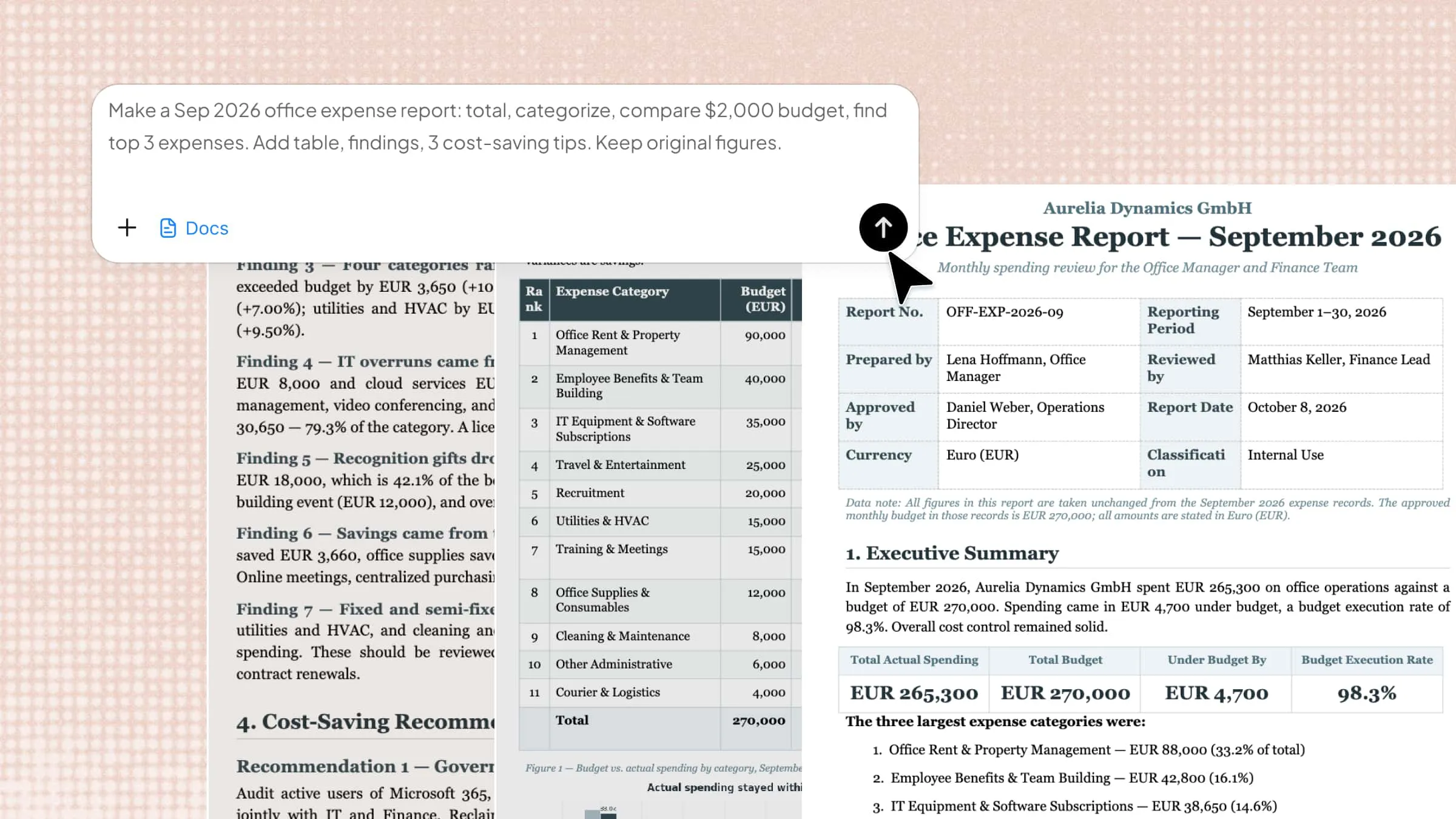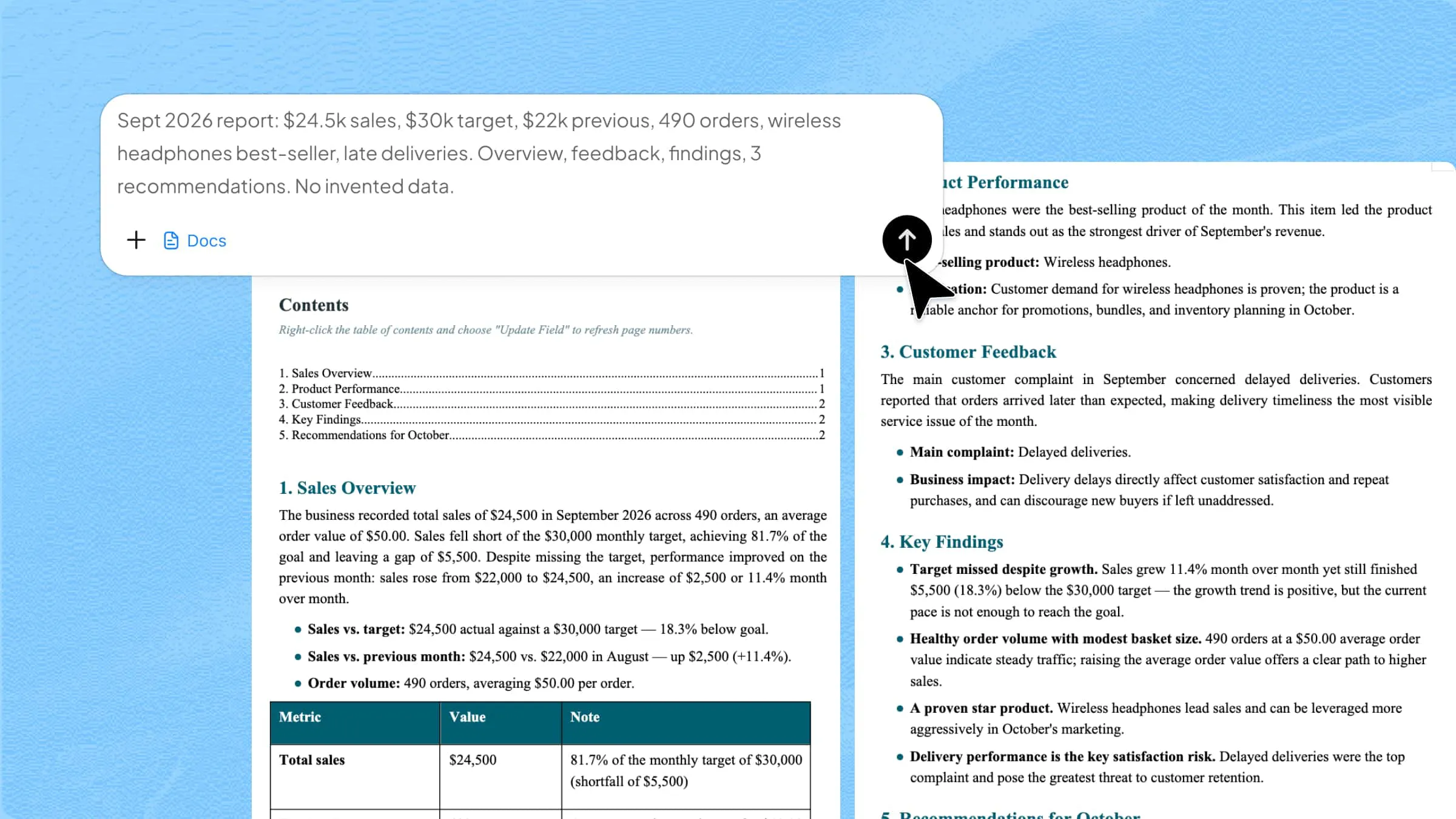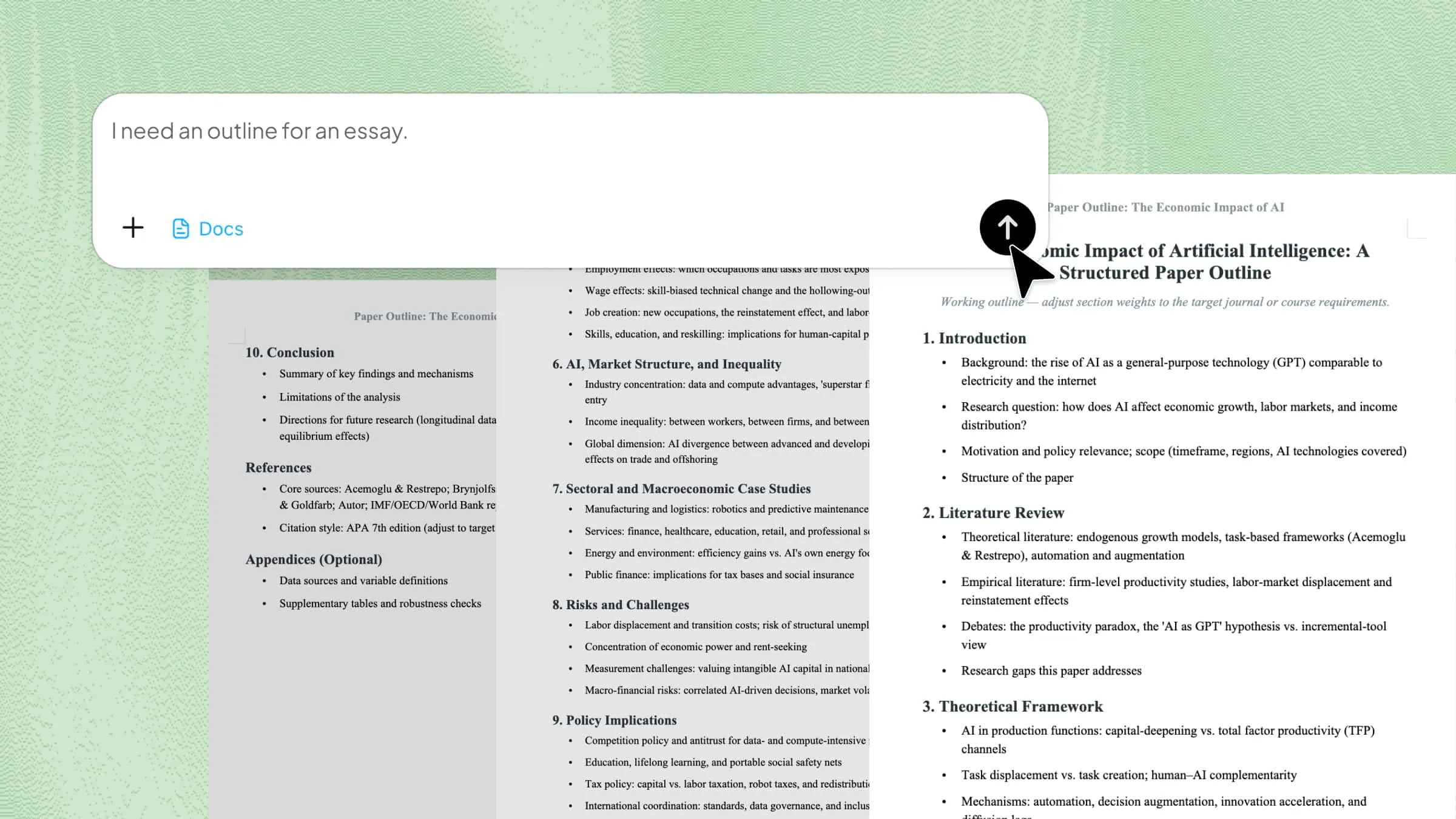
Organizing ideas, supporting evidence, and arguments into a logical order can be challenging when starting an essay. Essay outline templates provide a clear framework for arranging each section, from the introduction to the conclusion. This guide covers 10 formats for different essay types and explains how Kimi Docs can help you turn your topic and notes into a structured outline for a more focused writing process.
Overview of 10 essay outline templates
Each essay type requires a structure that supports its purpose, whether it tells a personal story, explains an idea, or presents a research-based argument. The table below features 10 outline templates for different essay types, including a personal essay outline template, to help you choose the right format for your writing.
| Essay outline template | Main purpose | Key components | Suitable for |
|---|---|---|---|
| Argumentative essay outline | Build a logical argument supported by evidence | Thesis statement, supporting arguments, evidence, counterargument, rebuttal, conclusion | Debates, academic arguments, opinion-based assignments |
| Expository essay outline | Explain a topic clearly and objectively | Introduction, topic overview, explanatory sections, facts, examples, conclusion | Informative essays, process explanations, topic analysis |
| Persuasive essay outline | Convince readers to accept a viewpoint or take action | Main claim, persuasive reasons, supporting evidence, opposing views, call to action or conclusion | Opinion essays, advocacy, proposals |
| Narrative essay outline | Organize a story with a clear progression of events | Setting, characters, background, conflict, key events, turning point, resolution | Personal experiences, autobiographical stories, creative nonfiction |
| Descriptive essay outline | Present a vivid picture of a person, place, object, or experience | Subject introduction, physical details, sensory descriptions, atmosphere, overall impression | Personal descriptions, place essays, creative writing |
| Compare and contrast essay outline | Explain similarities and differences between two subjects | Introduction, comparison criteria, similarities, differences, supporting examples, conclusion | Comparative analysis, academic assignments, evaluations |
| Cause and effect essay outline | Explain why something happens and what results from it | Introduction, causes, causal relationships, short- and long-term effects, evidence, conclusion | Social issues, scientific topics, historical analysis |
| Problem and solution essay outline | Analyze a problem and develop practical responses | Problem statement, underlying causes, supporting evidence, proposed solutions, expected outcomes, conclusion | Research assignments, policy proposals, real-world challenges |
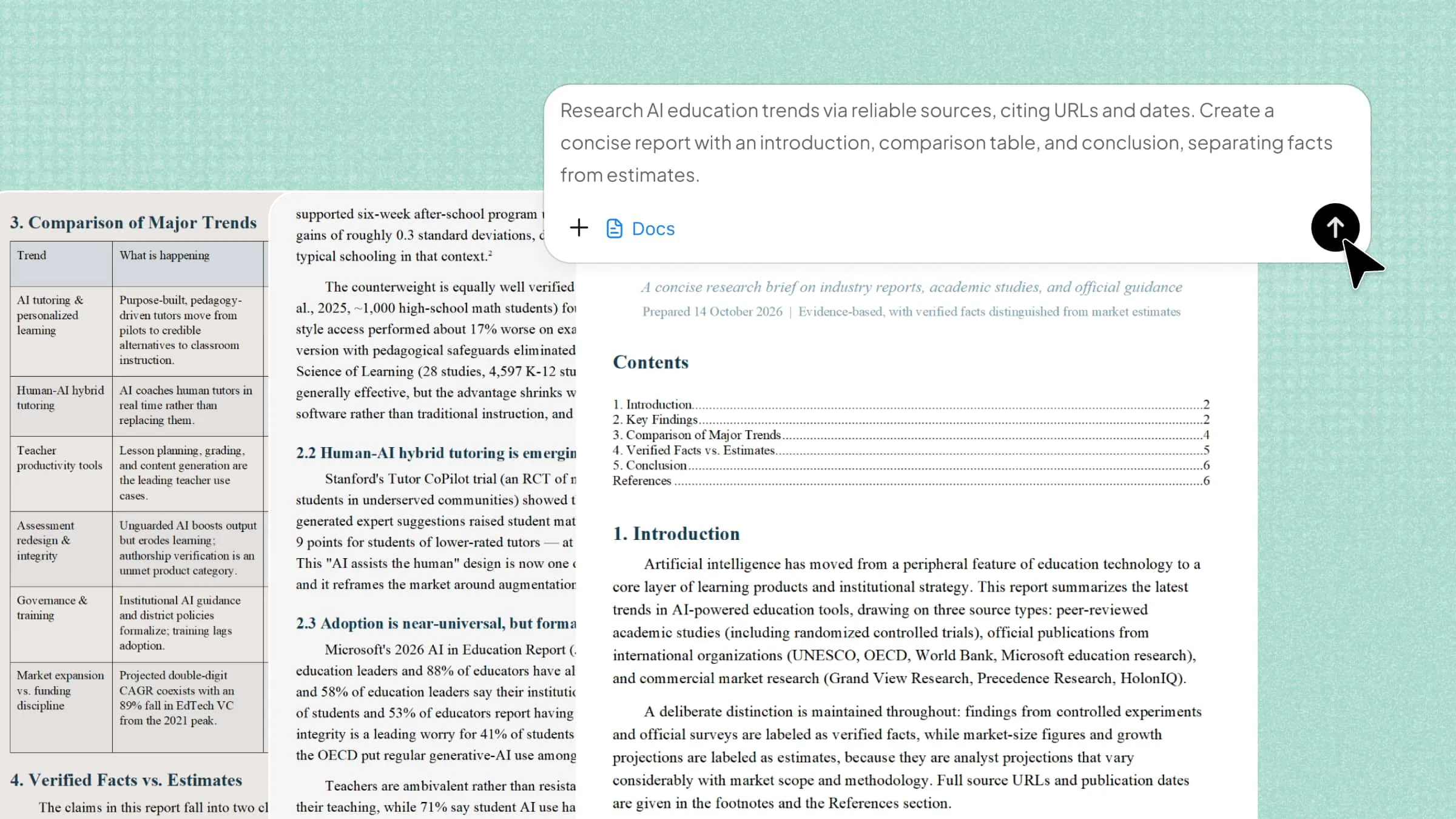
| Research essay outline | Structure an academic paper around a research question | Research question, thesis, background, literature findings, analysis, evidence, conclusion | College papers, literature-based research, academic projects |
| Critical analysis essay outline | Evaluate how a text, argument, or creative work conveys meaning | Thesis, analytical criteria, textual evidence, interpretation, evaluation, conclusion | Literary criticism, media analysis, rhetorical analysis |
10 essay outline templates for better writing
Different essays require different structures, whether the goal is to explain a topic, compare ideas, or support an argument with evidence. These 10 printable outlines for essays provide clear ways to organize a thesis statement, main points, supporting details, and a conclusion in a logical order.
To make planning easier, Kimi Docs, an AI document agent, can help organize research materials, group related ideas, and develop key points into a structured draft. You can then review the content and refine the outline to match your topic and writing goals.
Argumentative essay outline
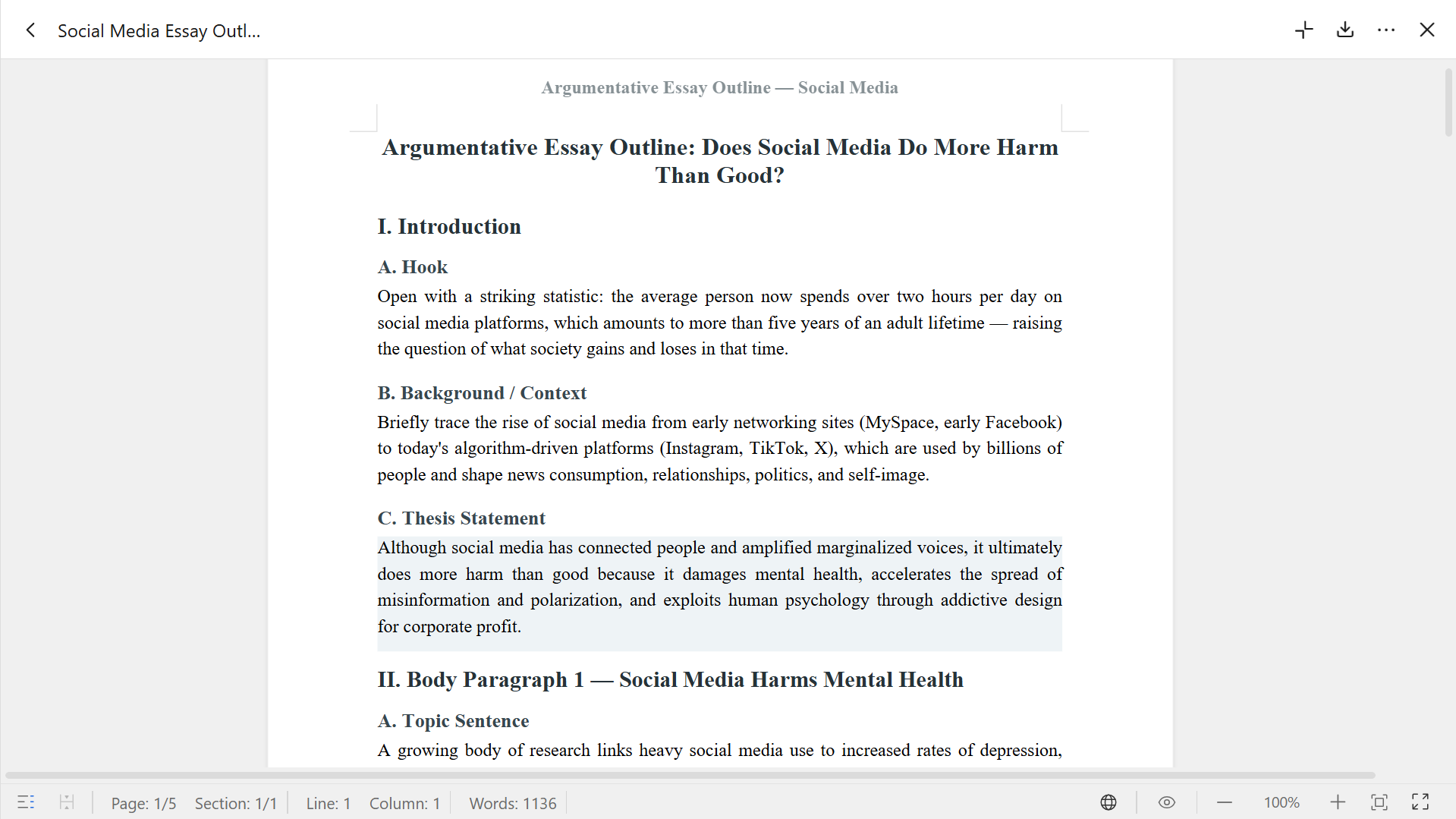
An argumentative essay outline helps you build a strong case by organizing your main claim, supporting reasons, and credible evidence. A well-designed outline template for an argumentative essay also includes counterarguments and responses, which allows you to address opposing views and strengthen your position with logical reasoning.
How to use
Step 1: Enter your prompt
Specify your argumentative essay topic, position, supporting reasons, and any opposing views to include.
Prompt:
Step 2: Let AI generate your Word
Kimi Docs arranges your claim, evidence, counterarguments, and rebuttals into a logical essay structure.
Step 3: Review and export the Word
Check the order of your arguments, refine supporting points, and export the completed outline as a Word document.
Expository essay outline
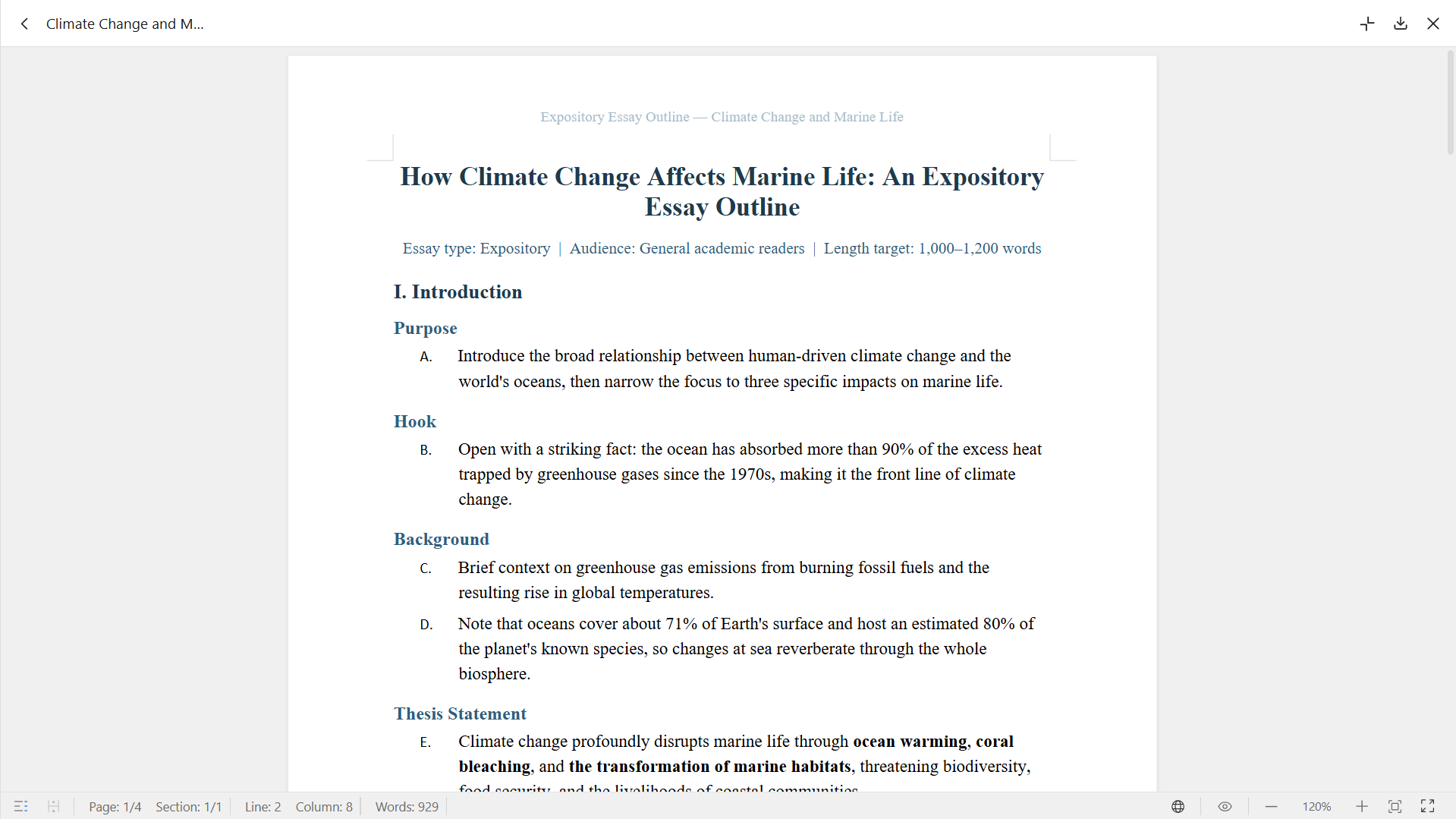
An expository essay outline helps plan an explanation around a specific purpose, such as describing a process, comparing two subjects, or examining cause-and-effect relationships. An informative essay outline template also helps determine where definitions, research findings, and real-world examples will best clarify the subject for readers.
How to use
Step 1: Enter your prompt
Describe your essay topic, the purpose of the explanation, and the key points or questions the outline should cover.
Prompt:
Step 2: Let AI generate your Word
Kimi Docs uses your prompt to organize the topic into an introduction, focused body sections, and a conclusion, with relevant details under each heading.
Step 3: Review and export the Word
Check the sequence of sections, verify factual details, and revise any missing points. Export the completed outline as a Word document for further editing.
Persuasive essay outline
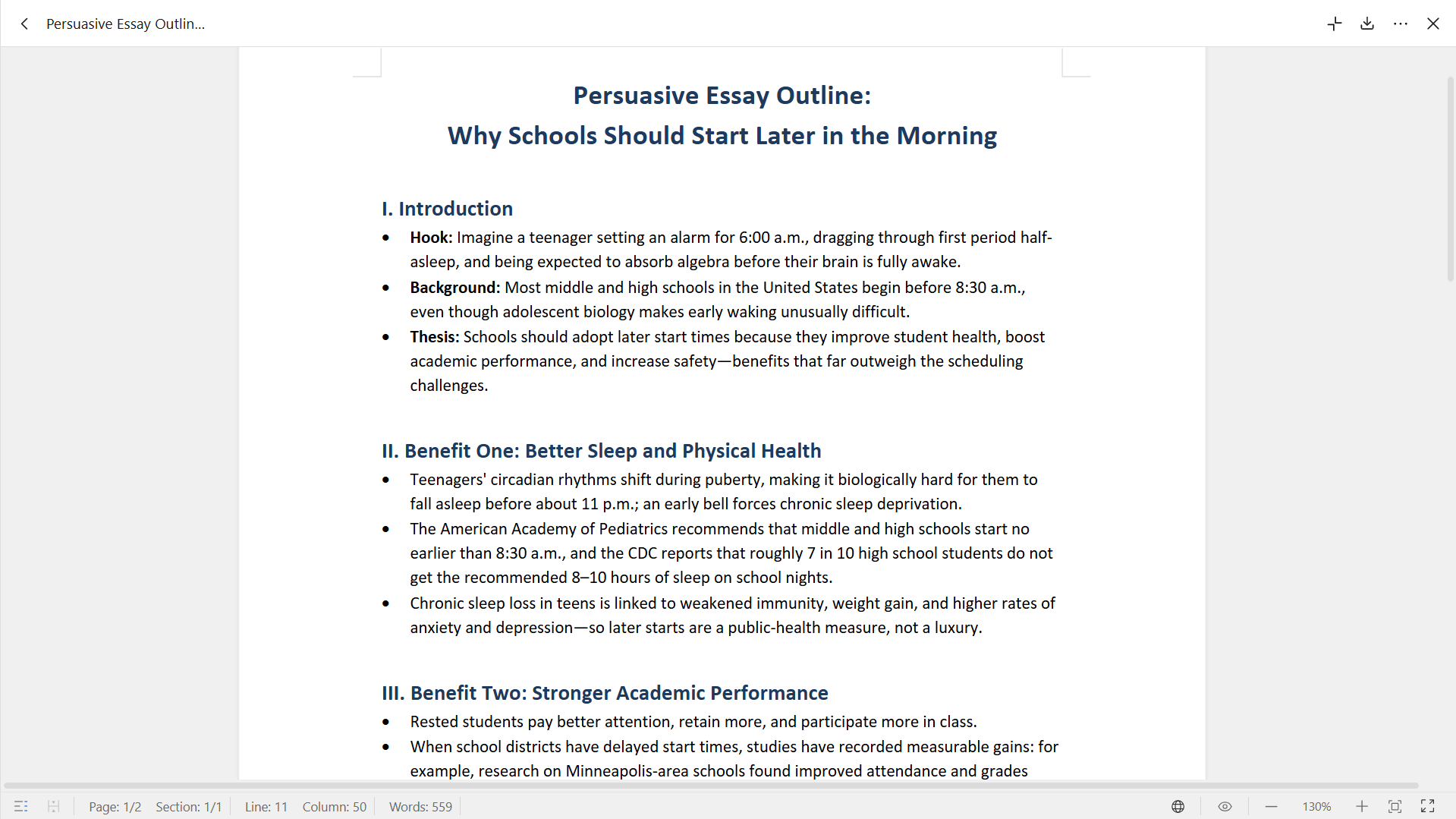
A persuasive essay outline template helps organize your main claim, supporting reasons, and evidence to convince readers to consider your viewpoint. It also guides you in adding relevant examples, addressing opposing views, and ending with a strong conclusion that reinforces your message.
How to use
Step 1: Enter your prompt
Enter a detailed prompt that defines your topic, states your position, and highlights the key arguments that could convince readers.
Prompt:
Step 2: Let AI generate your Word
Kimi Docs turns the prompt into an outline with a central argument, supporting paragraphs, an opposing viewpoint, and a closing section.
Step 3: Review and export the Word
Assess whether the evidence supports each point, adjust the order where needed, and save the approved outline in Word format.
Narrative essay outline
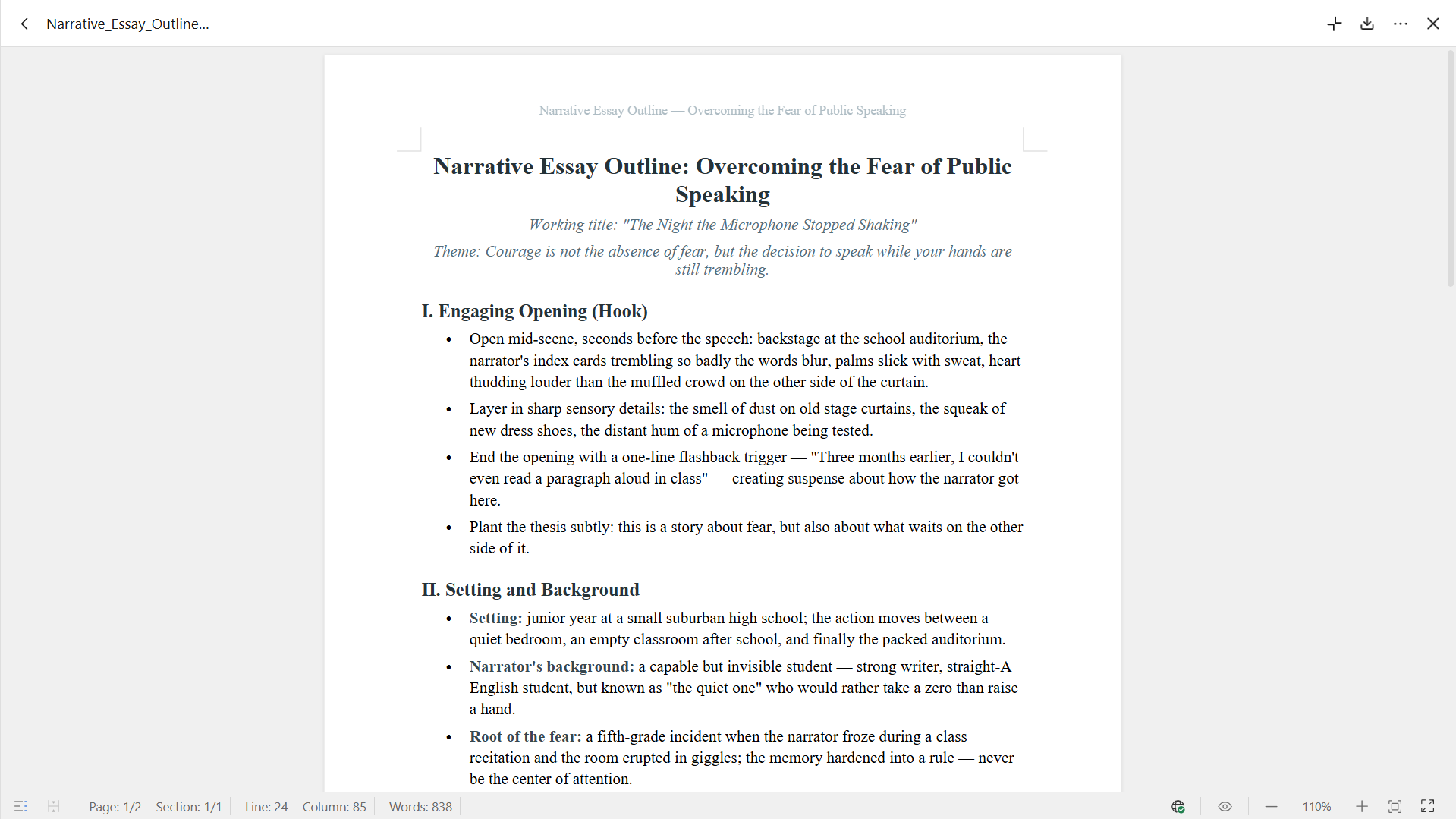
Narrative essay outline templates organize a story's key elements, from the setting and characters to the central conflict and resolution. They show how events connect, how character reactions shape the story, and how the ending reveals the significance of the experience.
How to use
Step 1: Enter your prompt
Describe the personal experience, main challenge, key events, and intended message to define the direction of your narrative essay.
Prompt:
Step 2: Let AI generate your Word
Kimi Docs transforms your prompt into an organized story outline with a clear beginning, turning point, and resolution.
Step 3: Review and export the Word
Refine the event sequence and story details, then export the completed outline in Word format for further writing.
Descriptive essay outline
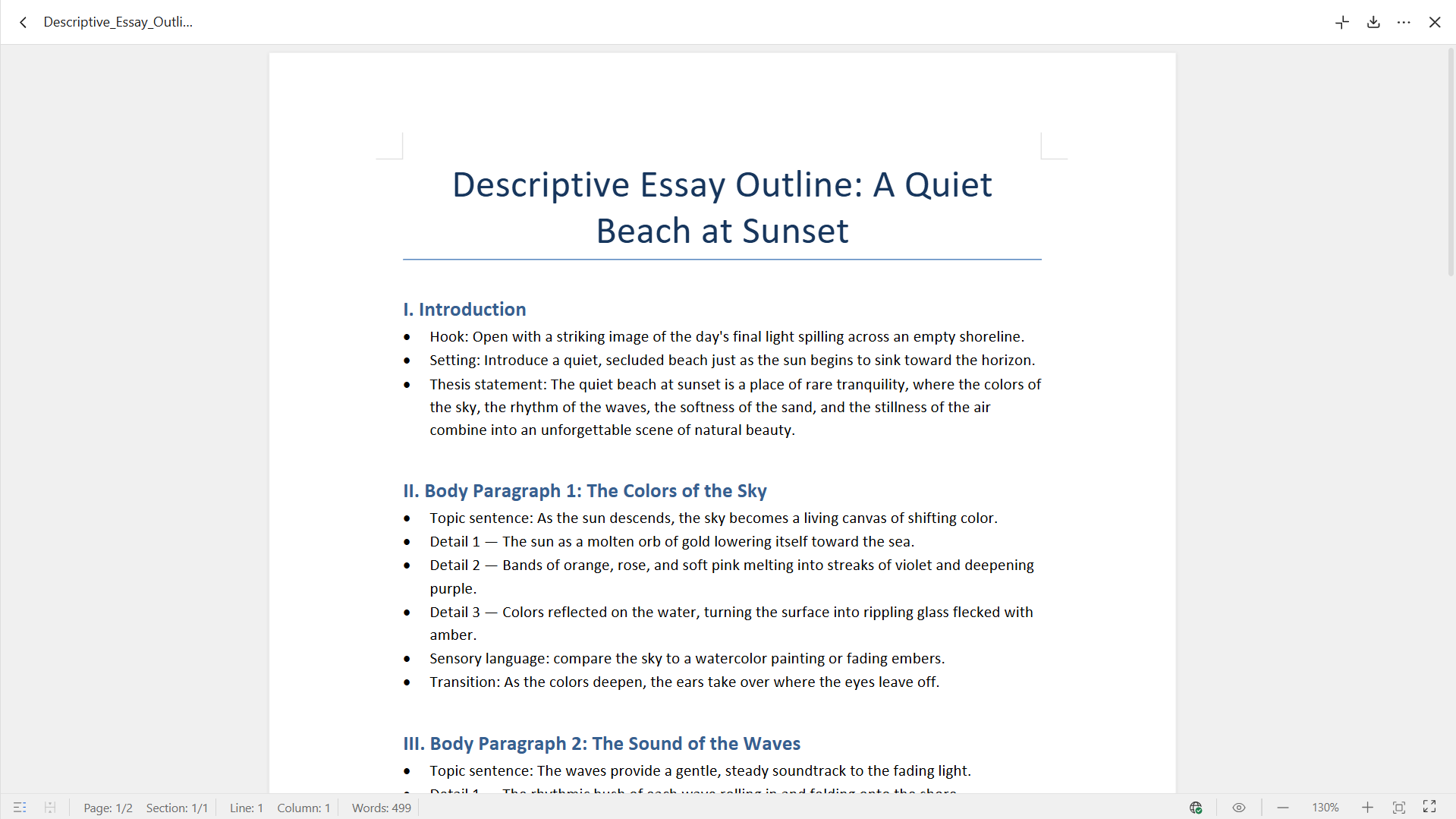
A short essay outline template helps organize a subject's physical features, sensory details, and atmosphere in a logical sequence. For example, a description of a place might begin with its overall appearance before exploring specific sounds, textures, and smells, giving readers a clear and vivid impression without unnecessary details.
How to use
Step 1: Enter your prompt
Write a prompt that describes the subject, its key features, the sensory details to include, and the overall impression you want to create.
Prompt:
Step 2: Let AI generate your Word
After submitting, let Kimi Docs turn your prompt into an outline with clear headings and grouped descriptive details for each section.
Step 3: Review and export the Word
Check that the details match your subject, adjust any missing points, and export the outline as a Word document for editing.
Compare and contrast essay outline
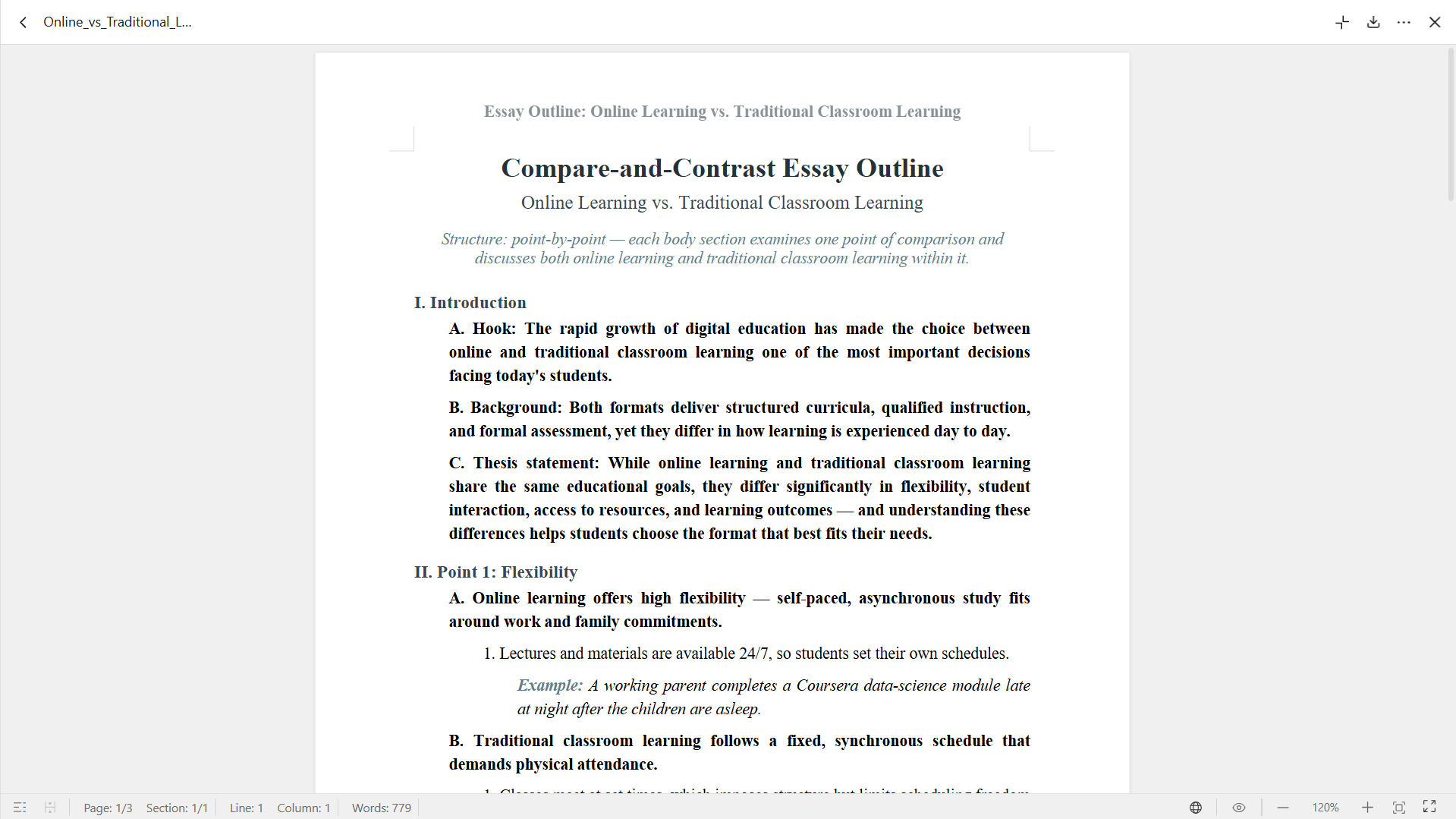
An outline for a compare-and-contrast essay organizes two subjects using either a point-by-point structure, which examines each feature side by side, or a block structure, which discusses one subject before the other. Both approaches help present similarities, differences, and supporting examples in a logical order to make the comparison easier to follow.
How to use
Step 1: Enter your prompt
Type the two topics, list the aspects to compare, and specify how you want the similarities and differences organized.
Prompt:
Step 2: Let AI generate your Word
Kimi Docs builds an essay framework that groups similarities and differences under relevant headings.
Step 3: Review and export the Word
Verify the comparisons, adjust any sections that need improvement, and save the finished outline as a Word document.
Cause and effect essay outline
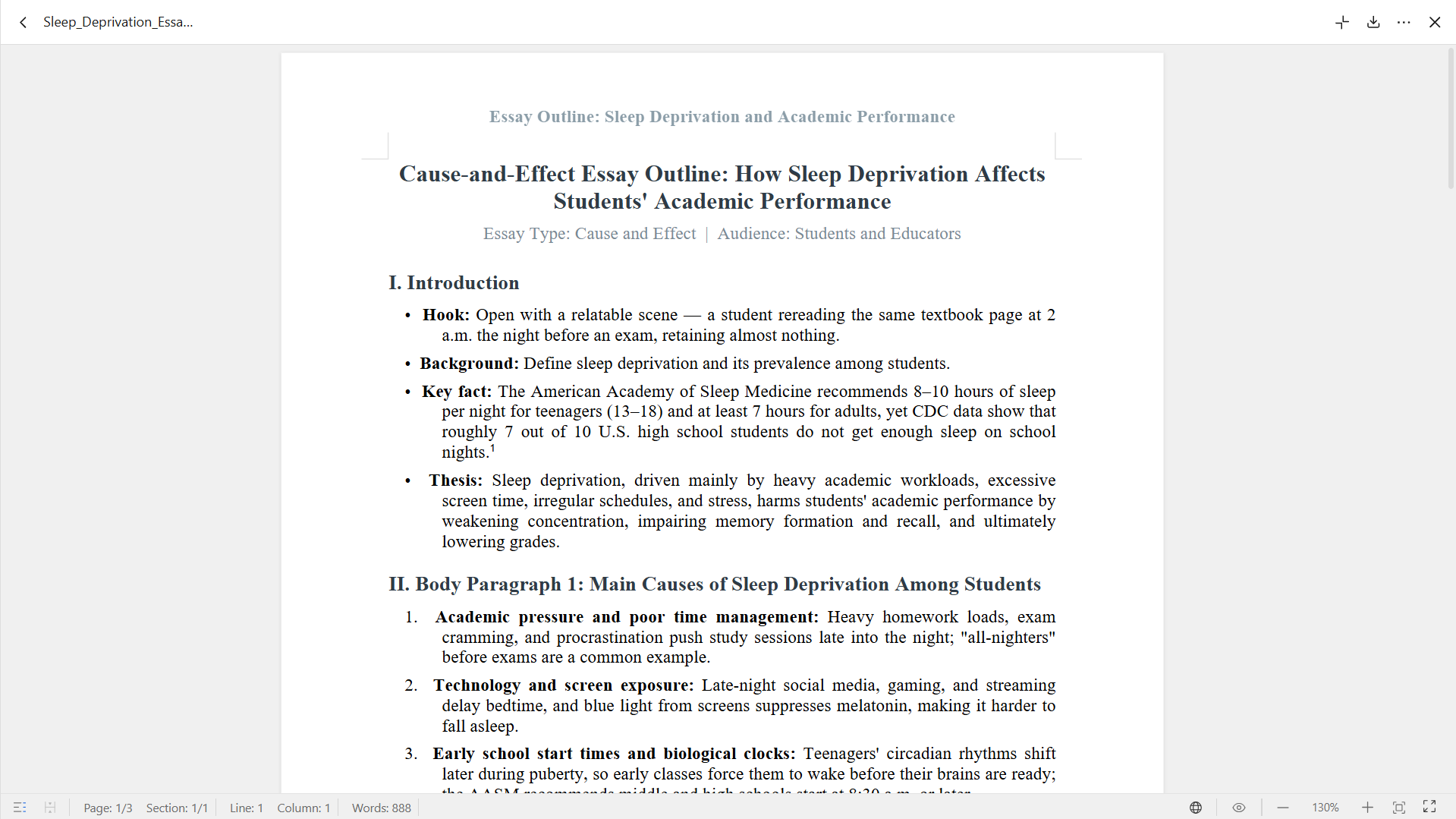
A cause and effect essay outline separates the root causes of an issue from its immediate and long-term consequences. This essay writing outline template helps explain how different factors contribute to a problem, connect each cause with its outcomes, and support those links with relevant evidence or real-world examples.
How to use
Step 1: Enter your prompt
Add your essay topic, the causes you want to examine, and the outcomes that need explanation.
Prompt:
Step 2: Let AI generate your Word
Kimi Docs converts your input into an essay plan that links contributing factors with their consequences.
Step 3: Review and export the Word
Check the accuracy of each connection, polish the section order, and export the document for your assignment.
Problem and solution essay outline
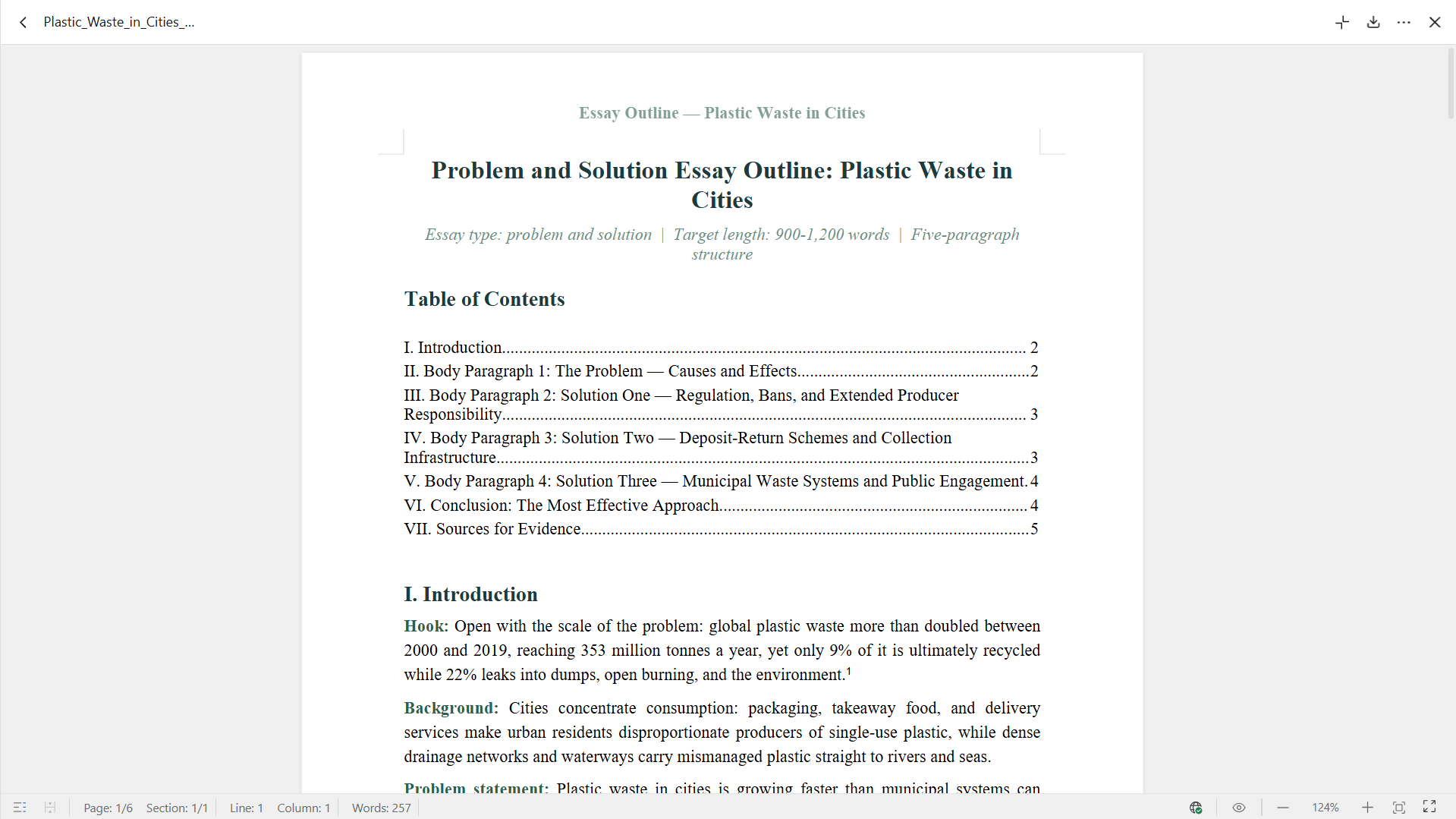
A problem and solution essay outline identifies an issue, examines its underlying causes, and presents practical ways to address it. Students can use an essay outline template for college to organize supporting evidence, compare possible solutions, and explain their expected outcomes in a clear, logical structure.
How to use
Step 1: Enter your prompt
Add the essay topic, the problem to address, its main causes, and the solutions you want to explore.
Prompt:
Step 2: Let AI generate your Word
Kimi Docs converts your instructions into a structured outline that connects the problem with practical solutions and their expected results.
Step 3: Review and export the Word
Adjust the section order, fill in any gaps in the content, and save the finished outline as a Word file.
Research essay outline
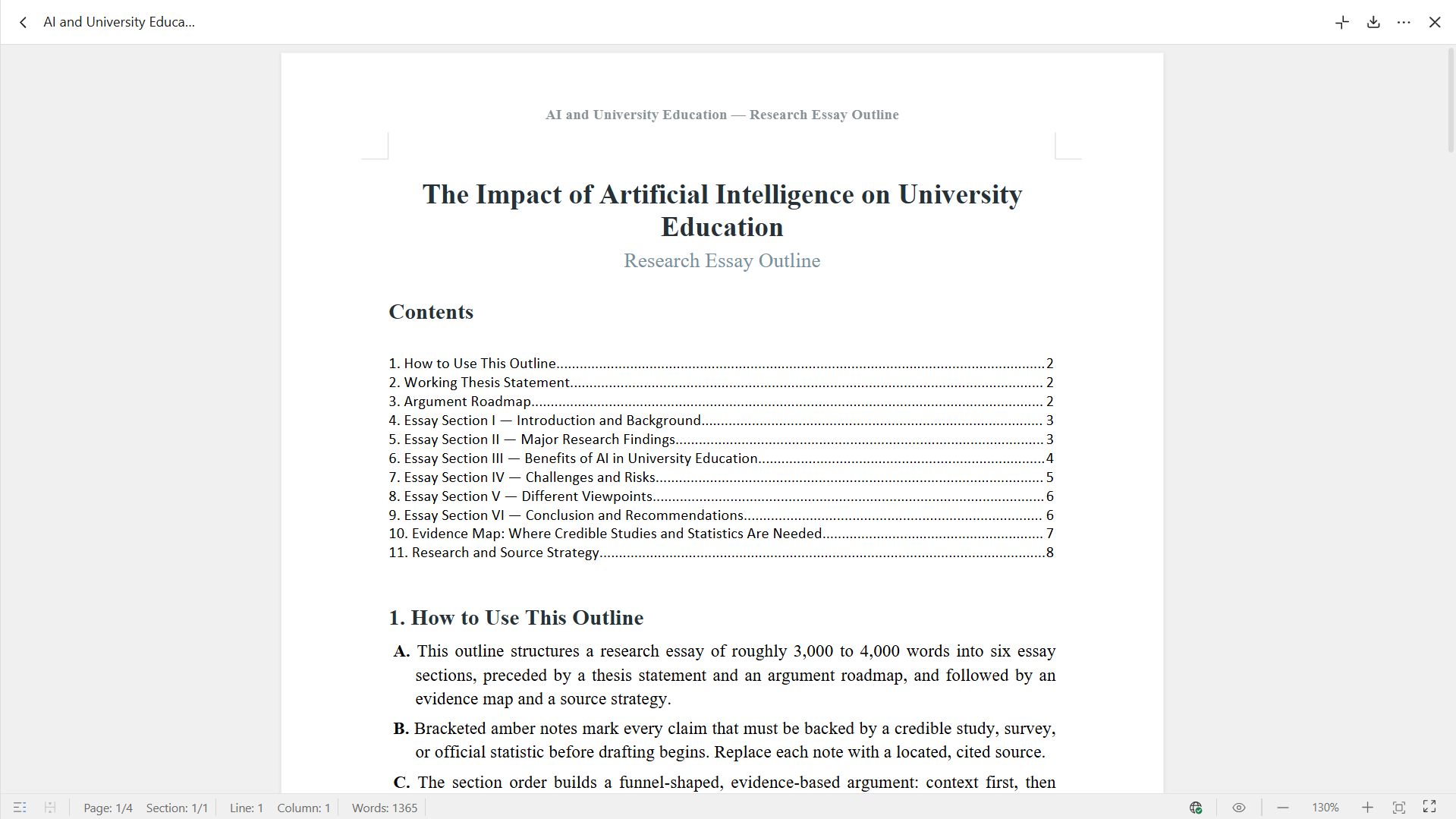
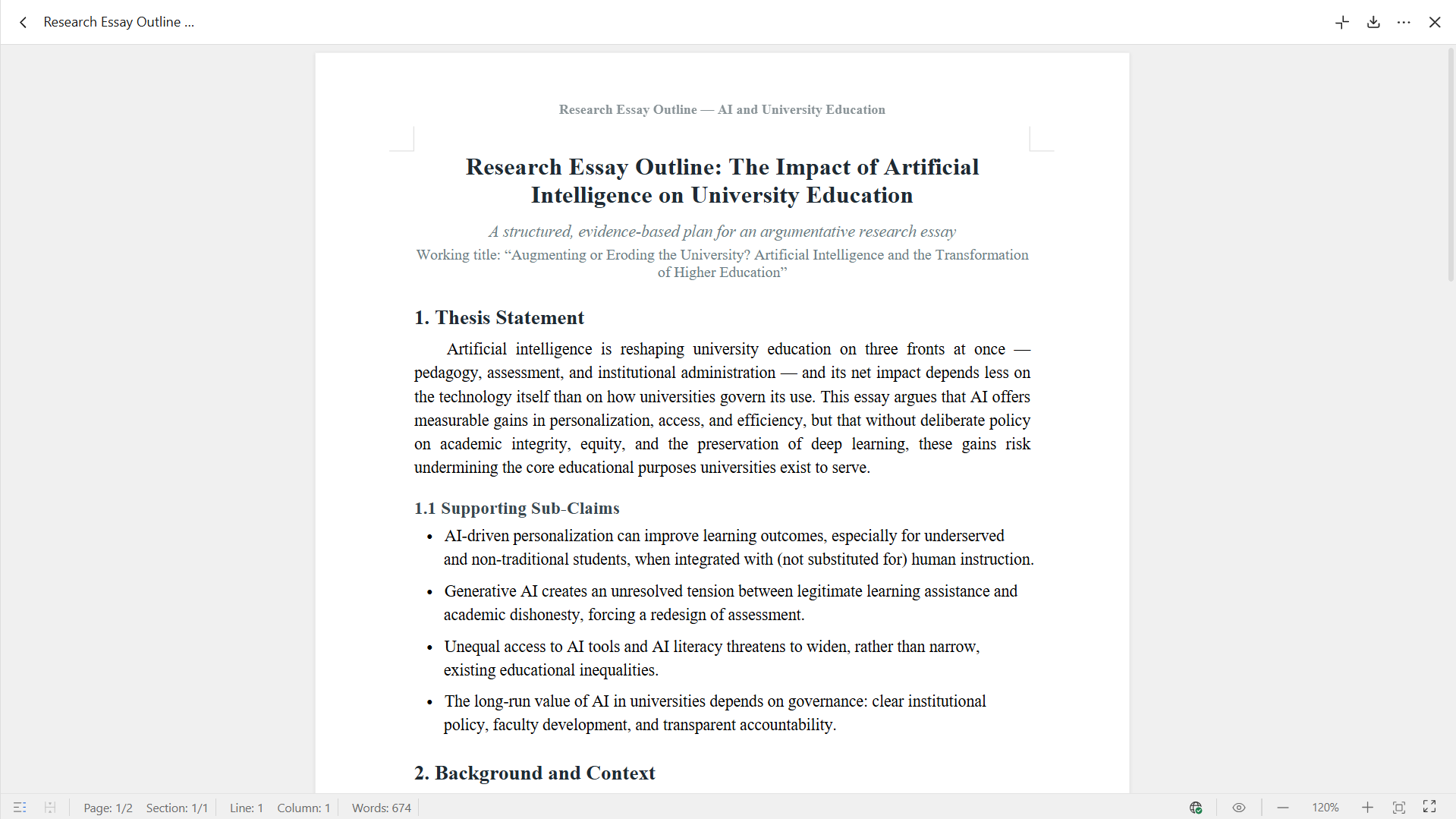
A research essay outline establishes the logic of an academic paper by linking the research question, thesis, literature findings, and analysis. A research essay outline template also helps distinguish established knowledge from unresolved questions, compare evidence across sources, and show how each section contributes to answering the central research question.
How to use
Step 1: Enter your prompt
Enter a detailed prompt outlining your research topic, key questions, and required sections, then upload relevant documents or reference materials to guide the outline.
Prompt:
Step 2: Let AI generate your Word
Kimi Docs organizes your research question into sections and places the main arguments and evidence requirements under relevant headings.
Step 3: Review and export the Word
Check the source requirements, refine the thesis and section order, then export the outline as a Word file for further research and writing.
Critical analysis essay outline
A critical analysis essay explores how an author builds an argument, uses evidence, and influences the reader's understanding of a subject. An essay paper outline template provides a framework for examining these choices, testing the strength of the reasoning, and supporting your interpretation with specific examples rather than relying on personal opinion alone.
How to use
Step 1: Enter your prompt
Specify the text you want to analyze, the author's main argument, and the aspects you want to evaluate, such as evidence, tone, or reasoning.
Prompt:
Step 2: Let AI generate your Word
Kimi Docs converts your prompt into an analysis framework, grouping the author's techniques, textual examples, and interpretations into relevant sections.
Step 3: Review and export the Word
Confirm that each observation has textual support, strengthen the analysis where needed, and export the outline as a Word file.
Why choose Kimi Docs for essay outline creation
Kimi Docs supports essay planning with features that turn initial ideas into a clear, well-organized essay outline template, keep research materials accessible, and help refine the document's structure. Here are the key features that make it useful for creating effective essay outlines.
Adapt outlines to different essay types: Create outlines for argumentative, expository, persuasive, narrative, descriptive, compare-and-contrast, cause-and-effect, and problem-and-solution essays. Each format generated follows a structure suited to its purpose and is arranged according to the thesis, main points, and supporting details logically.
Support research with traceable academic sources: Access academic research and paper-related information from scholarly databases to find relevant studies and evidence for your essay. Use source-backed findings to strengthen your arguments and support key claims, while checking original papers and citations for accuracy.
Create well-structured, high-quality essay content: Turn your topic, research question, or assignment requirements into a well-organized essay outline and coherent content with clear arguments, relevant supporting points, and smooth transitions, giving you a solid foundation for a more compelling, well-reasoned essay.
Format essays for academic requirements: Organize essay content to align with academic writing conventions and paper-formatting requirements. Structure headings, sections, citations, and references according to the required format to create a more consistent draft. Review the final document against your institution's specific guidelines.
Revise drafts and compare different versions: Improve existing content by refining sentences, rearranging sections, and strengthening arguments. Kimi Docs revision and comparison functions help examine differences between drafts, review alternative edits, and identify changes that improve the essay's organization and clarity.
Write and refine essays in multiple languages: Prepare and edit essay content in different languages while maintaining clear expression and a consistent tone. Language refinement helps make complex ideas easier to understand without losing their intended meaning.
Key practices for structuring an essay outline
Effective essay planning requires more than listing ideas; Each point needs a clear place in the overall argument. The following practices help structure your outline, connect related points, and build a coherent essay.
Start with a clear thesis statement: Define the central argument or purpose of your essay in one focused sentence. A clear thesis gives direction to the outline and helps determine which points deserve attention.
Organize main points in order: Arrange the main ideas in a sequence that makes sense for your topic. A logical order helps readers follow your reasoning as the discussion moves from one point to the next.
Add relevant supporting details: Include examples, facts, explanations, or research findings that develop each main point. Relevant details make your arguments more convincing and show how each section supports the thesis.
Keep each section well balanced: Give each main point enough space to explain its importance without allowing one section to dominate unnecessarily. Adjust the number of supporting details according to the complexity and relevance of each idea.
Use concise and clear language: Write short phrases or sentences that communicate the purpose of each section. Avoid unnecessary explanations at the outlining stage, so the main ideas remain easy to scan and develop later.
Connect ideas with smooth transitions: Plan how one section leads to the next to prevent abrupt shifts in the discussion. Logical connections help maintain continuity and make the essay easier to follow from beginning to end.
Include evidence for key arguments: Identify credible sources, relevant statistics, specific examples, or research findings that support your major claims. Marking the evidence in your outline also helps reveal arguments that need stronger justification.
Review the outline for clarity: Check whether the thesis, main points, and supporting details work together to address the essay topic. Remove unrelated ideas, resolve overlapping points, and fill in any gaps before beginning the full draft.
Conclusion
The right essay outline template depends on the type of essay you need to write and the information you want to present. Use these 10 formats to find a suitable structure, then adjust the sections to fit your topic and assignment requirements. Kimi Docs can help organize your ideas and research into an outline, so choose your preferred format and start planning your essay with a clear direction.