AI for digital marketing is changing how businesses attract customers, create content, and manage campaigns. However, choosing the right tools from so many options can be challenging. This guide explores 10 powerful AI tools for digital marketing, their key features, and practical uses to help you simplify marketing tasks, improve efficiency, and make smarter decisions.
What is AI for digital marketing
AI for digital marketing is the use of artificial intelligence to plan, manage, and improve online marketing activities. It helps businesses create content, analyze customer behavior, personalize advertisements, and automate repetitive tasks. By using AI tools, marketers can better understand their target audience, make informed decisions, and improve campaign performance while saving time and effort.
Overview of 10 AI tools for digital marketing
These 10 AI tools support different aspects of digital marketing, from content creation and SEO to campaign analytics and customer engagement. The comparison below highlights their core capabilities, suitable marketing tasks, ease of use, and free access options to help you find the right tools for your needs.
| Tool | Primary focus | Key capabilities | Suitable marketing tasks | Learning curve |
|---|---|---|---|---|
| Kimi Work | AI agentic workspace | Multi-step task execution, web research, file analysis, report generation | Competitor research, keyword analysis, campaign planning, marketing data analysis | Moderate |
| Jasper | AI marketing content | Content generation, brand voice control, content repurposing | Blog writing, ad copy, social media content, email campaigns | Low to moderate |
| Surfer SEO | SEO content optimization | SERP analysis, keyword recommendations, content scoring, on-page optimization | Content audits, article optimization, organic search strategy | Moderate |
| HubSpot | CRM and marketing automation | Contact management, email campaigns, workflow automation, campaign analytics | Lead nurturing, customer segmentation, lifecycle marketing | Moderate |
| Paradigm AI | AI-powered business research | Company research, structured data collection, market signal analysis | Prospect research, account-based marketing, audience analysis | Moderate |
| AdCreative.ai | AI advertising creatives | Ad design, copy generation, creative scoring, product visuals | Paid social campaigns, display ads, creative testing | Low to moderate |
| Mailchimp | Email marketing | Email content generation, audience segmentation, automation, campaign analytics | Newsletters, promotional emails, customer re-engagement | Low to moderate |
| Brand24 | Social listening and brand monitoring | Mention tracking, sentiment analysis, AI insights, influencer discovery | Reputation monitoring, campaign feedback, audience sentiment research | Low to moderate |
| Google Analytics 4 | Website and campaign analytics | Traffic attribution, event tracking, conversion measurement, predictive insights | SEO performance analysis, conversion tracking, campaign measurement | Moderate to high |
| Intercom | AI customer engagement | Fin AI agent, live chat, automated workflows, support analytics | Customer inquiries, website engagement, support-led conversion | Moderate |
Explore 10 powerful AI tools for digital marketing
Here's a detailed overview of each tool, including its key features and best use cases, to help you make an informed choice.
Kimi Work (AI agentic workspace)
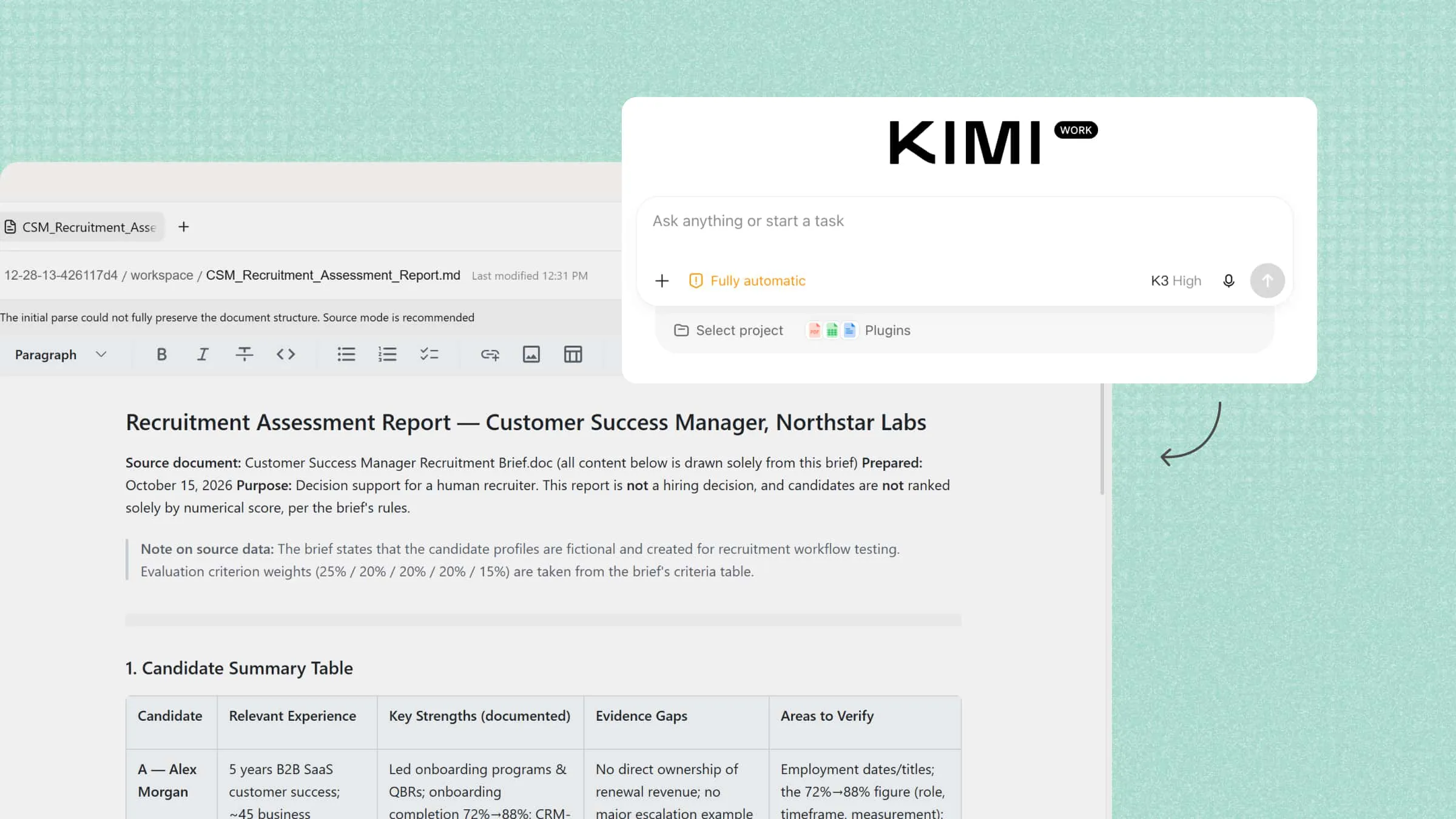
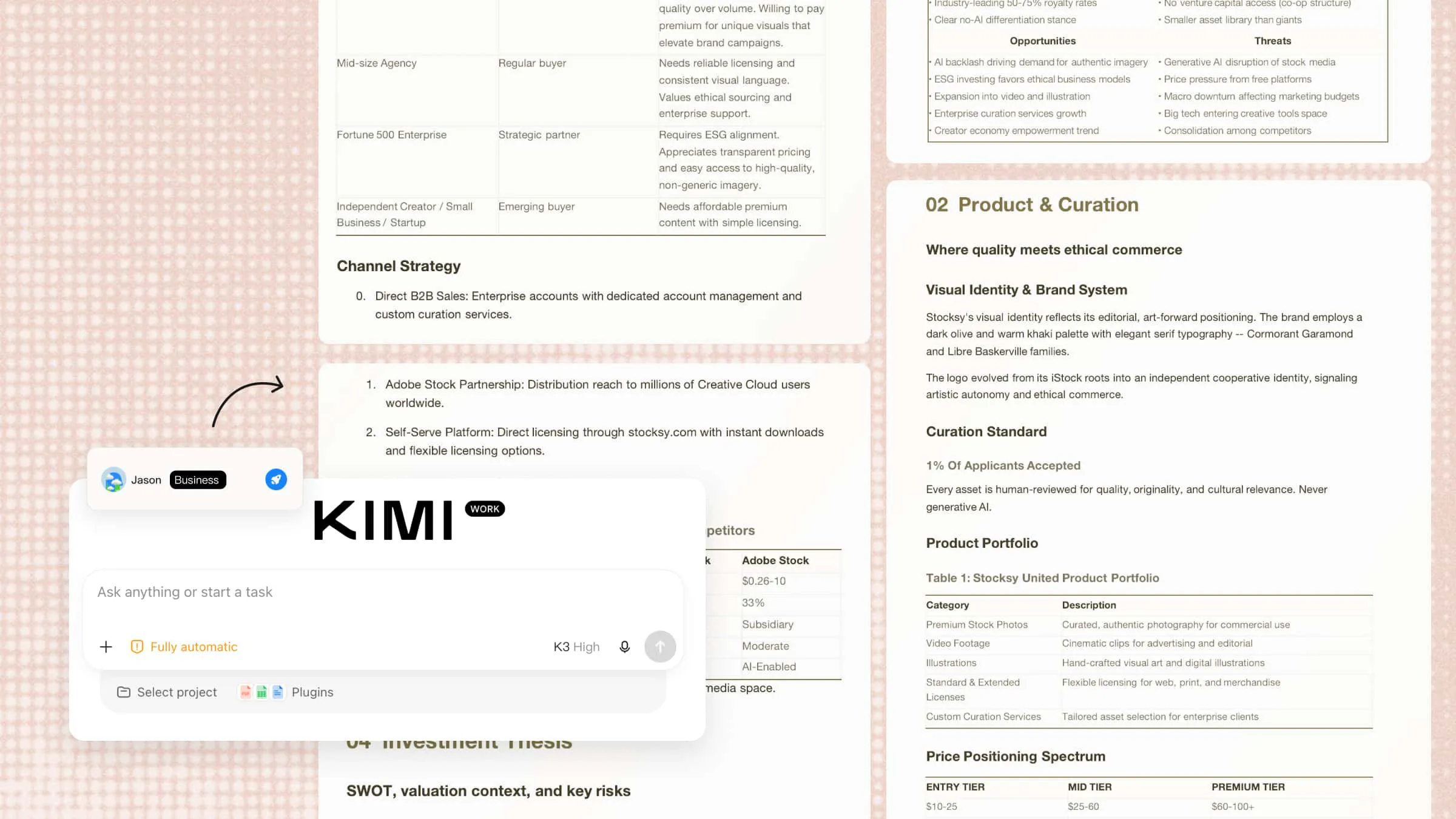
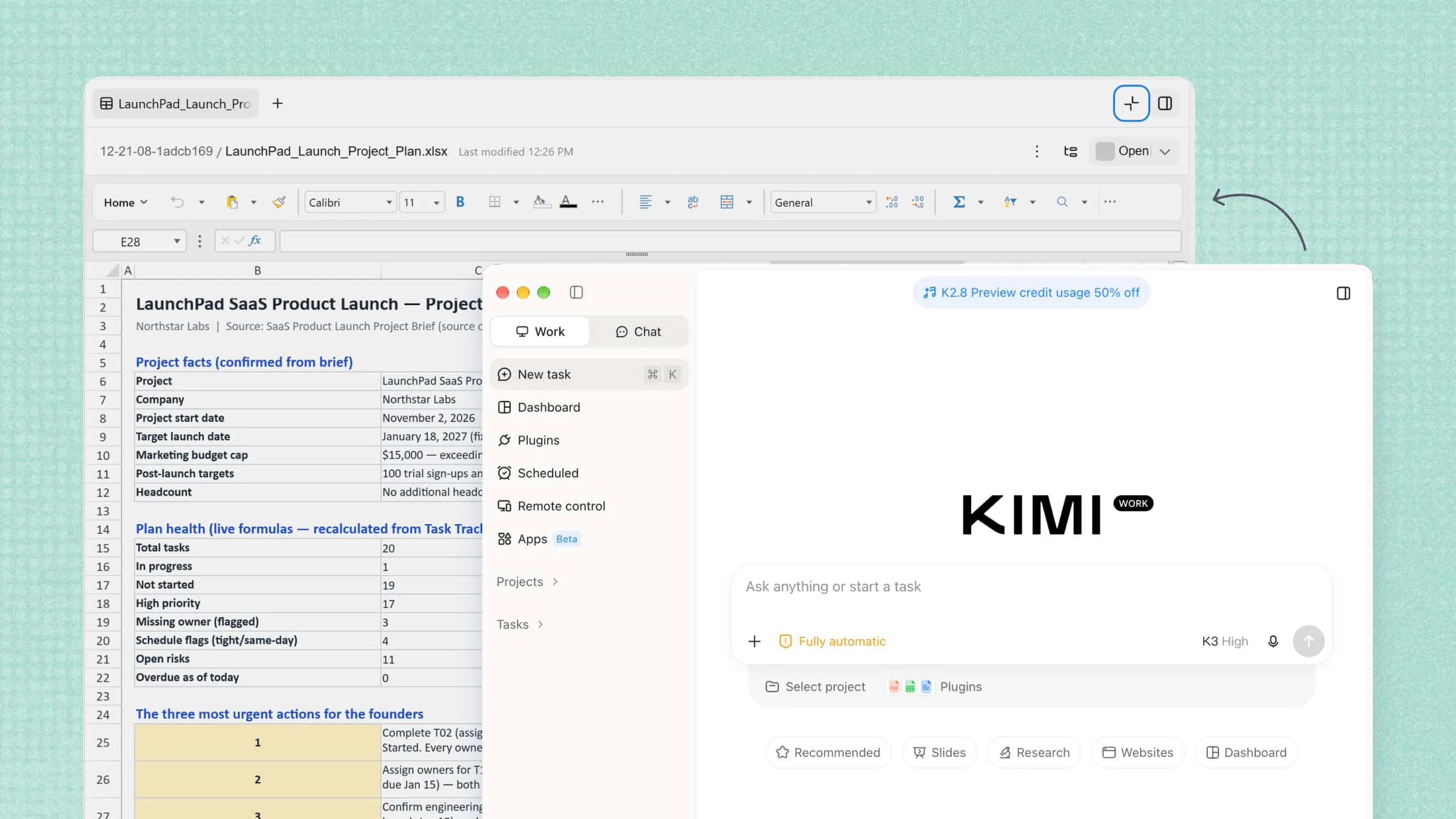
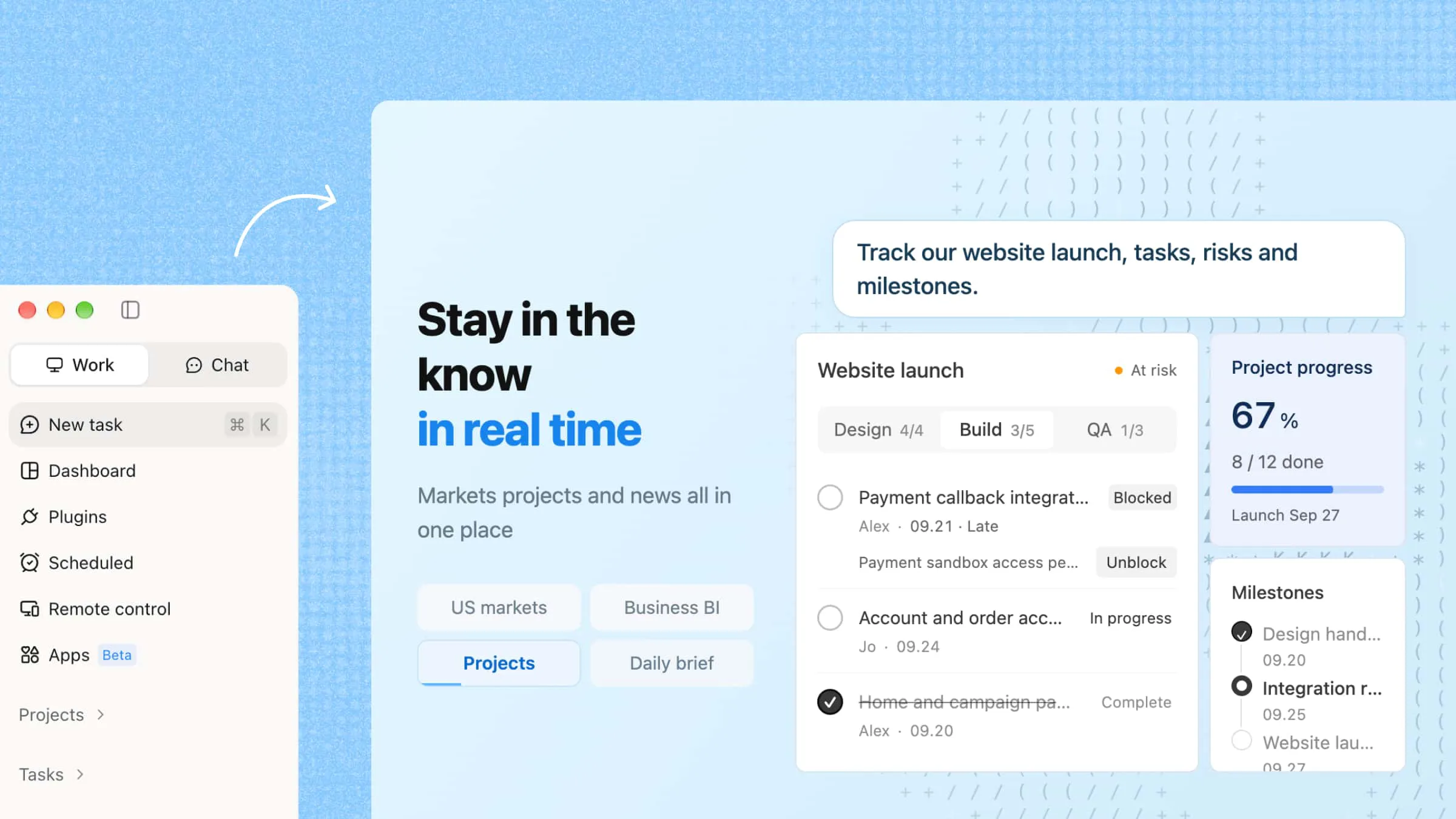
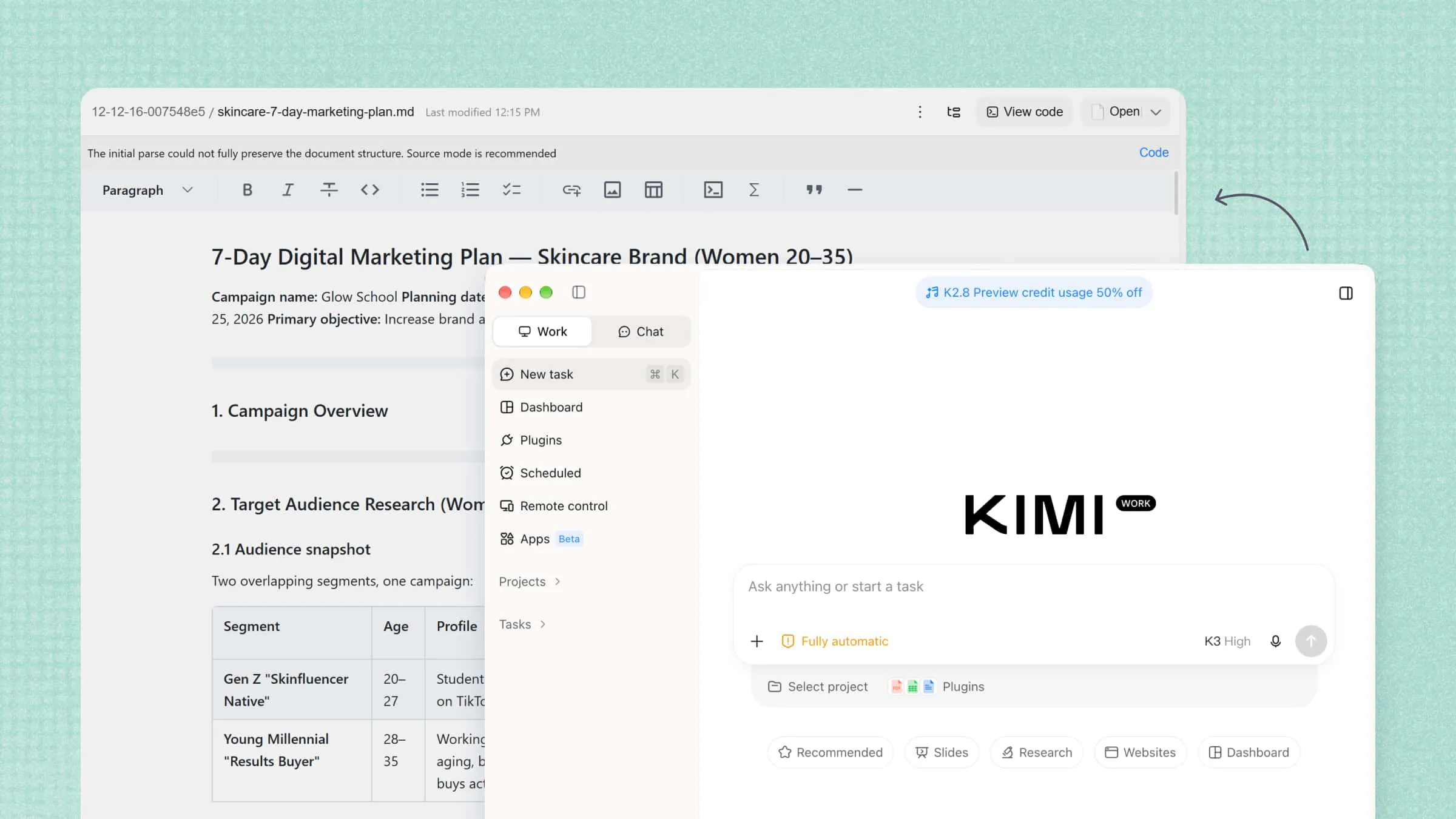
Kimi Work is an AI-powered agentic workspace that helps digital marketers manage complex, multi-step tasks with less manual effort. It can support competitor research, keyword analysis, content strategy development, and campaign planning by gathering information and turning it into structured outputs. Its ability to work with documents, spreadsheets, and presentations makes it useful for organizing marketing data and preparing reports
Main features
Turn marketing goals into actionable projects: Set a marketing objective, define acceptance criteria, and specify constraints in Goal Mode. Kimi Work can work through research, data collection, analysis, and report generation, helping you move from a broad campaign goal to concrete deliverables.
Research audiences and competitors across the web: Use the WebBridge browser automation feature to navigate websites, gather market information, examine competitor messaging, and retrieve relevant details from web pages. This helps marketers build a clearer picture of their target audience, industry trends, and competitive landscape.
Connect marketing tools and external data sources: Use Kimi Work's built-in plugins and integrations to connect with various tools and data sources, bringing relevant information together for marketing research, analysis, and reporting.
Analyze marketing data & create live marketing dashboards: Work with local files and folders to organize campaign reports, audience research, and performance spreadsheets. Kimi Work can help analyze marketing data, identify trends, and organize key metrics into dashboard-style visualizations, making it easier to track campaign performance, compare results, and identify opportunities for optimization.
Suitable for
SEO specialists conducting keyword and competitor research.
Content strategists planning content calendars and campaigns.
Marketing agencies preparing client reports and presentations.
Businesses analyzing market trends and organizing marketing data.
How to use Kimi Work for digital marketing
Follow these steps to use Kimi Work for digital marketing:
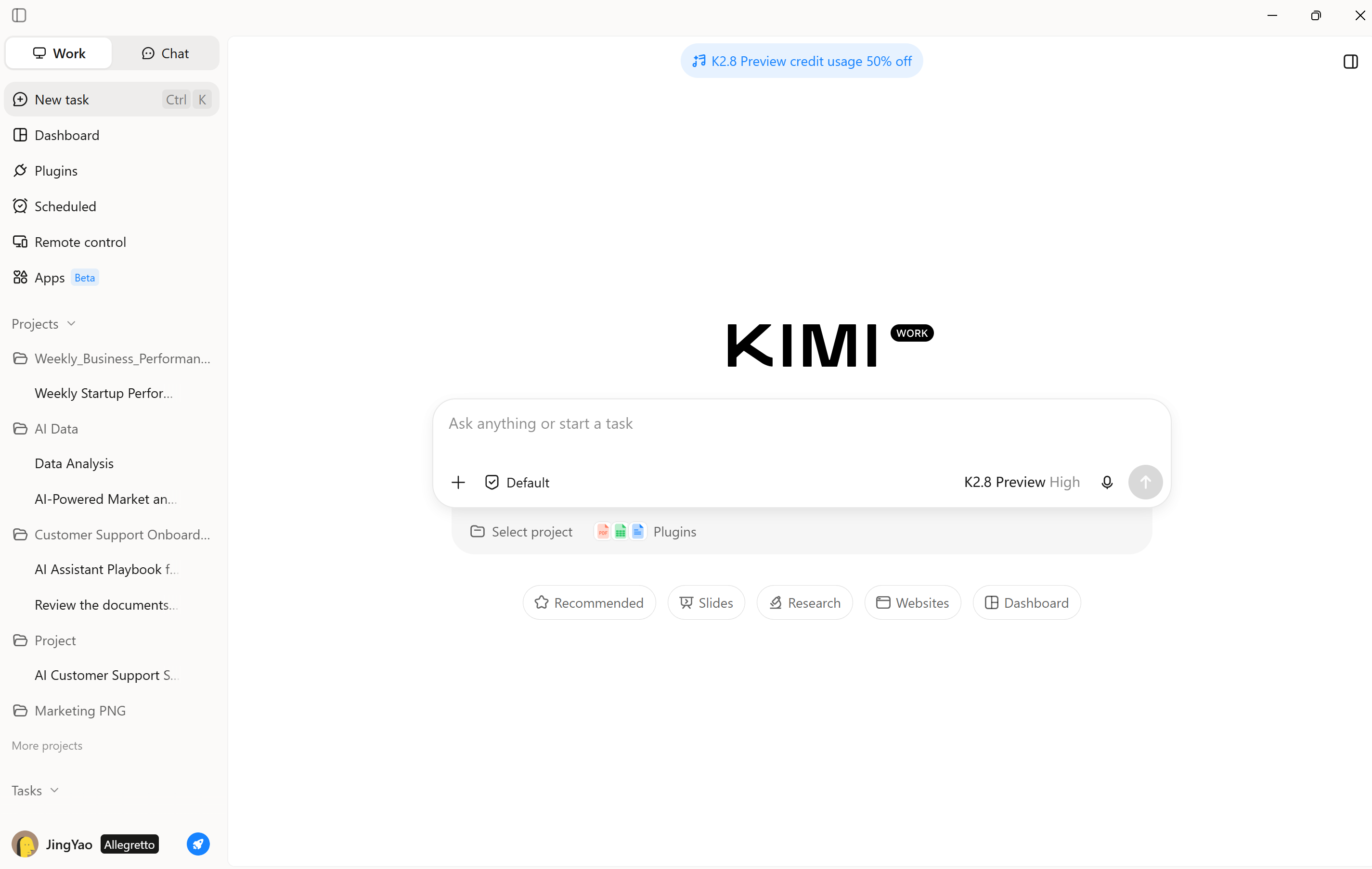
Step 1: Describe your task
Open Kimi Work, start a new task, and explain your marketing goal, target audience, preferred platforms, and expected results. A clear prompt helps the AI understand your requirements.
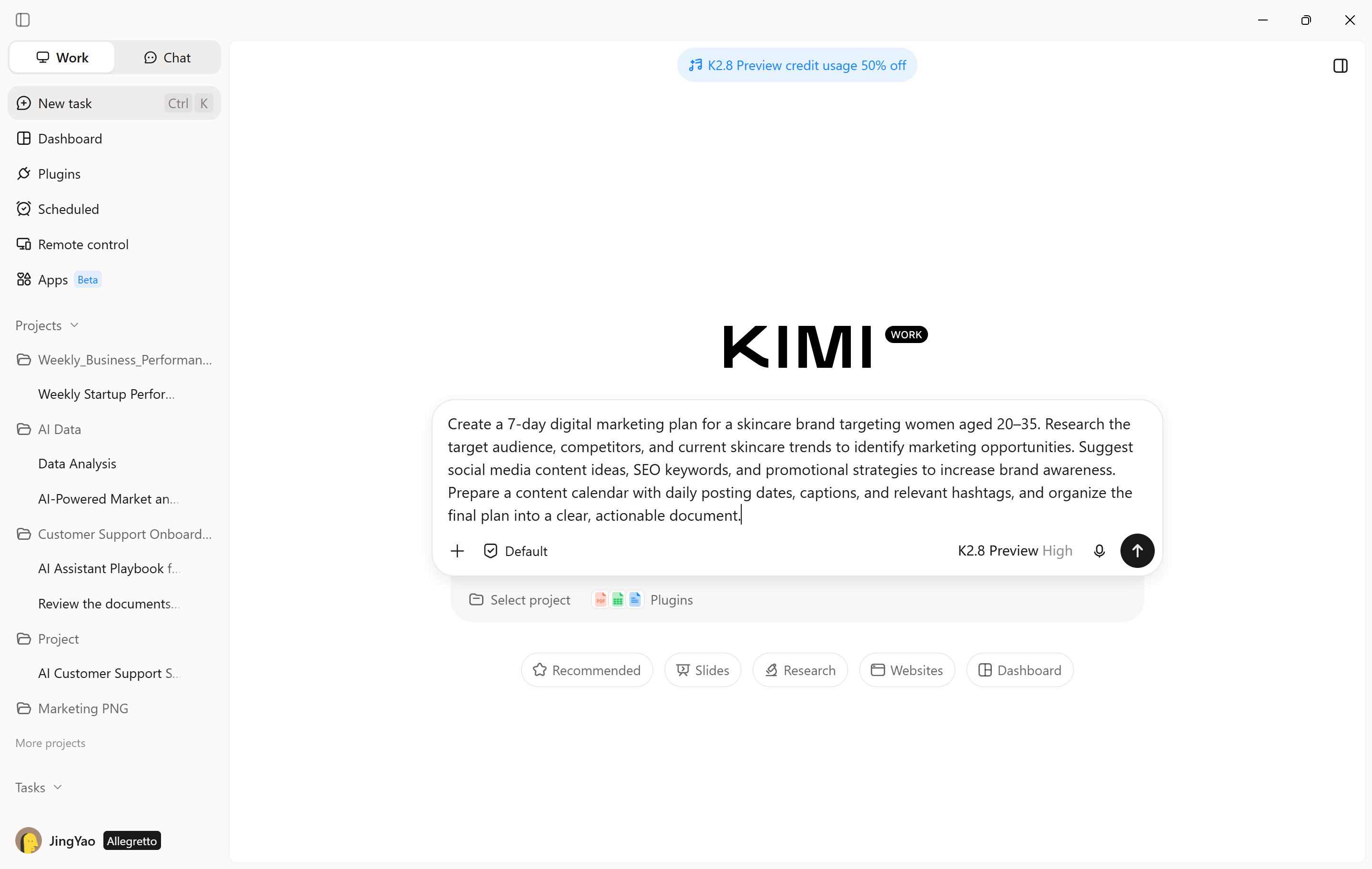
Step 2: Let AI process and generate results
Submit your prompt and allow Kimi Work to break the task into smaller steps, conduct research, and prepare the requested materials.
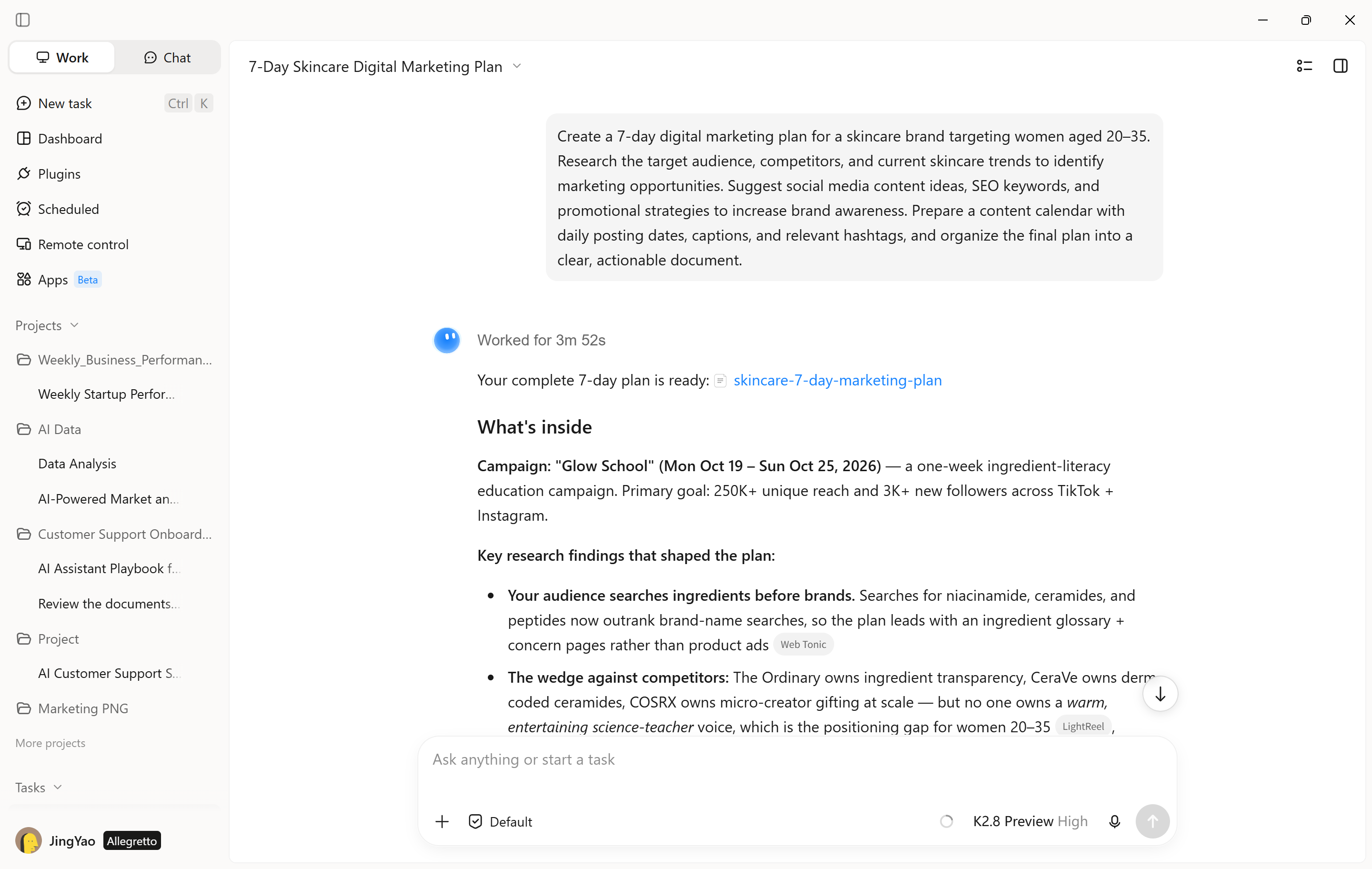
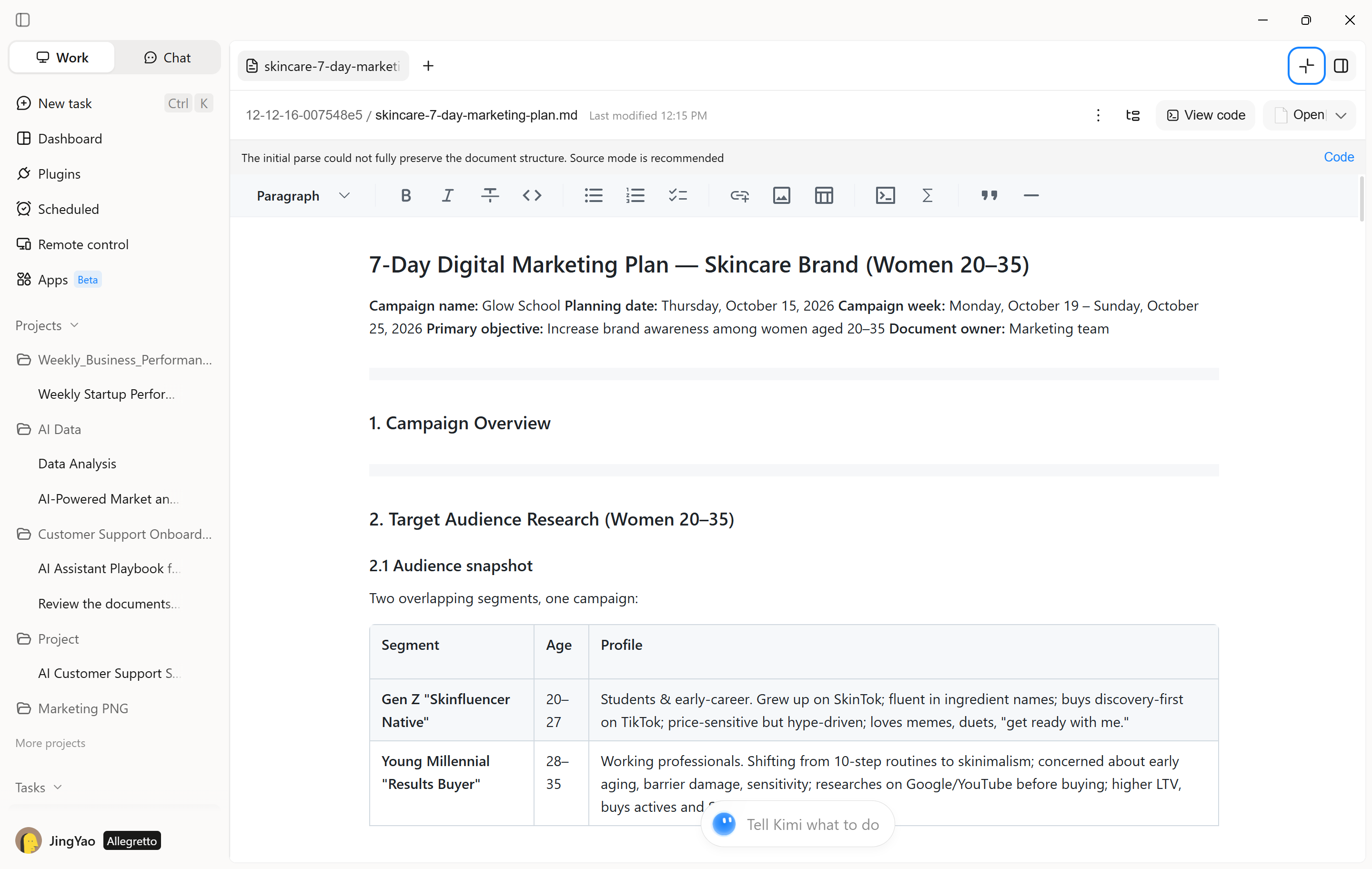
Step 3: Check your completed workflow output
Review the generated marketing plan, content calendar, keywords, and captions before using them. Edit any inaccurate or repetitive sections. Once you are satisfied with the results, save the deliverables to your project folder for implementation.
Jasper (AI marketing writing platform)
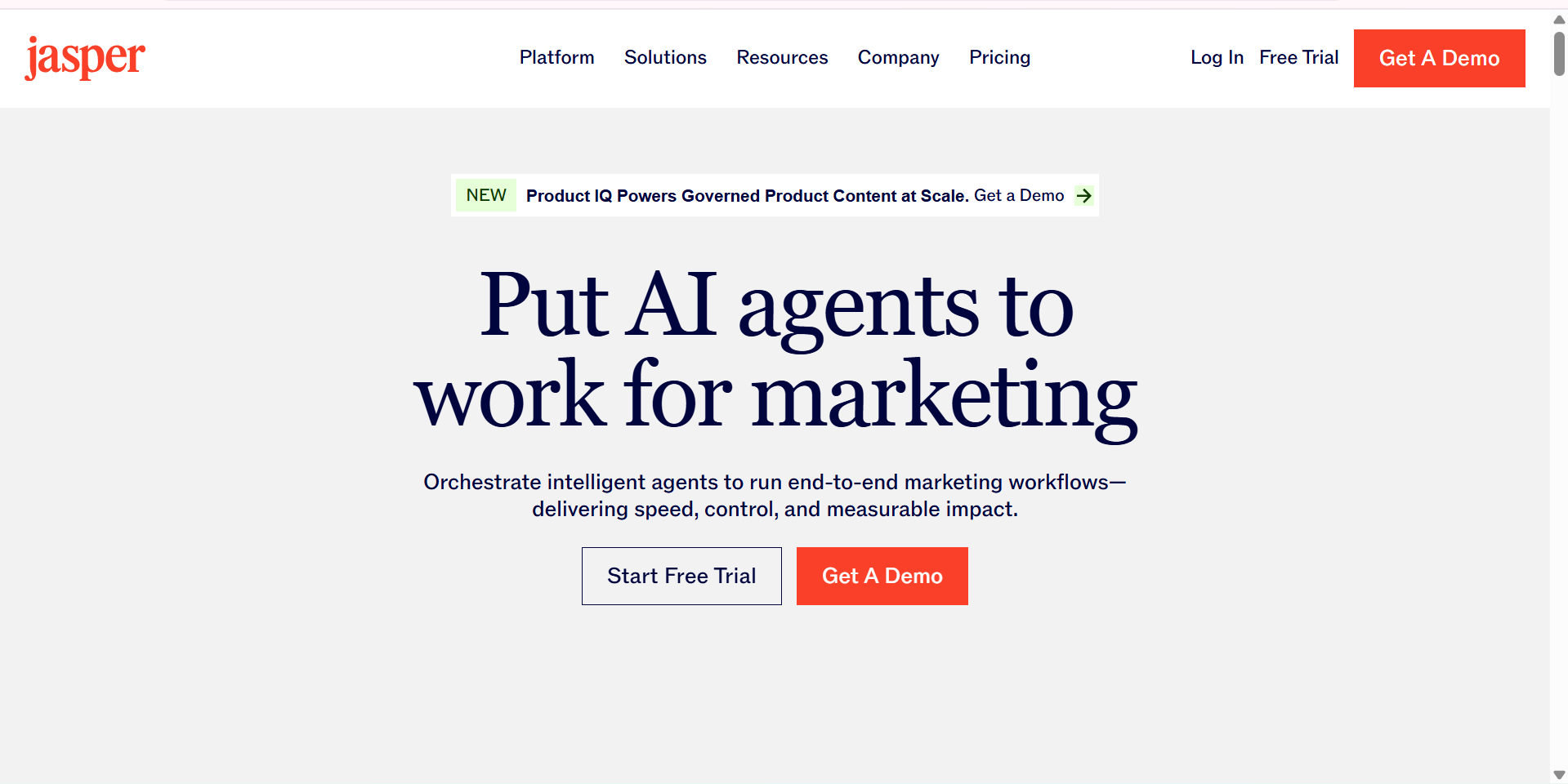
Jasper is an AI-powered content platform designed to help marketing teams create high-quality content faster. It can assist with blog posts, social media captions, advertising copy, and email campaigns. The platform also helps businesses maintain a consistent brand voice across different channels. Its marketing-focused features make it useful for teams that need to produce content regularly without sacrificing quality.
Main features
AI content generation: Create first drafts of blog posts, marketing emails, advertisements, and social media content to speed up content production.
Brand voice control: Maintain a consistent brand identity by aligning content with your preferred tone, style, and messaging.
Campaign support: Develop campaign ideas, plan marketing activities, and create content tailored to specific goals and target audiences.
Content repurposing: Transform existing content into platform-specific formats to reach different audiences and extend its value.
Suitable for
Content writers and bloggers who produce articles regularly.
Digital marketing agencies managing multiple clients.
Businesses that need consistent content across several channels.
Social media managers looking for fresh content ideas.
Surfer SEO (AI SEO optimization tool)
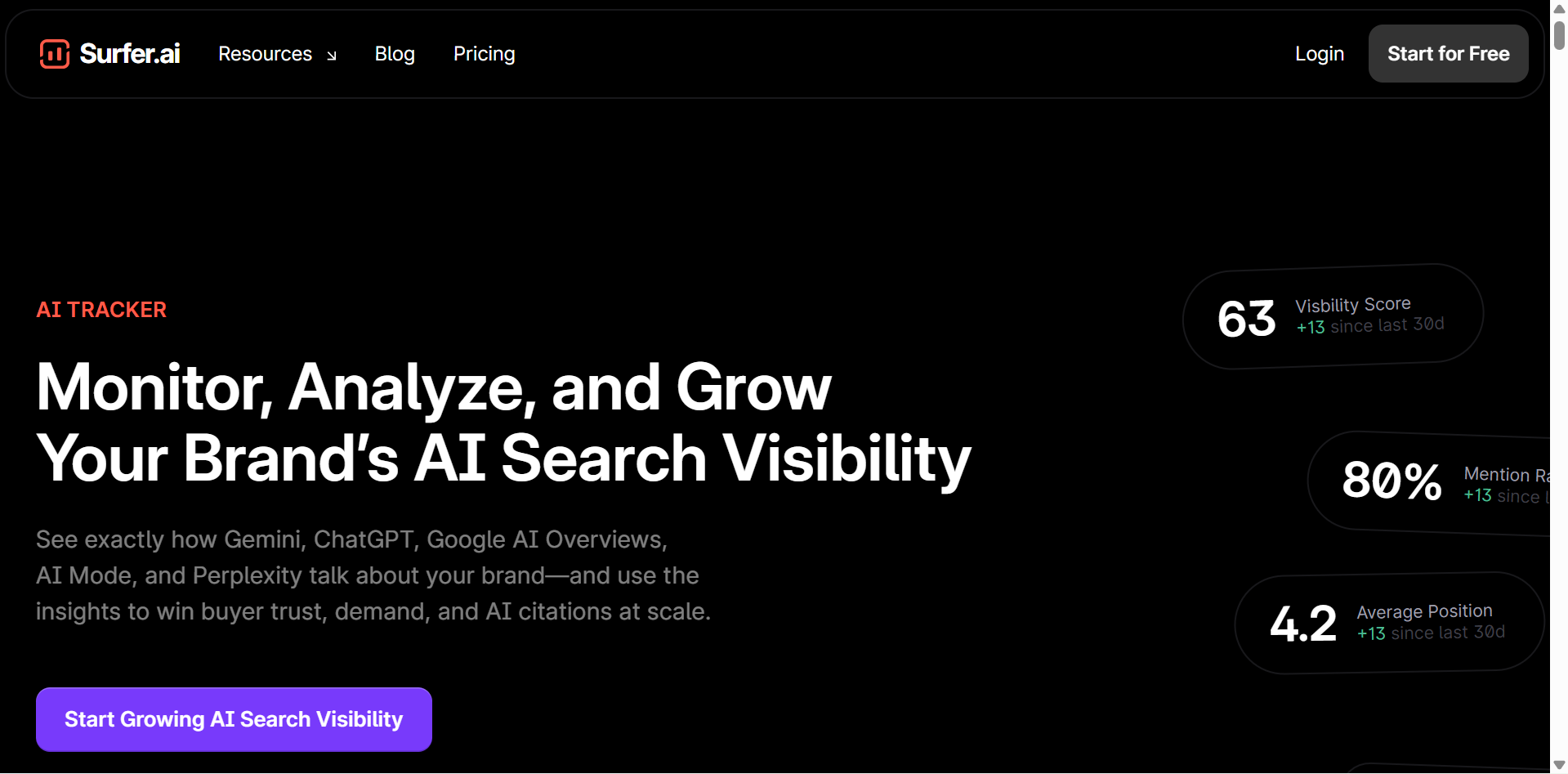
Surfer SEO helps marketers create and optimize website content for search engines. It analyzes competing pages and provides recommendations for improving the relevance and structure of your content. Its AI-powered features can also assist with drafting articles and refining existing pages. By using search data to guide content improvements, Surfer helps marketers build a more organized SEO strategy.
Main features
Content editor: Analyzes content and recommends improvements to strengthen SEO relevance, readability, and topical coverage.
Keyword guidance: Identifies relevant keywords, related terms, and supporting topics to help create more comprehensive content.
SERP analysis: Evaluates top-ranking search results to uncover competitor strategies, content gaps, and opportunities to improve rankings.
Content optimization: Recommends targeted revisions to existing content while preserving its original meaning, intent, and overall message.
Suitable for
SEO specialists working to improve organic search traffic.
Bloggers who want to optimize articles before publishing.
Website owners targeting specific search keywords.
Content marketing teams managing large article libraries.
HubSpot (AI-powered CRM and marketing automation platform)
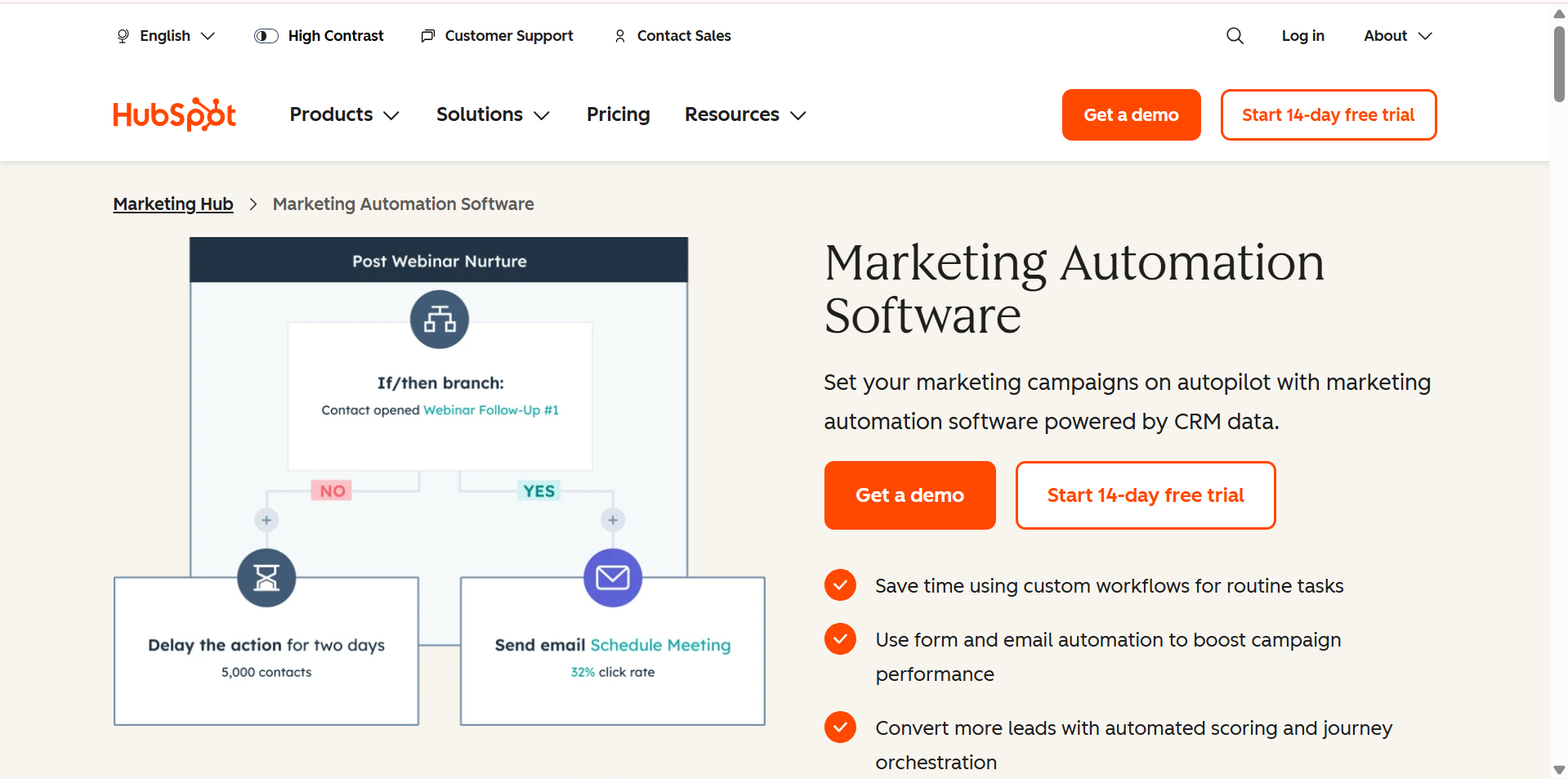
HubSpot is an advanced AI for digital marketing that combines customer relationship management (CRM) with marketing, sales, and customer service tools. Its AI-powered features help businesses understand customer needs, personalize communication, and automate routine marketing tasks. Marketers can manage contacts, create email campaigns, track leads, and review campaign results from a connected platform.
Main features
Smart CRM: Centralizes customer details, communication history, and sales opportunities to help teams manage relationships and track leads.
Email marketing: Creates personalized email campaigns tailored to different audience segments and customer preferences.
Marketing automation: Automates repetitive tasks, including follow-up emails, lead nurturing, and scheduled communications.
Campaign analytics: Monitors campaign performance and engagement metrics to help measure results and identify areas for improvement.
Suitable for
Small businesses building their first structured marketing system.
Growing companies that need to manage and nurture leads.
Sales and marketing teams working together.
E-commerce businesses seeking more personalized customer communication.
Paradigm AI (AI data research)
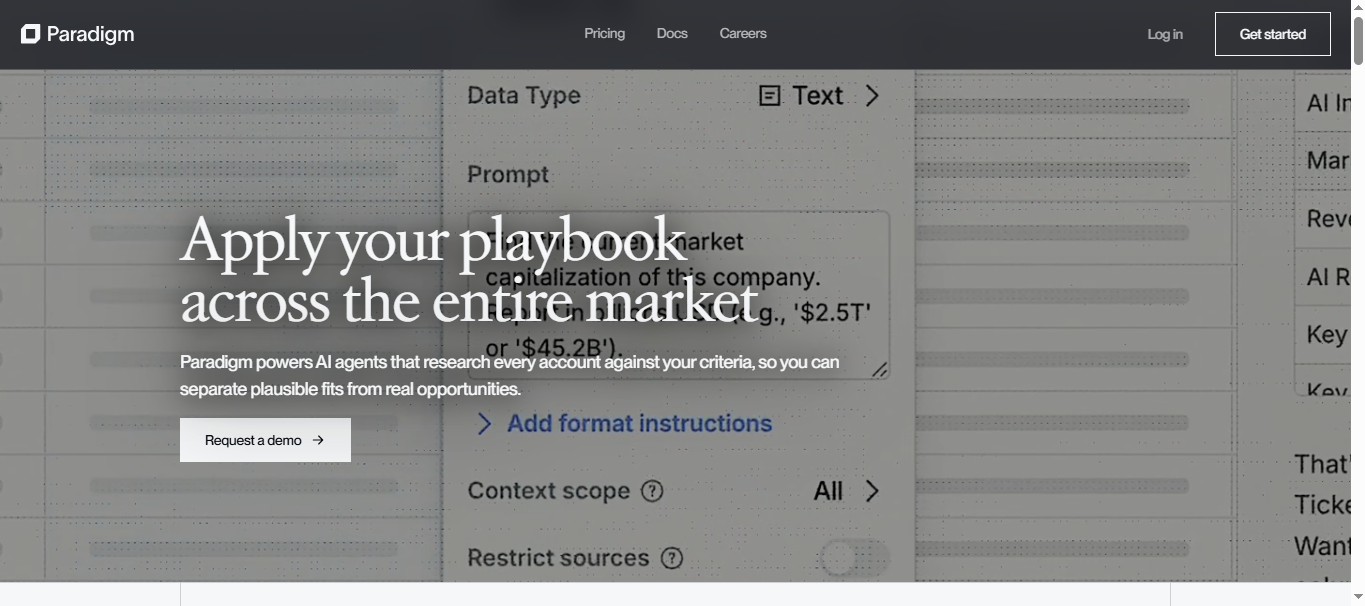
Paradigm AI is an AI-powered research workspace that helps teams collect, organize, and analyze business information. It can research target companies, identify useful market signals, and structure findings into organized data. For digital marketers, this can support prospect research, audience analysis, and account-based marketing.
Main features
Automated research: Gathers information about companies, potential customers, and target markets to support business research.
Structured data: Organizes research findings into tables and searchable records for easier analysis and reference.
Market signal tracking: Monitors relevant market changes and emerging trends that may reveal new business opportunities.
Source visibility: Provides access to the sources behind research findings, helping users verify information and assess its reliability.
Suitable for
B2B marketers researching potential customers.
Lead generation teams identifying promising business accounts.
Market researchers gathering company-level information.
Sales teams looking for relevant prospect insights.
AdCreative.ai (AI ad creative platform)
AdCreative.ai helps businesses create advertising visuals and marketing copy using artificial intelligence. It can generate ad designs, product images, and text variations for different advertising needs. The platform also offers creative scoring tools to help marketers assess potential ad performance before launching a campaign.
Main features
AI ad design: Creates advertising creatives tailored to different digital platforms and campaign goals.
Ad copy generation: Generates promotional headlines, descriptions, and marketing text for advertising campaigns.
Creative scoring: Evaluates ad designs and estimates their potential to attract attention and engage audiences.
Product visuals: Generates product images and supports visual assets for digital advertising and marketing campaigns.
Suitable for
Running paid campaigns on social media.
Managing advertising for an online store.
Creating multiple ad variations for testing.
Working in a marketing agency with frequent creative requests.
Mailchimp (AI email marketing platform)
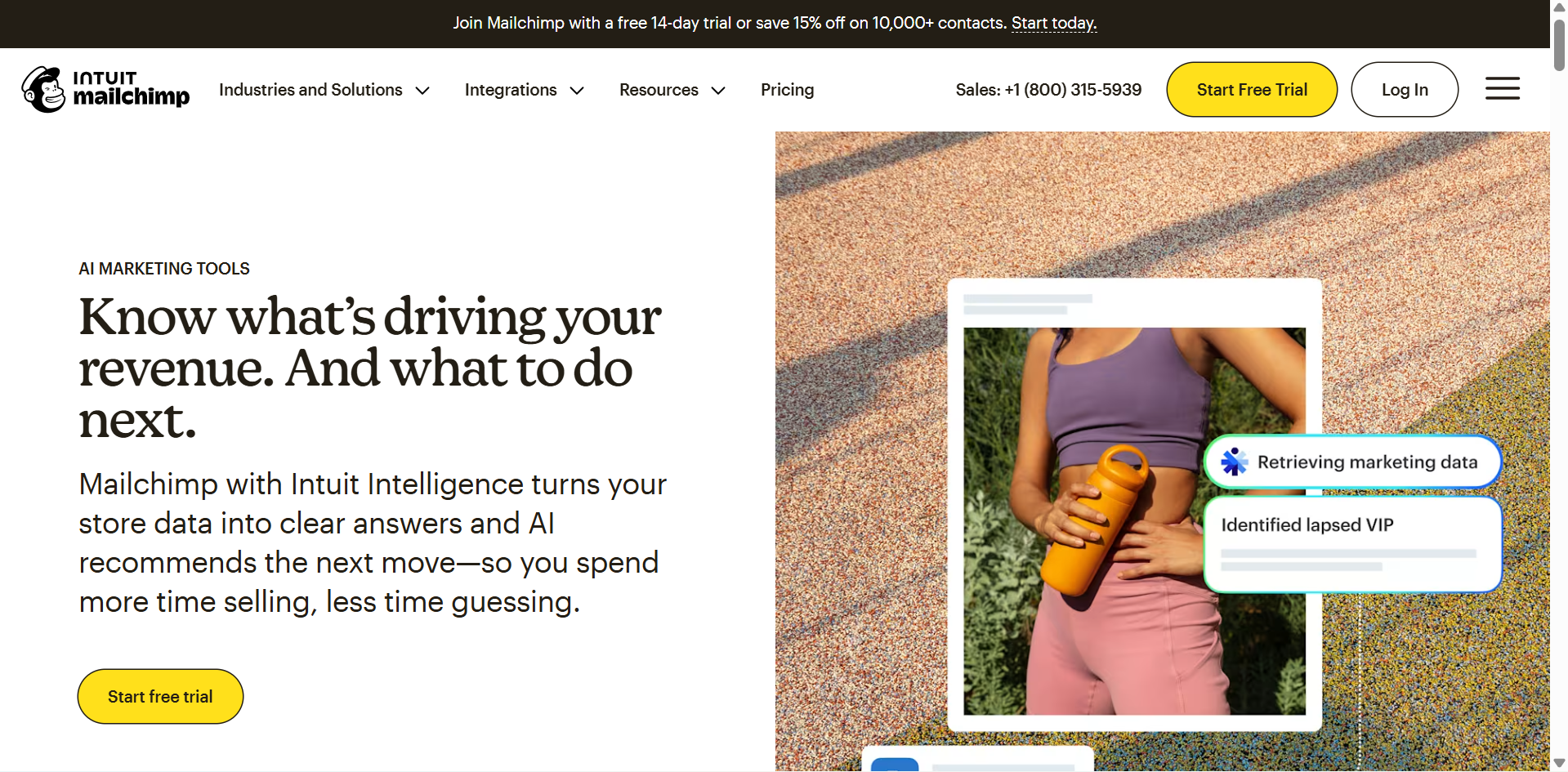
Mailchimp is an email marketing platform that helps businesses create, send, and manage email campaigns. Its AI-powered features support content creation, audience segmentation, and campaign optimization. Marketers can use it to send personalized messages, automate follow-ups, and track how subscribers respond.
Main features
AI email content: Generates subject lines, marketing copy, and content ideas for different email campaigns.
Audience segmentation: Groups subscribers based on their interests, behavior, and customer data to support more targeted messaging.
Email automation: Automates welcome emails, reminders, and follow-up messages based on subscriber actions or predefined triggers.
Campaign analytics: Tracks open rates, click-through rates, and other performance metrics to identify opportunities for improvement.
Suitable for
Small businesses building email marketing campaigns.
E-commerce stores promoting products and special offers.
Content creators sending newsletters to subscribers.
Marketing teams managing customer email lists.
Brand24 (AI social listening tool)
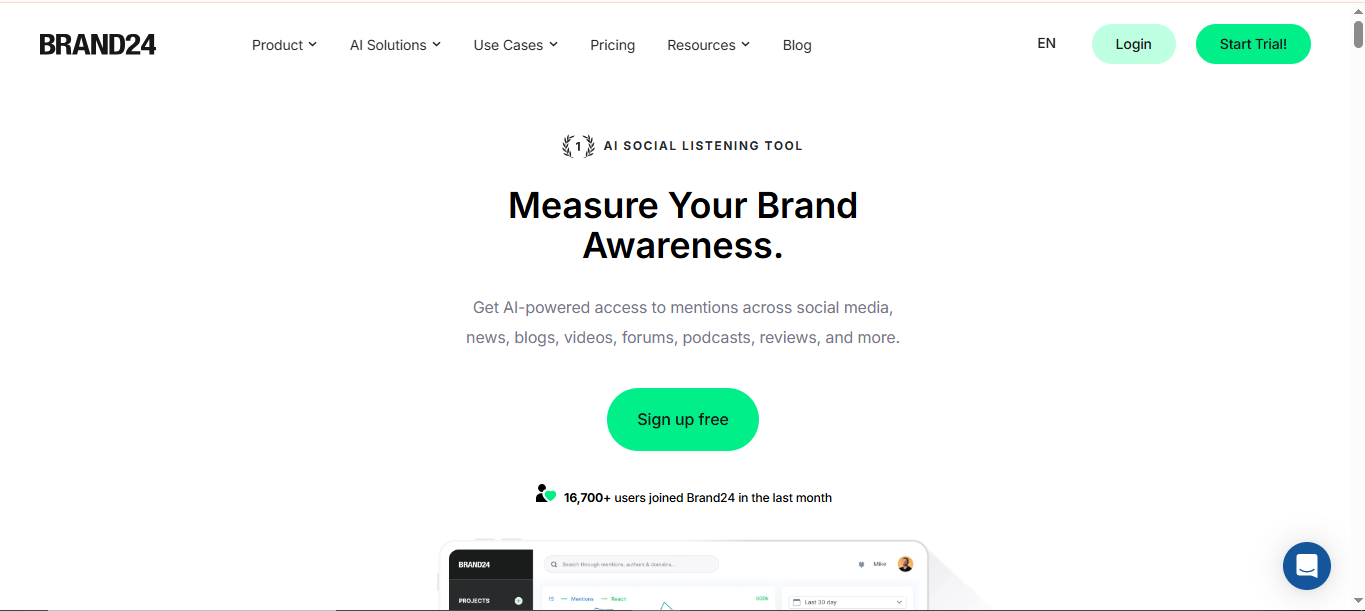
Brand24 is an agentic AI for digital marketing on a social listening platform that helps businesses monitor online conversations about their brand, products, and industry. It tracks mentions across social media, websites, blogs, forums, and other online sources. Its AI features help marketers understand public sentiment, identify popular discussions, and spot potential reputation issues. This information allows businesses to make better decisions about their marketing and communication strategies.
Main features
Brand mention monitoring: Tracks online mentions of your business, products, and selected keywords across relevant platforms.
Sentiment analysis: Classifies online discussions as positive, negative, or neutral to help assess public perception.
AI-powered insights: Summarizes online conversations and identifies emerging trends, recurring topics, and audience concerns.
Influencer identification: Helps discover influential profiles discussing relevant brands, products, or industry topics.
Suitable for
Businesses monitoring their online reputation.
Social media managers tracking brand conversations.
Marketing agencies analyzing public reactions to client campaigns.
PR teams identifying potential reputation risks.
Google Analytics (web analytics platform)
Google Analytics, particularly Google Analytics 4 (GA4), helps businesses understand how people interact with their websites and apps. It collects data about traffic sources, user activity, and conversions, allowing marketers to measure the impact of their campaigns. Its automated insights and predictive features can help identify trends and understand customer behavior. Although it is primarily an analytics platform rather than a dedicated AI writing tool, it supports data-driven digital marketing decisions.
Main features
Traffic analysis: Identifies where website visitors come from, including search engines, social media, and advertising campaigns.
User behavior tracking: Shows how visitors navigate website pages, interact with content, and engage with key elements.
Conversion measurement: Tracks important actions, such as purchases, sign-ups, and lead submissions, to measure marketing effectiveness.
Automated and predictive insights: Highlights unusual traffic patterns and emerging trends, and estimates potential outcomes, such as purchase probability, when supported by available data.
Suitable for
Website owners measuring visitor activity and engagement.
SEO specialists evaluating organic search performance.
Digital marketers comparing campaign traffic and conversions.
E-commerce businesses tracking purchases and customer journeys.
Intercom (AI customer engagement platform)
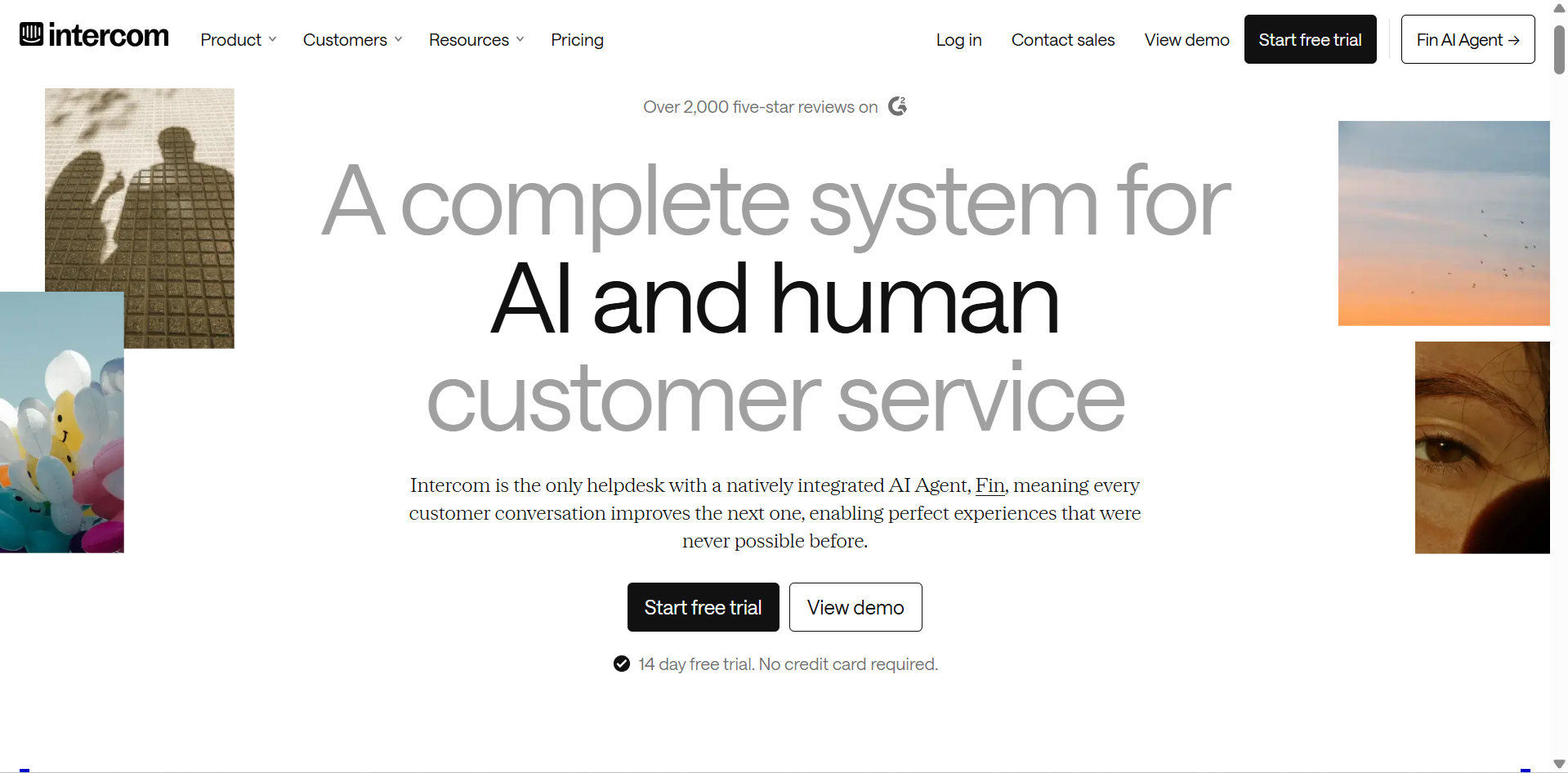
Intercom is a customer engagement platform that combines messaging, support tools, and AI-powered customer service. It helps businesses communicate with website visitors and customers through live chat, automated messages, and support conversations. Its AI agent, Fin, can answer customer questions using approved support information and help resolve common issues.
Main features
AI customer support: Uses the Fin AI agent to answer customer questions and resolve supported requests automatically.
Live chat and messaging: Enables real-time conversations with website visitors and customers across supported messaging channels.
Automated workflows: Routes conversations, assigns tasks, and triggers actions based on customer needs or predefined rules.
Customer insights and reporting: Tracks support conversations, response times, and resolution rates to help teams evaluate performance and improve customer service.
Suitable for
SaaS companies providing customer support online.
E-commerce businesses answering product and order questions.
Customer service teams handling large numbers of inquiries.
Businesses seeking faster responses through AI-powered support.
Tips for implementing AI in digital marketing
Implementing AI in digital marketing requires the right tools and a clear strategy to achieve meaningful results. Follow these practical tips to integrate AI into your workflow and improve marketing efficiency.
Start with a specific marketing goal
Before using AI, decide what you want to achieve, such as increasing website traffic, generating leads, or improving conversions. A clear goal helps you choose the right tools and measure whether your marketing efforts are successful.
Choose tools that fit your existing workflow
Select AI tools that work well with your current marketing platforms and daily tasks. For example, you can use AI for email marketing, social media scheduling, or customer data analysis without making major changes to your workflow.
Use AI to support, not replace, human creativity
AI can help generate ideas, suggest headlines, and create content drafts, but human creativity adds originality and emotional connection. Combine AI's speed with your team's experience to create marketing messages that feel natural and connect with your audience.
Provide reliable data and clear instructions
AI works better when you provide accurate information, relevant customer insights, and clear instructions. Give it enough context about your target audience, brand voice, and campaign goals to generate useful and relevant results.
Test and measure campaign performance
Do not assume that every AI-powered campaign will deliver the desired results. Test different headlines, messages, and audience segments, then track metrics such as click-through rates, conversions, and engagement to identify what works best.
Review AI-generated content before publishing
Always check AI-generated content for accuracy, clarity, originality, and tone before publishing it. Make sure it reflects your brand's voice, provides genuine value to readers, and does not include misleading claims or outdated information.
Conclusion
AI tools help businesses simplify marketing tasks, understand customer behavior, and improve campaign performance. From content creation to customer support and analytics, each tool offers different benefits depending on your goals and budget. Choosing the right AI tools for digital marketing can help you build more efficient workflows, make informed decisions, and strengthen your overall marketing strategy.