Running a small business often involves many tasks, from managing customers and tracking sales to creating content and handling daily operations. AI tools simplify these activities through automation and smart features that save valuable time. They help business owners save time, reduce costs, and improve overall productivity. In this article, we explore useful AI tools for small businesses, their key benefits, and practical use cases to support long-term business growth.
What is AI for small business
AI for small businesses means using intelligent software to perform tasks that usually require human effort. It includes technologies such as machine learning, natural language processing, and generative AI to analyze information and create useful results. These systems can support everyday business activities without requiring advanced technical knowledge. This enables small companies to access helpful technology and compete more effectively in their markets.
Overview of 10 AI tools for small businesses
AI tools for small businesses provide various features, from content creation and customer support to marketing, data analysis, and task automation. The following tools are compared based on their key features, benefits, and use cases to help you choose the right solutions for your business needs.
| Tool | Primary focus | Standout capabilities | Ideal users |
|---|---|---|---|
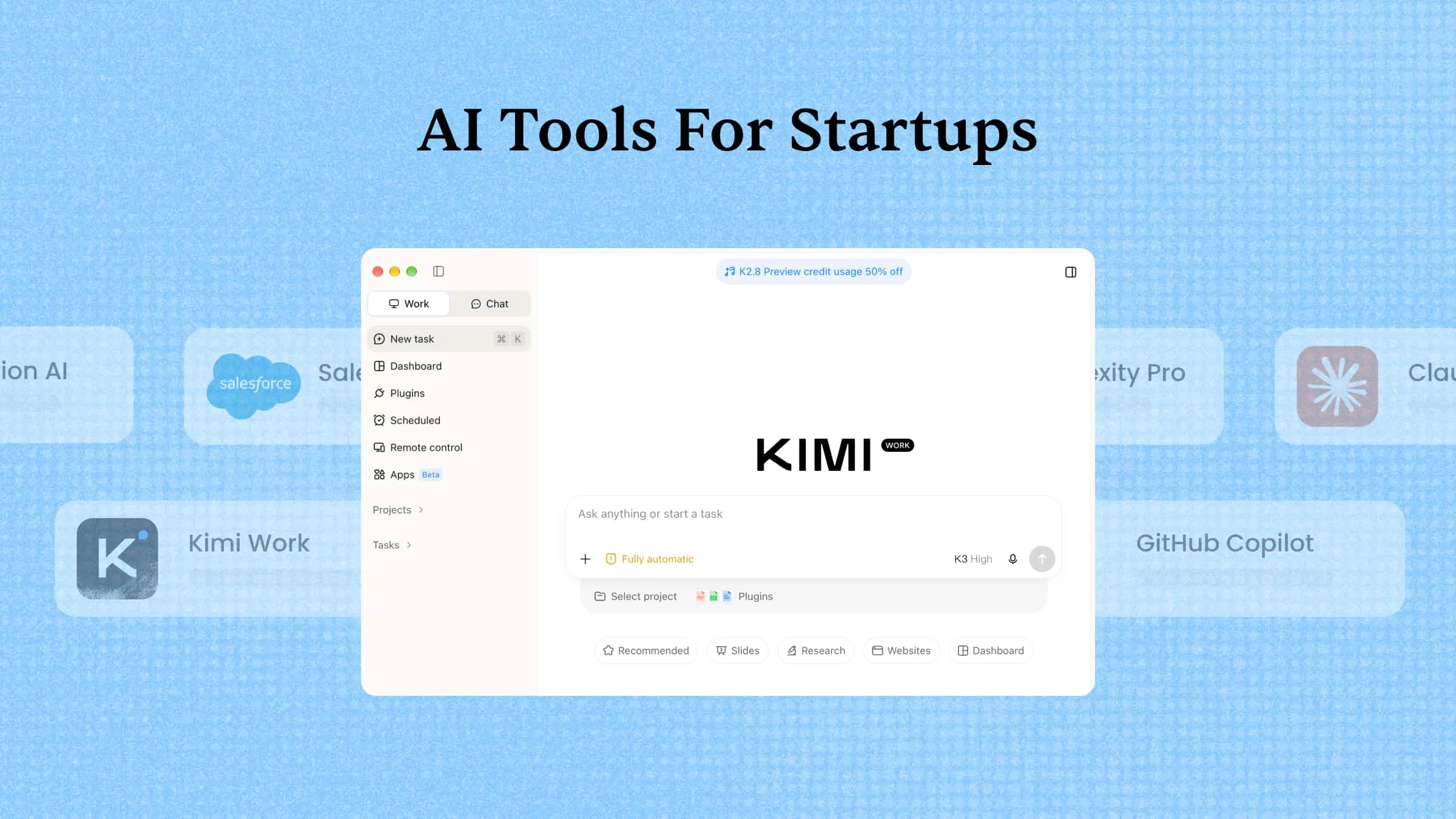
| Kimi Work | Business productivity and task automation | Web research, document creation, data analysis, scheduled tasks, multi-agent collaboration, interactive dashboards | Small business owners and teams handling diverse, research-intensive tasks |
| HubSpot | CRM and marketing management | AI content generation, customer data management, lead nurturing, sales automation | Businesses looking to coordinate marketing, sales, and customer relationships |
| Forethought | AI customer support | Automated ticket resolution, ticket classification, agent assistance, knowledge gap detection | Businesses managing high volumes of customer support requests |
| Botpress | AI chatbot development | Visual conversation builder, knowledge base integration, autonomous agents, multichannel deployment | Businesses building custom chatbots for support, lead generation, and customer engagement |
| Buffer | Social media management | Post scheduling, content assistance, engagement analytics, centralized inbox, link-in-bio pages | Small businesses manage social media content across multiple channels |
| Crunchbase | Market intelligence and prospect discovery | AI-powered company search, company insights, funding predictions, real-time alerts | Founders and sales teams researching competitors, markets, and B2B prospects |
| Gong | Sales intelligence | Call transcription, conversation analysis, deal forecasting, sales coaching, outreach automation | Sales teams seeking better visibility into customer conversations and pipeline performance |
| Monday.com | Project and workflow management | AI-generated workflows, task categorization, project summaries, automated task handling | Small teams coordinating projects, marketing campaigns, and business operations |
| Tableau | Business intelligence and data visualization | Natural-language data exploration, interactive dashboards, metric alerts, predictive analytics | Businesses that need to analyze performance data and monitor key metrics |
| Salesforce | Customer relationship and sales operations | CRM insights, AI-generated emails, conversation summaries, AI agents, customer service automation | Growing businesses managing complex customer relationships and sales processes |
10 AI tools for small businesses you should try today
Choosing the right AI tools can help small businesses save time, simplify daily tasks, and improve productivity. With many options available, business owners can find solutions that match their goals and work needs. Here are 10 AI marketing tools for small businesses worth exploring to improve workflows and support business growth.
Kimi Work
For small businesses seeking practical ways to manage their workload, Kimi Work provides a versatile and efficient solution. Its range of AI-powered capabilities makes it easier to handle different projects and meet changing business needs effectively.
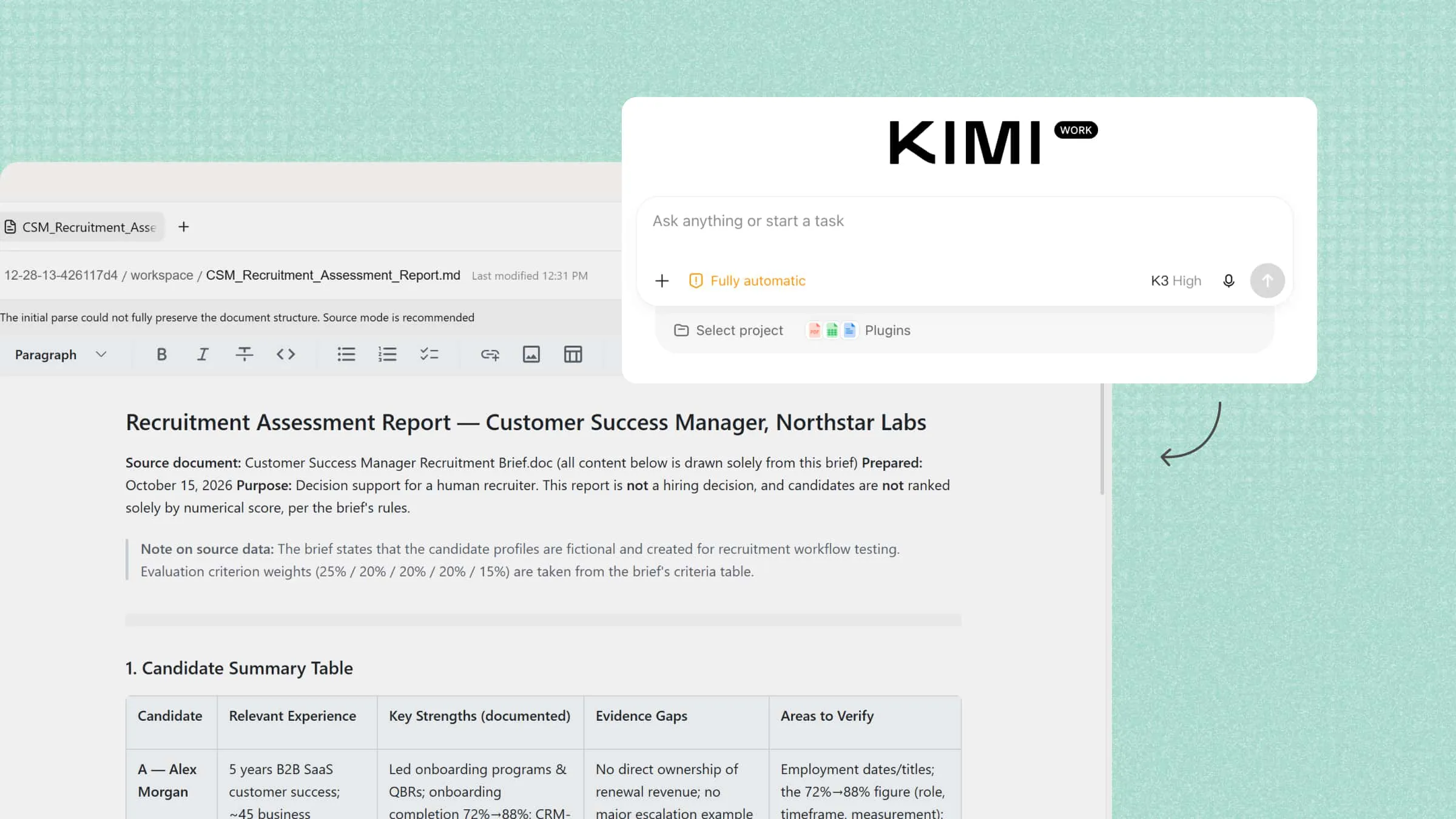
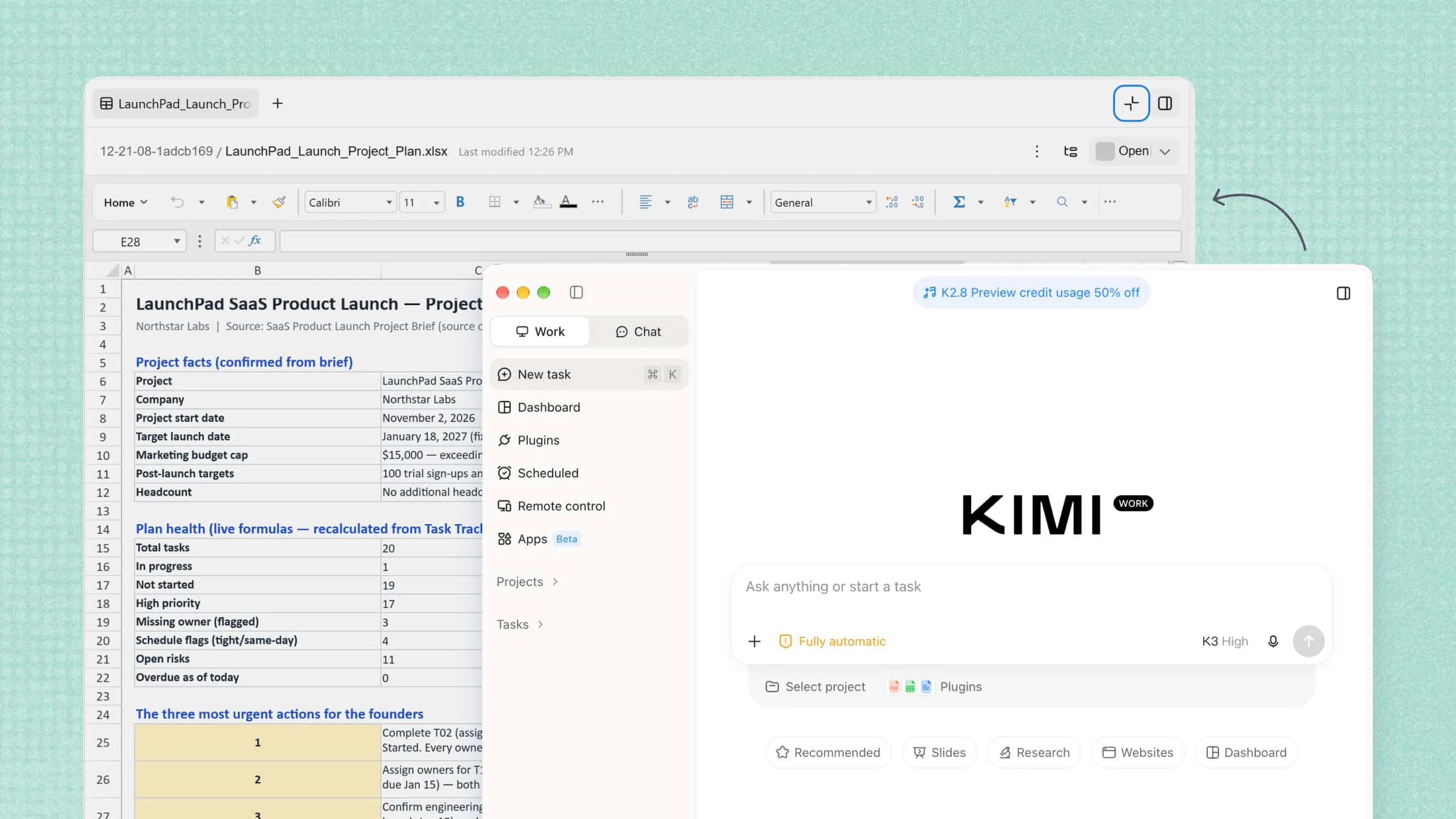
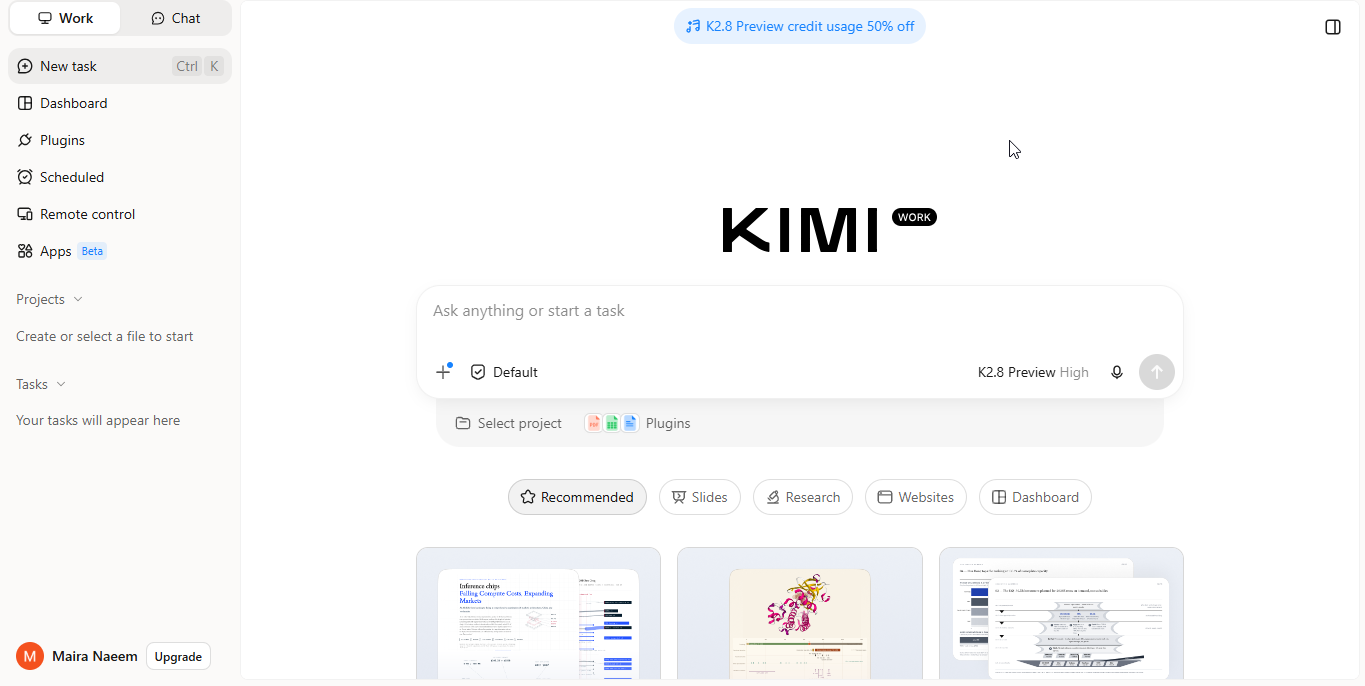
Kimi Work is an AI-powered tool that helps small businesses handle a wide range of tasks with less manual effort. It can assist with researching information, creating documents, organizing data, and preparing reports. Its flexible features help simplify office work and support better task management. This makes it useful for small business owners, freelancers, and teams looking to improve their daily workflows.
Main features
Find business information quickly with web research: Search public websites and review relevant documents to retrieve industry trends, competitor information, and customer insights. Kimi Work helps small business owners gather useful information and organize findings into summaries without spending hours searching manually.
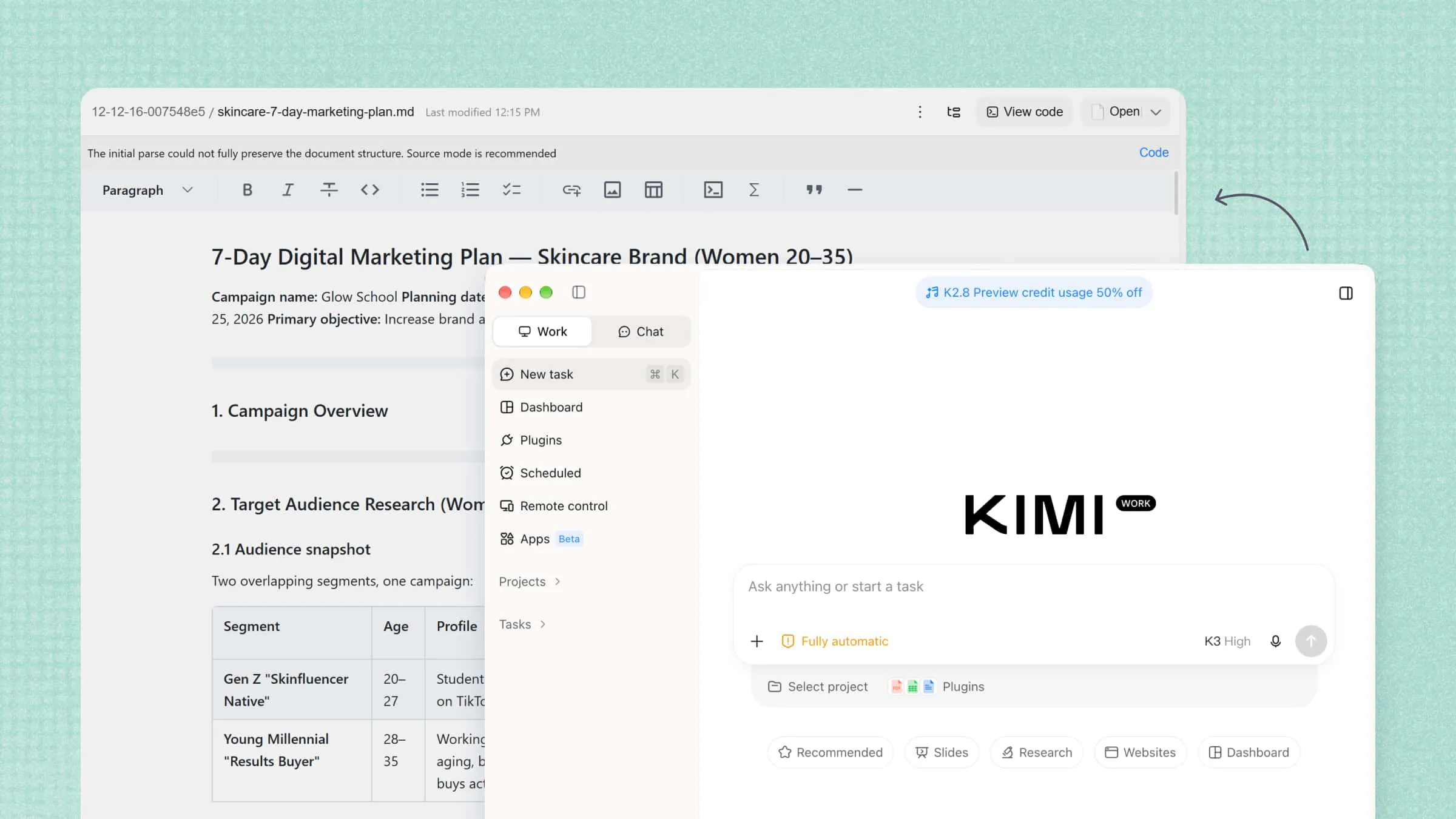
Create business plans and professional documents: Turn business goals and research findings into structured business plans, growth strategies, client proposals, marketing plans, reports, spreadsheets, and presentations, helping small teams turn ideas into practical business materials.
Automate recurring business tasks: Schedule daily or weekly research, information gathering, and report generation to keep business updates organized and reduce repetitive administrative work, leaving more time for customer service and business growth.
Handle complex business tasks with multiple AI agents: Use Agent Swarm to tackle demanding tasks that require extensive research, multiple perspectives, and parallel analysis. Kimi Work can coordinate up to 300 agents to help small businesses work through complex questions and produce useful deliverables faster.
Build interactive dashboards for business tracking: Organize key business information, performance metrics, and project updates into persistent, interactive dashboards. Small business owners can review important information in one place and keep track of changing priorities.
Suitable for
Automating daily business tasks and workflows
Managing customer relationships and support
Creating marketing content and social media posts
Analyzing sales data and improving business decisions
How to use Kimi Work for small businesses
Kimi Work helps small businesses manage daily tasks through a simple AI-powered workflow. You can use it to research information, analyze data, create documents, and automate routine activities. Follow the steps below to get started and make your business operations more efficient.
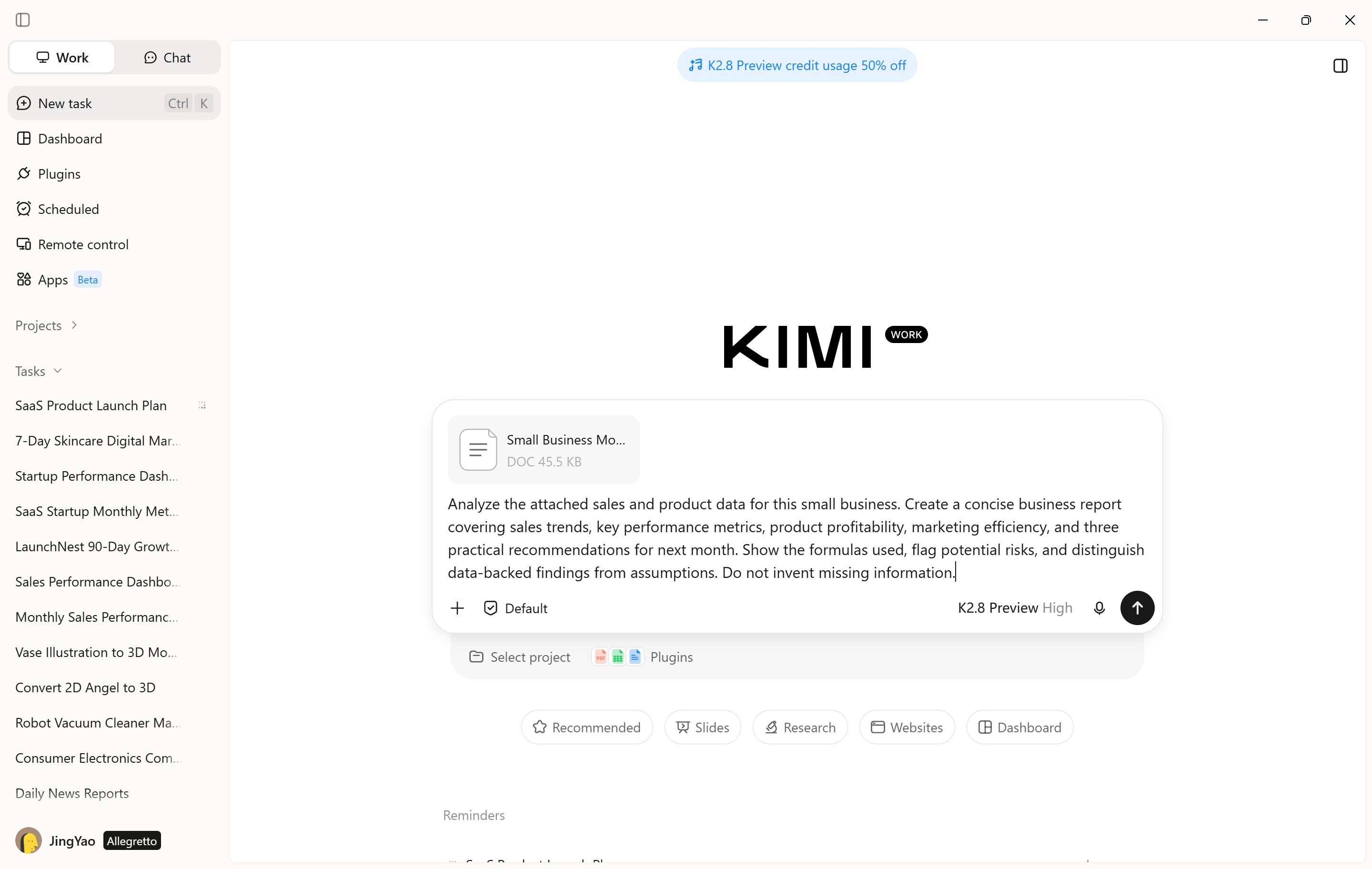
Step 1: Describe your task
Start by describing your task in a clear prompt that explains what you want Kimi Work to accomplish for your small business. Include details such as your business goals, required information, preferred format, and expected results to generate a useful and well-organized output.
Step 2: Let AI process and generate results
After describing your task, let Kimi Work process your request and generate the results. The AI will analyze your instructions, work with the provided information, and create useful outputs such as business reports, organized data, or actionable recommendations based on your requirements.
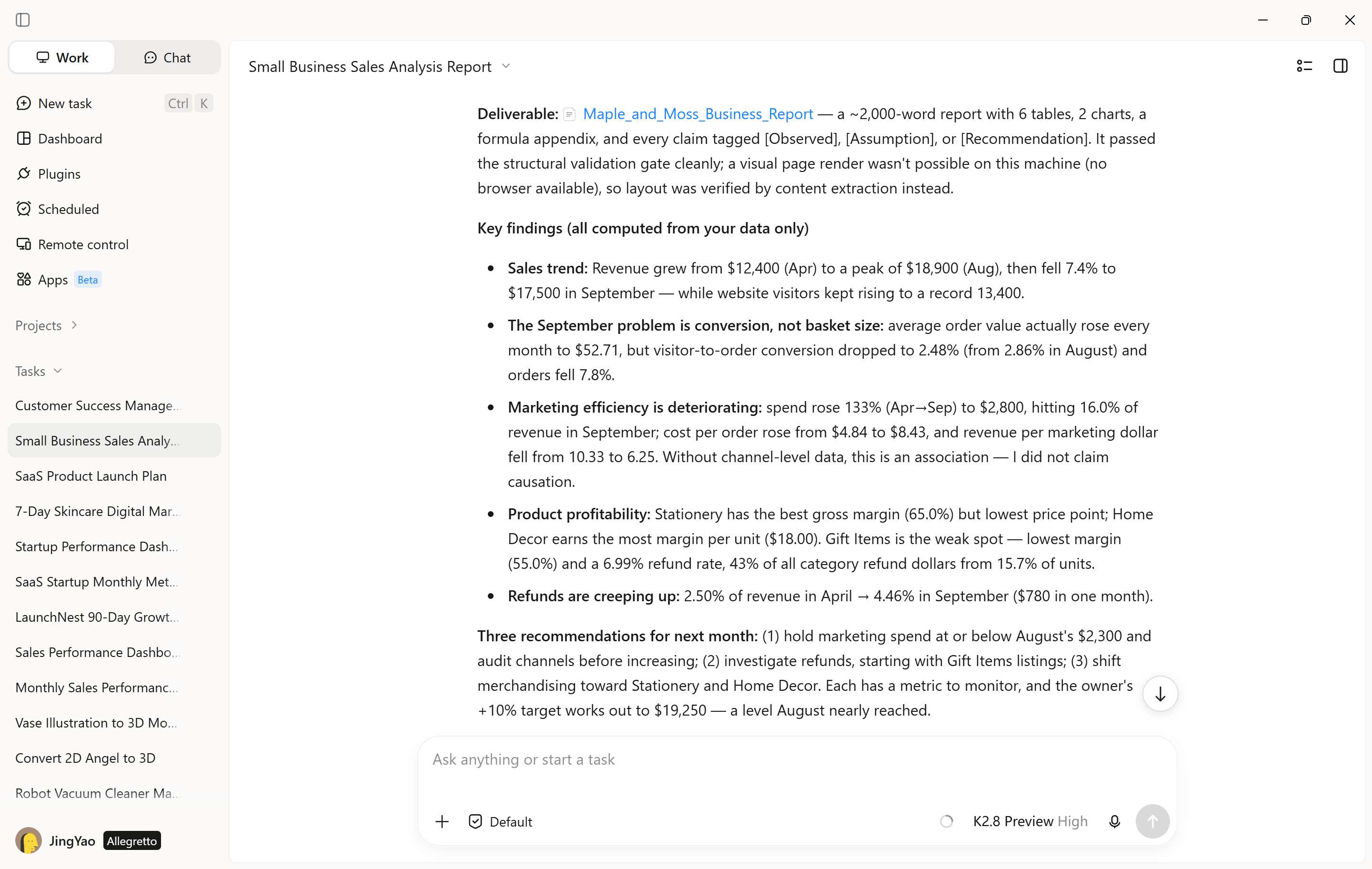
Step 3: Check your completed workflow output
Review the generated output to ensure the information is accurate, the format is clear, and the results meet your business needs. If necessary, provide additional prompts to refine the content, correct errors, or improve the recommendations before using the final results in your business operations.
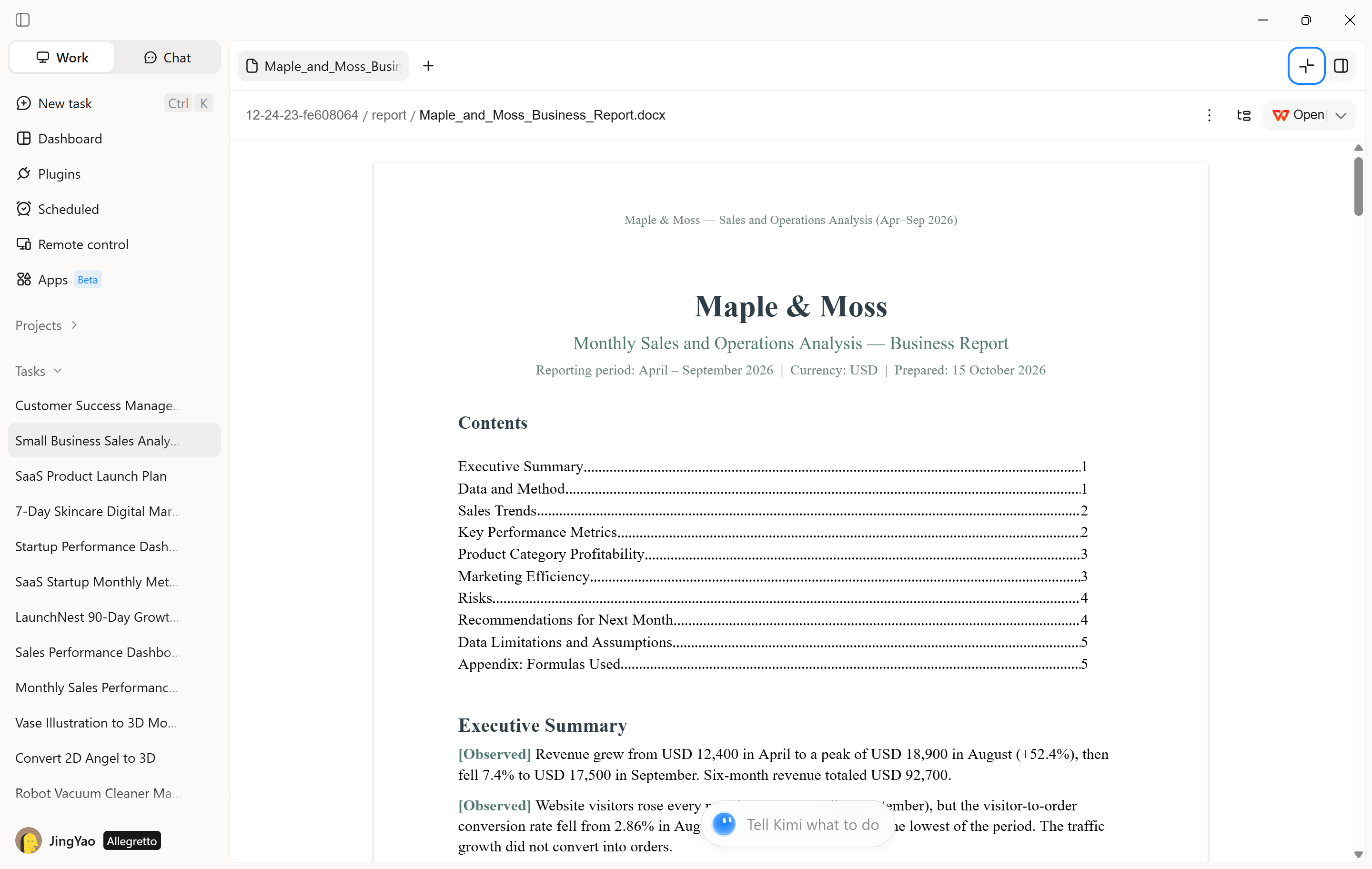
HubSpot
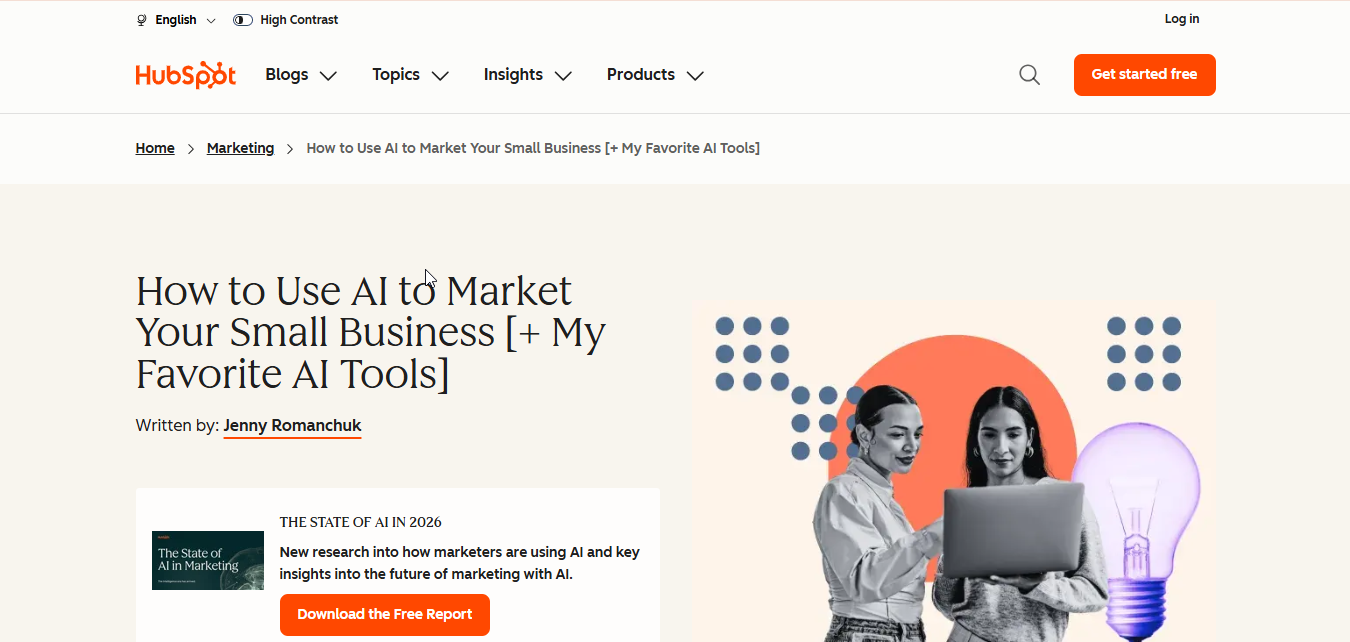
HubSpot is an AI-powered CRM platform that helps small businesses manage sales, marketing, and customer relationships. Its AI features support content creation, automate tasks, and improve customer communication. The platform brings business tools together, helping teams organize workflows and work efficiently. HubSpot provides a free CRM, with paid plans available for businesses needing additional features.
Main features
Breeze Assistants: Helps create marketing emails, blog posts, SEO descriptions, and sales call summaries.
Breeze Agents: Automates repetitive tasks, supports customer inquiries, and assists with sales prospecting.
AI-Powered CRM: Organizes customer records, tracks sales activities, and supports data-driven business decisions.
Content Creation and Repurposing: Generates web content and adapts existing material for different marketing channels.
Suitable for
Managing customer relationships and marketing workflows
Automating lead nurturing and customer communication
Creating targeted e-commerce marketing content
Organizing customer data and tracking interactions
Forethought
Forethought supports AI marketing for small businesses by helping automate customer support and manage incoming requests. It uses large language models and customer history to deliver relevant responses. The platform can classify support tickets, assist human agents, and identify gaps in knowledge resources. These capabilities help customer support teams resolve issues more efficiently and improve service quality.
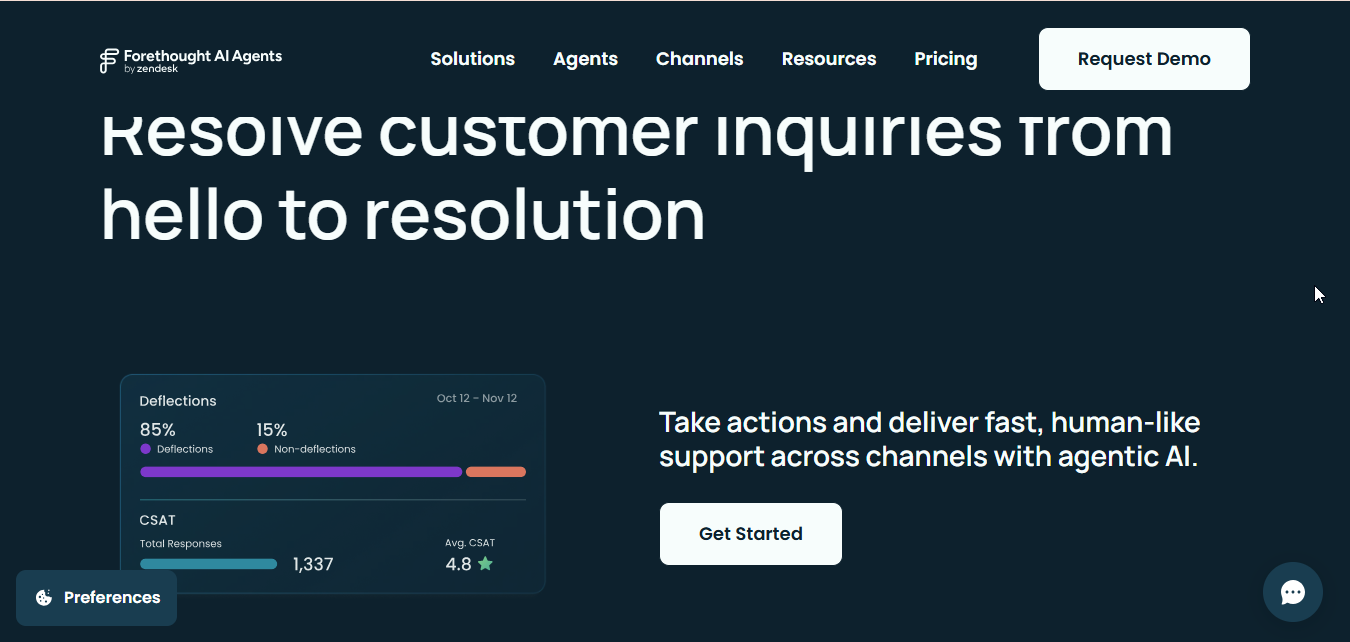
Main features
Solve Agent: Resolves customer issues using support resources across multiple communication channels.
Triage: Automatically classifies, prioritizes, and routes incoming customer support tickets.
Assist: Provides agents with suggested replies, summaries, and relevant knowledge articles.
Discover: Identifies knowledge gaps and drafts helpful self-service content.
Suitable for
Automating high-volume customer support operations
Managing customer inquiries across multiple communication channels
Improving ticket routing and agent productivity
Identifying knowledge gaps and improving self-service support
Botpress
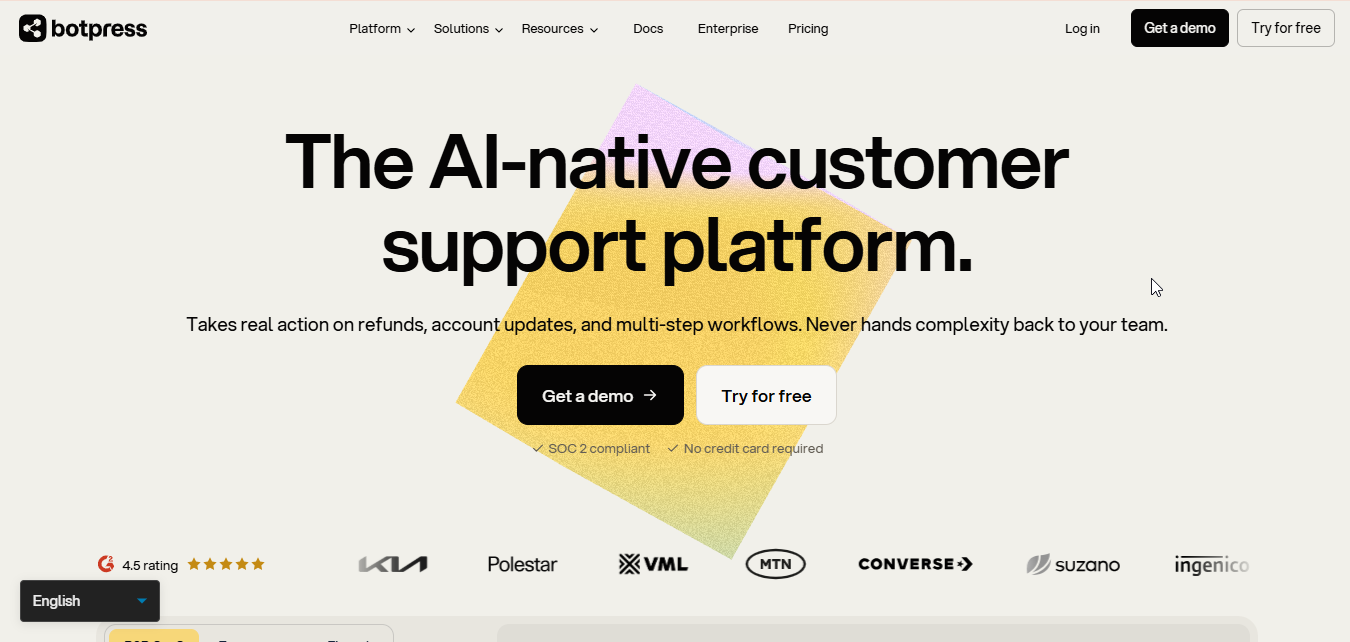
Botpress simplifies chatbot development by helping businesses create customized AI agents with minimal coding. Its visual builder lets users design conversation paths and define business rules. The platform connects agents to documents, spreadsheets, and websites for context-aware responses. Botpress automates customer inquiries and routine tasks, improving service and workflow efficiency.
Main features
Botpress Studio (Visual Flow Builder): Uses a drag-and-drop interface to design conversation flows and branching rules.
Autonomous Nodes and Engines: Enables AI agents to understand user intent and select suitable tools or actions.
Dynamic Knowledge Base: Uses documents, websites, spreadsheets, and text files to generate context-aware answers.
Omnichannel Deployment: Deploys AI agents across websites, WhatsApp, Slack, Telegram, and social media platforms.
Suitable for
Automating customer support and e-commerce operations
Capturing leads and qualifying potential customers
Building customized chatbots with minimal coding
Supporting personalized marketing and sales campaigns
Buffer
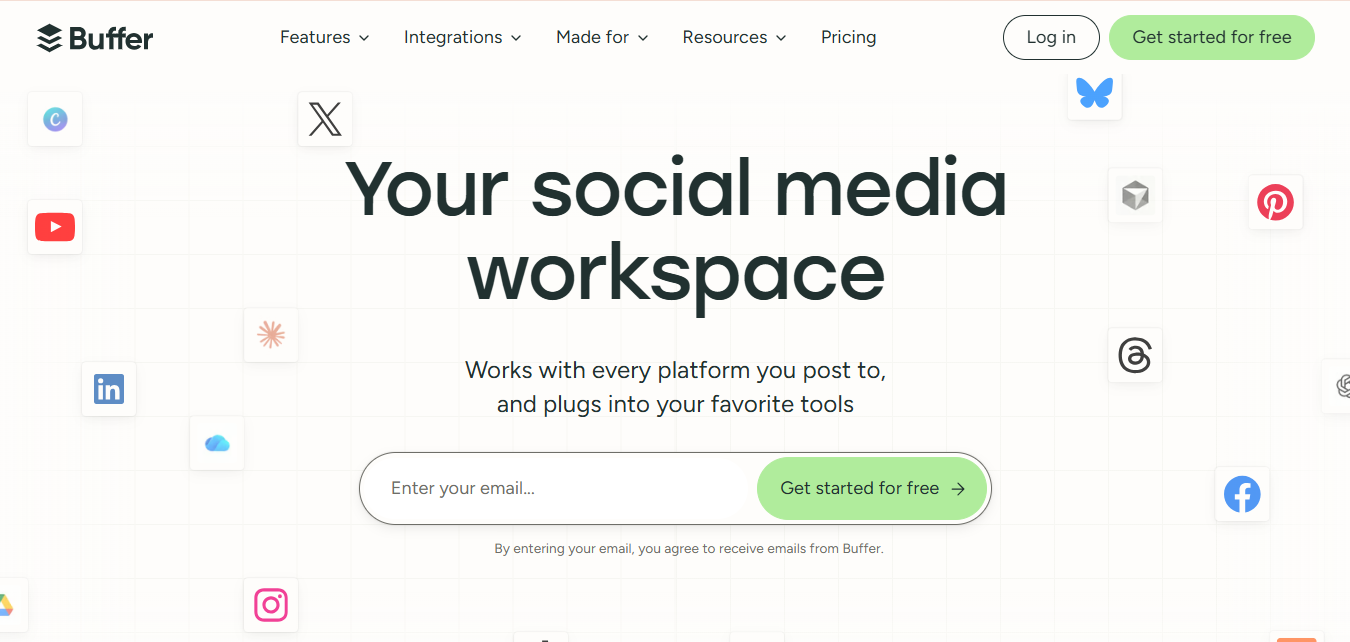
Buffer is a social media management platform that helps businesses organize and publish content across multiple channels. Its scheduling tools enable users to plan posts in advance and maintain a consistent posting routine. Built-in analytics track audience engagement, while the AI Assistant supports content creation. Buffer also includes a customizable landing page, making social media management simpler for small businesses.
Main features
Multi-Platform Publishing and Scheduling: Plans and schedules posts across social networks using a visual calendar and content queue.
Unified Inbox: Brings audience comments and Google reviews into one dashboard for easier responses.
Analytics and Insights: Tracks social media performance and engagement metrics across connected channels.
Start Page: Creates a personalized bio landing page with links to websites and other resources.
Suitable for
Managing social media for small businesses
Planning content across multiple social media platforms
Tracking audience engagement and campaign performance
Creating bio pages to showcase business links
Crunchbase
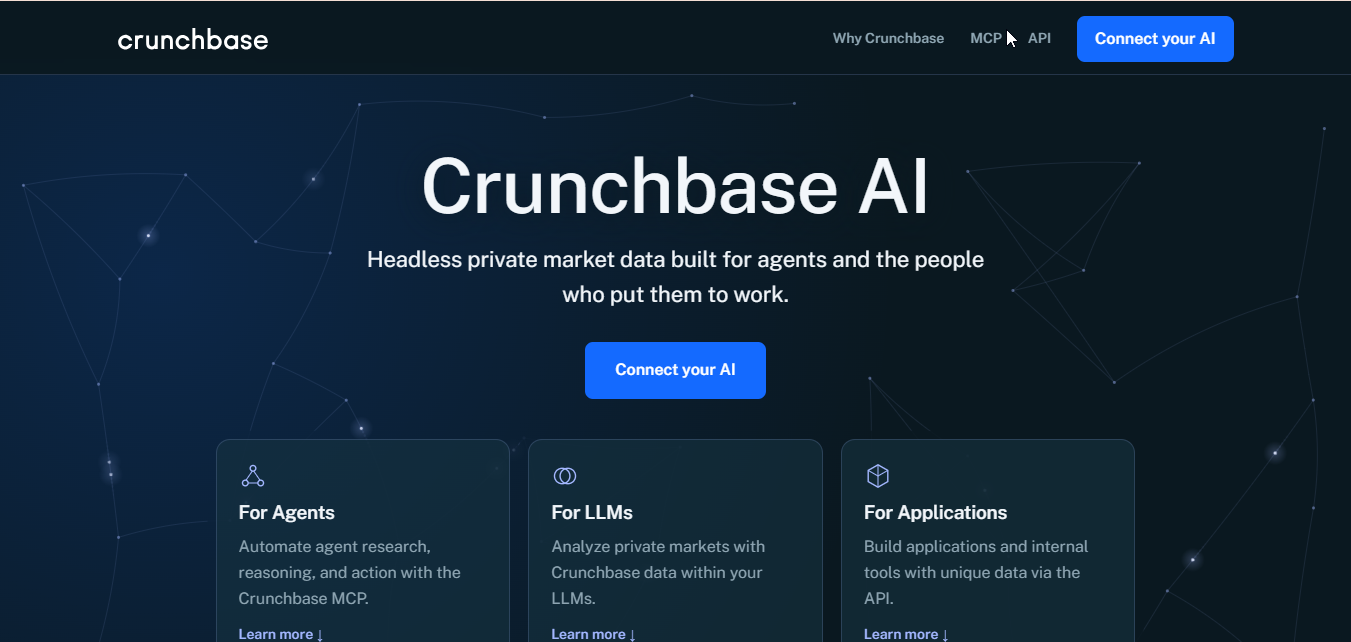
Crunchbase is an AI-powered platform that helps businesses identify growth opportunities and analyze market trends. Its database combines company information, financial records, and predictive insights. Alongside a small business AI assistant, Crunchbase helps users research competitors, discover customers, and monitor funding activities. These insights support informed decisions for sales teams, founders, and investors.
Main features
AI Search Builder: Finds companies, investors, and funding rounds through natural language searches.
AI Company Discovery and Insights: Provides company financial data, employee metrics, and growth forecasts to support market research.
Funding and Milestone Predictions: Uses machine learning to predict potential funding rounds, acquisitions, and other private market events.
Real-Time Alerts and Signals: Notifies users about important developments involving tracked companies and target industries.
Suitable for
Identifying high-potential B2B sales prospects
Researching competitors and exploring new markets
Discovering startups and evaluating investment opportunities
Building targeted prospect lists for business development
Gong
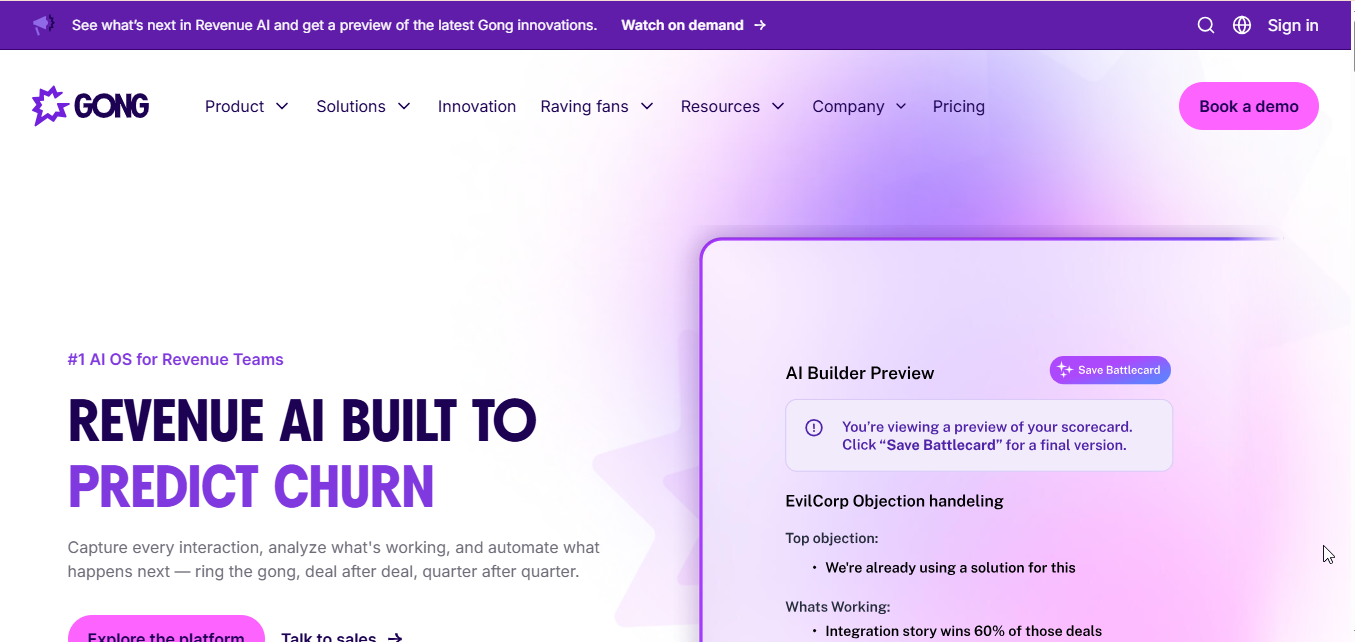
Gong is an AI-powered sales intelligence platform that analyzes customer conversations to uncover valuable business insights. By recording and transcribing sales calls and meetings, it helps teams understand buyer needs, objections, and preferences. Revenue forecasting tools assess deal progress and identify potential risks. Gong also supports sales engagement and rep coaching to improve team performance.
Main features
Conversation Intelligence: Records and transcribes sales calls, highlighting key topics, customer objections, and competitor mentions.
Gong Forecast: Analyzes buyer engagement and deal health to predict revenue and assess pipeline risks.
Gong Engage: Supports sales outreach through automated workflows and coordinated communication across multiple channels.
Gong Enable and AI Agents: Assists with sales coaching, performance scorecards, and automated workflows using conversation data.
Suitable for
Analyzing sales conversations and understanding buyer needs
Forecasting revenue and monitoring deal progress
Automating sales outreach and follow-up activities
Coaching sales representatives and improving team performance
Monday.com
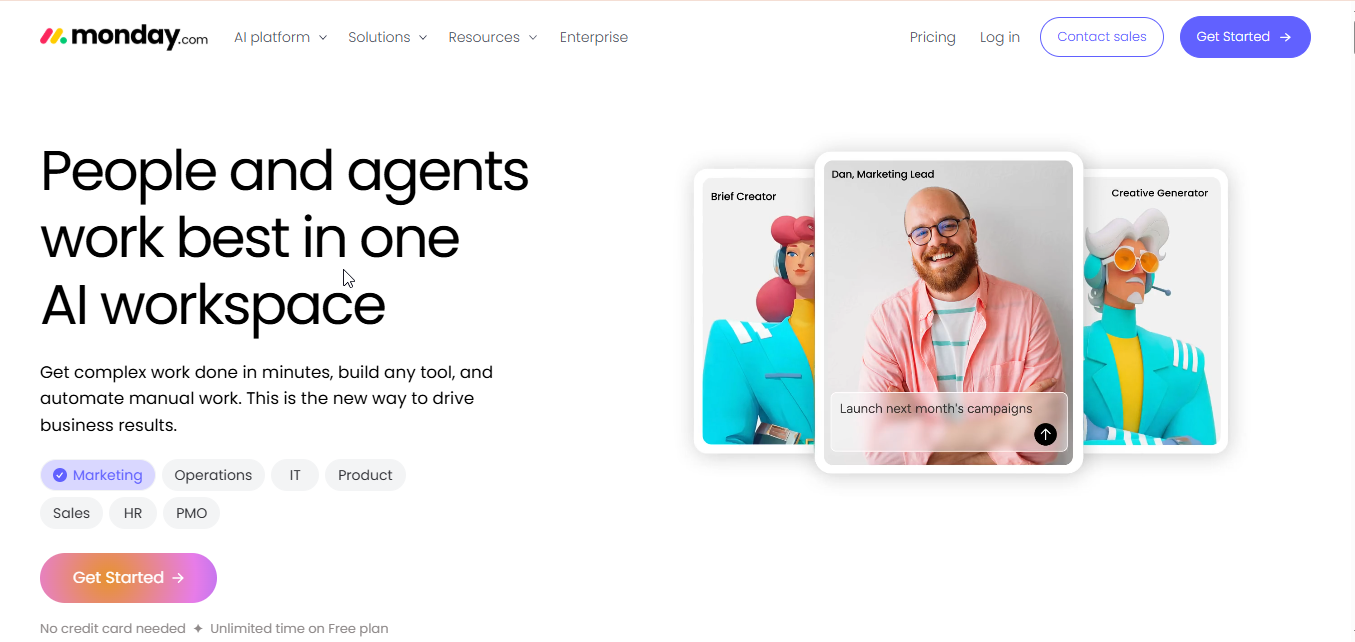
Monday.com combines project management with AI-powered tools to simplify everyday business operations. Teams can generate content, automate repetitive tasks, and turn ideas into organized workflows. Its AI features summarize project updates, categorize information, and coordinate complex tasks. The platform also supports sales and customer management, helping businesses organize projects and improve productivity.
Main features
Monday Sidekick: Summarizes project boards, drafts updates, and highlights potential operational risks.
Monday Agents: Performs multi-step tasks such as categorizing support tickets, researching vendors, and summarizing meetings.
AI Blocks and Columns: Summarizes text, categorizes data, extracts file information, and translates content within tables.
AI Workflows and Magic: Creates project boards, timelines, dependencies, and automated workflows from natural language prompts.
Suitable for
Organizing projects and replacing scattered spreadsheets
Managing marketing campaigns and client approvals
Tracking deadlines and streamlining operational workflows
Managing sales pipelines and automating follow-ups
Tableau
Tableau AI brings artificial intelligence into data analysis, helping businesses make informed decisions through visual insights. Its tools simplify data exploration, reveal patterns, and turn complex datasets into interactive dashboards. Users can monitor key performance indicators, investigate unusual changes, and forecast trends. These capabilities help teams understand business performance and identify opportunities for improvement.
Main features
Tableau Agent: Creates visualizations, applies filters, and generates calculated fields through natural language prompts.
Tableau Pulse: Tracks key metrics and sends alerts about performance changes and unusual patterns through email or Slack.
Explain Data: Identifies potential factors and statistical explanations behind specific data points in visualizations.
Einstein Discovery and Predictive Modeling: Uses machine learning to identify patterns, analyze trends, and generate forecasts from business data.
Suitable for
Analyzing business data without dedicated data scientists
Monitoring sales trends and daily operations
Creating interactive dashboards for business reporting
Integrating performance insights into existing workflows
Salesforce
Salesforce supports AI small business marketing by helping businesses personalize interactions and improve sales operations. Its AI tools analyze CRM data to identify customer needs, suggest next steps, and create personalized emails. Teams can summarize interactions and automate tasks to save time. These features help small businesses strengthen customer service, increase sales productivity, and support growth.
Main features
Conversational AI Assistants: Enable users to query CRM records, explore data, and perform tasks through natural language prompts.
Click-Based AI: Simplifies routine work with features such as record summaries and automated email drafting.
Agentforce and AI Agents: Automate customer support, lead nurturing, and sales outreach using business data.
Einstein Conversation Insights: Records and summarizes sales conversations, highlighting important details, action items, and follow-ups.
Suitable for
Managing client relationships and automating routine inquiries
Personalizing customer experiences for growing retail businesses
Improving sales operations with limited resources
Tracking customer interactions and improving follow-up processes
Common uses of AI in small businesses
AI helps small businesses simplify daily operations, save time, and make better decisions. From automating routine tasks to improving customer service, these tools support different business needs. Here are some common ways to use AI in small businesses to improve productivity and support growth.
Market research and competitor analysis
AI tools analyze market data to reveal customer preferences, industry trends, and competitor activities. Businesses use these insights to identify market gaps and understand their position. As a result, owners make informed decisions and plan effective strategies.
Marketing content and social media management
Creating promotional content is easier with AI writing and design tools. Businesses generate captions, product descriptions, email campaigns, and post ideas for their audience. Scheduling and analytics features help maintain communication across platforms.
Customer service and inquiry handling
AI-powered chatbots answer common questions, share product details, and guide customers through basic processes. Automated responses help handle inquiries outside regular hours. This enables staff to focus on complex issues requiring personal attention.
Sales forecasting and lead generation
By examining sales records and market trends, AI estimates future demand and identifies sales opportunities. Lead generation tools help businesses find suitable prospects and prioritize promising contacts. These insights support better planning and focused outreach.
Business reporting and data analysis
AI processes business data to identify patterns, track performance, and highlight changes. Reports and visual summaries make complex information easier to understand. Business owners use these findings to evaluate results and identify areas for improvement.
Administrative tasks and document creation
Routine office work, including drafting emails, preparing reports, organizing records, and summarizing documents, becomes more efficient with AI. Templates and workflows reduce manual effort. Consequently, small teams can focus on essential activities.
Benefits of AI for small businesses
AI helps small businesses work efficiently by reducing effort and simplifying daily tasks. From improving customer service to supporting smarter decisions, these tools offer advantages for growth. Below are key benefits of AI that help businesses improve productivity and achieve better results.
Reduce operating costs
AI automates repetitive tasks, reducing the need for manual work and saving time. Businesses can also use AI tools to manage resources and minimize operational waste. These improvements help small companies control expenses and use their budgets wisely.
Improve productivity with limited resources
With AI handling routine activities, employees can focus on tasks requiring judgment. Automated workflows help teams complete work faster and manage multiple responsibilities. As a result, small businesses achieve more without expanding their workforce.
Make faster, data-informed decisions
AI analyzes sales records, customer feedback, and market trends to identify patterns. Quick access to insights helps business owners evaluate opportunities and risks. Better information supports timely decisions and effective planning.
Deliver more personalized customer experiences
AI tools analyze customer preferences and interactions to tailor recommendations and communications. Chatbots provide answers to individual inquiries. Personalized support helps businesses build stronger relationships and improve satisfaction.
Scale business operations more efficiently
As a business grows, AI helps manage increasing orders, inquiries, and administrative tasks. Automation enables teams to handle larger workloads with less manual effort. This flexibility supports growth while keeping operations organized.
Support innovation and competitiveness
AI helps small businesses explore ideas, develop content, and identify market needs. These capabilities make it easier to test strategies and adapt to expectations. Using AI effectively helps businesses stay competitive and discover growth opportunities.
Conclusion
AI for small businesses provides practical ways to automate routine tasks, improve customer service, and make informed decisions. Different tools support various use cases, helping businesses save time, reduce costs, and increase productivity. Choosing the right solutions depends on your business goals, available resources, and daily needs. For a smarter business workflow, try Kimi Work to simplify everyday tasks, organize workflows, and improve operational efficiency.