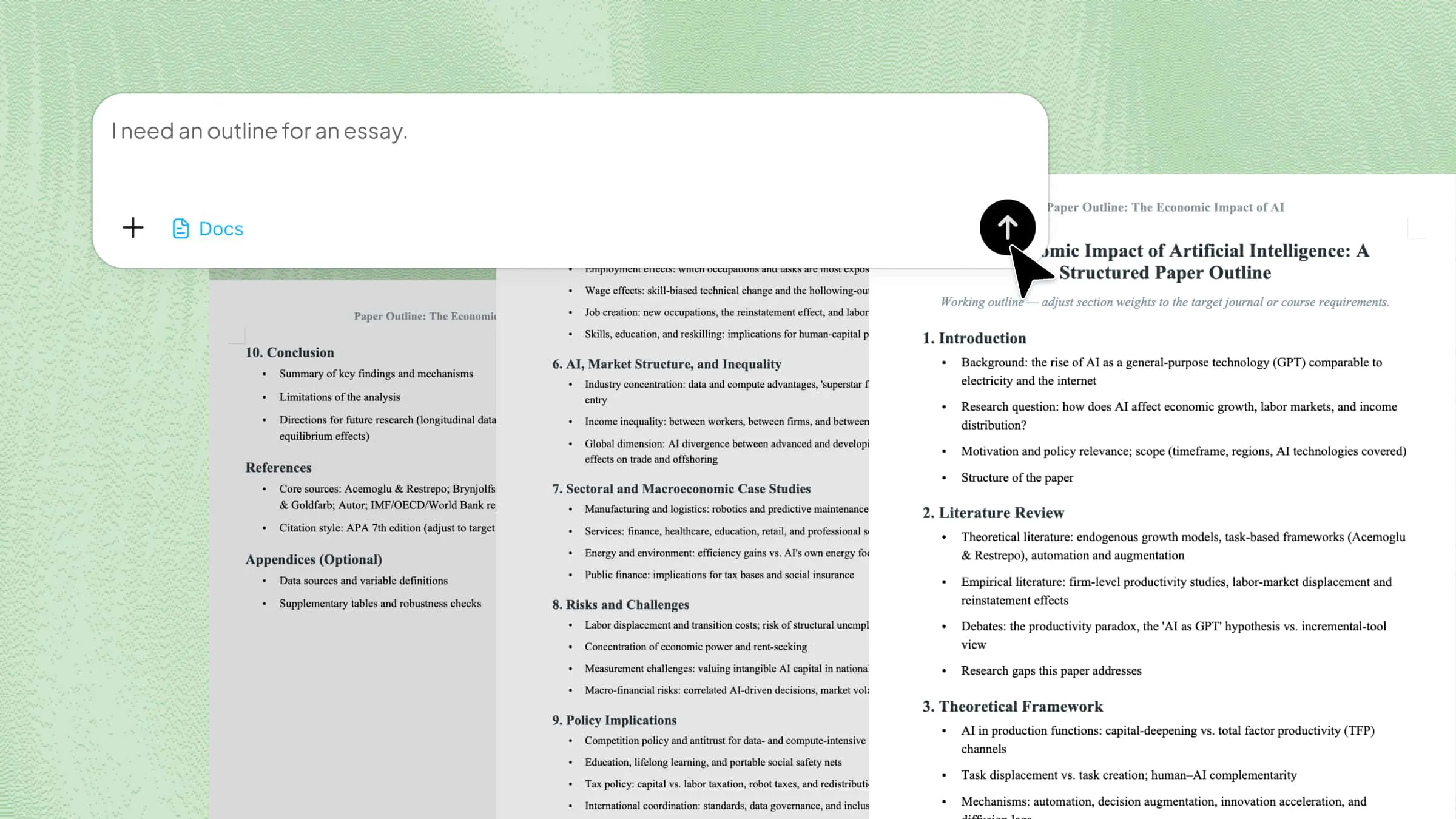
Writing a graduation speech can feel challenging when you want to capture years of memories, achievements, and emotions without making the speech too long or unfocused. Knowing how to write a speech for graduation gives you a clear way to organize your thoughts, connect with your audience, and end with a meaningful message. In this guide, you'll learn simple steps to create a memorable graduation speech with confidence.
How to write a graduation speech
Writing a graduation speech involves more than sharing memories or offering congratulations. You need to understand your audience, choose a meaningful message, organize your ideas, and create a tone that reflects the occasion. Kimi Docs can simplify this process by helping you develop ideas, structure your content, and refine your speech.
Kimi Docs, an AI document agent, can turn your notes, memories, and key points into a structured graduation speech. You can use it to shape your message, adjust the tone, improve wording, and create content suited to a school, university, or graduation ceremony. The following steps show you how to build your speech from start to finish.
Step 1: Provide your graduation speech requirements and key ideas
Tell Kimi Docs about your role, audience, graduation event, preferred tone, and main message. You can also share personal memories, experiences, achievements, or ideas you want to include, so the speech reflects the occasion.
Example prompt:
Step 2: Let Kimi Docs create a structured graduation speech draft
Kimi Docs analyzes your instructions and key ideas to create a structured graduation speech that fits your needs. It can organize your content into an opening, personal reflections, key experiences, future goals, and conclusion, helping turn scattered thoughts into a fluent and focused speech.
Step 3: Refine your speech with personal stories and emotional details
Review the draft and ask Kimi Docs to make it more personal and engaging. You can add meaningful memories, express gratitude, strengthen emotional moments, or replace generic phrases with more original wording.
Examples:
"Add a personal story about overcoming challenges during college."
"Make the opening more heartfelt and include gratitude."
"Replace common graduation phrases with more original expressions."
Step 4: Review and prepare your final graduation speech
Read the completed speech aloud and check its timing, flow, and wording. Make any final adjustments to match your speaking style, then download the polished document for rehearsal and use it at the graduation ceremony.
Why choose Kimi Docs for writing a graduation speech
After learning how to write a graduation speech, the right AI tool to make the process faster and more organized. Kimi Docs helps turn your ideas, memories, and key messages into a structured speech that is easier to refine and personalize.
Create graduation speech drafts from prompts and personal materials
Share your graduation details, audience, key memories, desired tone, and main message. Based on your instructions and materials, Kimi Docs can help generate a structured speech draft with sections such as an opening, personal reflections, key lessons, and a conclusion.
Build a clear and emotional speech structure
Organize your ideas into a logical and natural flow based on your message and audience. Kimi Docs can help structure different parts of your speech, including gratitude, personal experiences, achievements, challenges, future goals, and closing messages, making it easier to develop a complete speech with a clear direction.
Improve wording and emotional impact with AI editing
Use natural-language instructions to refine your speech content and improve how your ideas are expressed. Kimi Docs can help adjust the tone, strengthen storytelling, simplify complex expressions, and make sentences sound more natural and engaging when spoken aloud.
Adapt speeches for different graduation occasions
Customize your speech content, structure, and writing style for different graduation scenarios. Whether you are preparing a high school graduation speech, a college commencement address, a student representative speech, or a teacher speech, Kimi Docs can help you align the message with the audience and occasion.
Review and export speech documents easily
Review your completed speech draft, make final edits, and organize the document before delivery. By providing specific instructions and requirements, Kimi Docs can help adjust the document structure and prepare your speech for export in suitable formats for further editing, sharing, rehearsal, or presentation.
5 popular topics you can use for a graduation speech
Choosing the right topic can make your graduation speech more personal, memorable, and meaningful. Whether you want to share a lesson, express gratitude, or inspire your classmates, these ideas can help you decide what to include in a graduation speech and give Kimi Docs clear direction for generating your speech.
Failure that taught you the most
Sharing a meaningful failure can make your speech honest and relatable. Focus on what happened, what you learned, and how the experience changed the way you approach challenges rather than simply describing the setback.
Example prompt:
Specific gratitude, not clichés
Instead of using general phrases about being thankful, mention the specific people, moments, or experiences that shaped your journey. Personal details make gratitude feel genuine and give your audience something meaningful to remember.
Example prompt:
Shared class memory/joke
A shared memory can instantly connect you with your classmates because they experienced it too. Choose a funny or meaningful moment that reflects your time together, then connect it to a broader lesson about friendship, growth, or your journey.
Example prompt:
Letter to freshman self
Speaking to your younger self gives you a natural way to reflect on how much you have changed. You can share advice, mistakes, lessons, and encouragement while showing your classmates that growth often happens through experiences we do not expect.
Example prompt:
Concrete challenge for the future
Instead of ending with a general call to "follow your dreams," give your classmates a specific challenge they can carry into the next stage of life. It could involve taking risks, staying curious, helping others, or continuing to learn after graduation.
Example prompt:
Things to avoid when writing a graduation speech
Knowing how to write a graduation speech also means understanding what can weaken your message. Avoiding these common mistakes can help you create a speech that feels personal, focused, and appropriate for everyone in the audience.
Using clichés or copying common speech styles
Avoid relying on overused phrases or imitating famous graduation speeches. Use your own experiences, observations, and wording to make the message feel genuine and memorable.
Losing focus or adding unnecessary details
Every story or idea should support the main message of your speech. Remove details that do not add meaning, especially when deciding what to include in a graduation speech.
Using inside jokes that exclude part of the audience
Shared humor can make a speech more enjoyable, but jokes that only a few people understand can leave others feeling left out. Keep humor relatable, appropriate, and easy for the wider audience to follow.
Ignoring the importance of opening and closing
A weak opening can make it harder to capture attention, while a rushed ending can make the speech feel incomplete. Give both sections enough attention to create a strong beginning and memorable finish.
Making the speech too long
A graduation speech should communicate its message without overwhelming the audience. Keep things to say in a graduation speech focused, remove repetition, and practice aloud to make sure the speech fits the available time.
Conclusion
A memorable graduation speech combines a clear message with personal stories, genuine gratitude, and a meaningful takeaway. Kimi Docs can help you organize your ideas, shape your stories, and refine your wording while keeping the speech authentic to your experience. Whether you are preparing a motivational speech for graduation or a short address for your classmates, focus on what makes your journey unique and leave your audience with a message they will remember.