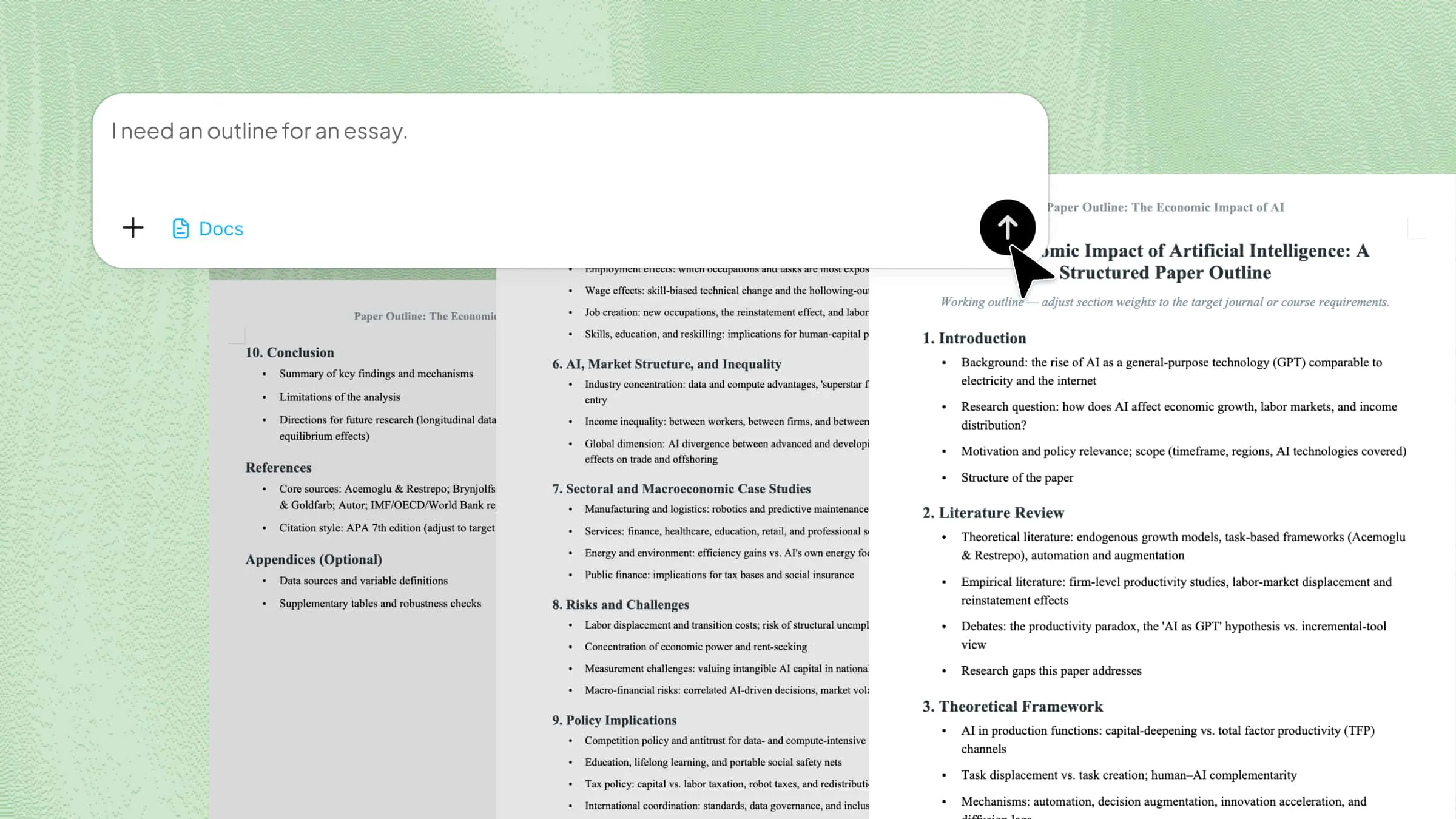
Writing a school speech can feel difficult when you have plenty of ideas but are unsure how to organize them into a clear and engaging message. Learning how to write a speech for school gives you a simple structure for developing your topic, arranging key points, and ending with impact. In this guide, you'll learn practical steps to plan, write, and refine a speech that is easy to present and keeps your audience interested.
How to write a speech for school with Kimi Docs in easy steps
Writing a school speech becomes easier when you have a clear structure and the right support for organizing your ideas. Instead of starting with a blank page, you can use AI to develop your topic, structure your points, and refine the final speech.
Kimi Docs is an AI document agent that helps students create, organize, and edit written content. It can turn a topic or simple prompt into structured speech and help refine the language, tone, and flow. This makes it useful for students who want to prepare a clear and engaging school speech more efficiently.
Step 1: Choose your topic and define your speech goals
Start by choosing a clear topic and deciding what you want your audience to learn, feel, or do after your speech. Give Kimi Docs enough context about your audience, tone, length, and purpose to create a focused draft.
Example prompt:
Step 2: Let Kimi Docs create a first draft
Submit your prompt and let Kimi Docs turn your topic and requirements into a structured speech. It can organize the introduction, main points, supporting details, and conclusion into a complete first draft.
Step 3: Refine the content and make the language student-friendly
Review the draft and use AI instructions to improve its flow, clarity, and impact. You can simplify complex wording, add relatable examples, strengthen key messages, or create smoother transitions.
Examples:
"Make the language more natural and student-friendly."
"Add a relatable school example to support the main point."
"Create smoother transitions between each section."
Step 4: Review, practice, and prepare your final speech
Read through the completed speech and check that the ideas, timing, and language fit your requirements. Download the document, practice delivering it aloud, adjust any parts that feel unnatural, and prepare the final version for presentation.
How does Kimi Docs simplify speech writing for students
Writing a school speech can take time when students need to organize research, develop ideas, and make their message easy to follow. Kimi Docs helps simplify the process by turning rough ideas and source material into structured, editable speech content.
Generate speech outlines from simple ideas
Turn a topic, assignment prompt, or brief instruction into a structured outline with an introduction, key points, supporting details, and conclusion. This provides a clear starting point for how to write a speech for school.
Support in-depth research for stronger speech content
Kimi Docs supports in-depth research by gathering information from reliable sources and expanding key topics with relevant facts, data, and supporting arguments. This helps students build more informative and well-supported speeches.
Adapt content for different assignments
Create structures for different school tasks, including informative and persuasive speeches, presentations, and self-introductions. You can also tailor the content to specific situations, such as a school assembly or election speech.
Improve writing clarity and flow
Ask Kimi Docs to simplify wording, adjust the tone, or reorganize sentences for better readability. The result is a more natural and polished speech that is easier to understand and present.
Key practices for writing an effective school speech
After learning how to start a speech in school, the next step is to make sure the rest of your speech is clear, engaging, and easy to deliver. The following practices can help you organize your ideas, strengthen your message, and create a speech that connects with your audience.
Understand your purpose and audience
Define your goal before writing, whether you're learning how to write a speech for school elections or preparing another type of speech. Choose language and examples that match your purpose and audience.
Create a clear speech structure
Organize your speech into a clear introduction, body, and conclusion. Give each main point a logical place and use transitions to connect ideas so your audience can easily follow your message.
Develop strong main points
Focus on two or three important ideas rather than trying to cover too much information. Support each point with relevant examples, facts, personal experiences, or explanations that make your message more convincing.
Use an engaging opening and ending
Start with a question, short story, surprising fact, or relatable statement to capture attention. End by reinforcing your main message and leaving the audience with a memorable thought or clear call to action.
Write for the spoken word
Use clear, concise sentences that are easy to say and understand when spoken aloud. Read your speech as you write and adjust wording or sentence length when it feels difficult to say naturally.
Practice and refine your delivery
Read your speech aloud several times to identify awkward phrases, unnecessary repetition, or sections that take too long. Practice your pace, pauses, eye contact, and voice so you can deliver the final speech with greater confidence.
Conclusion
Learning how to write a speech for school becomes easier when you follow a clear process, from choosing your topic and defining your goal to drafting, refining, and practicing your speech. Kimi Docs can simplify each stage by helping you organize ideas, develop key points, improve language, and create a polished draft. Whether you are preparing a school assembly speech, election speech, or class presentation, a clear structure and confident delivery can help make your message more effective.