Choosing the right speech can be difficult when every occasion calls for a different tone, structure, and purpose. Whether you need to inform, persuade, inspire, or entertain, not knowing where to start can make writing feel overwhelming. With the right approach and AI assistance, you can organize your ideas, build a clear outline, and create a strong speech faster. Keep reading to explore the different types of speeches and find the right one for your next occasion.
Overview of 11 main types of speeches
Speeches can serve different purposes, audiences, and situations, so choosing the right type is an important first step. From sharing information and explaining ideas to inspiring people or celebrating special moments, each speech has its own approach. Here are 11 types of speeches according to purpose.
| Classification | Type of speech | Purpose | Key characteristics | Common use cases |
|---|---|---|---|---|
| By purpose | Informative speech | Share knowledge and explain ideas | Focuses on facts, explanations, and clear information delivery | Lectures, presentations, educational talks |
| Entertaining speech | Engage and amuse the audience | Uses humor, storytelling, and emotional connection | After-dinner speeches, social events | |
| Demonstrative speech | Teach a process or skill | Includes steps, examples, and visual demonstrations | Tutorials, how-to presentations | |
| Persuasive speech | Influence opinions and encourage action | Uses evidence, reasoning, and emotional appeals | Campaigns, sales presentations, debates | |
| By format and delivery style | Oratorical speech | Deliver formal and powerful messages | Uses structured language and strong delivery techniques | Ceremonies, public events |
| Debate speech | Present arguments and defend positions | Requires logical reasoning and responses to opposing views | Academic debates, competitions | |
| Impromptu speech | Speak without preparation | Requires quick thinking and organized responses | Interviews, Q&A sessions, spontaneous situations | |
| By context and audience | Special occasion speech | Celebrate or recognize important moments | Focuses on appreciation, remembrance, or celebration | Weddings, farewells, eulogies, award ceremonies |
| Pitch speech | Present ideas and gain support | Highlights value propositions and persuades stakeholders | Business pitches, startup presentations | |
| Motivational speech | Inspire people to take action | Uses stories and emotional messages to encourage change | Leadership talks, personal development events | |
| Explanatory speech | Clarify complex topics | Breaks down difficult concepts into understandable ideas | Training sessions, educational presentations |
Different types of speeches with their uses
Speeches can be grouped more clearly by looking at their purpose, delivery style, and context rather than treating every type as the same kind of category. This makes it easier to understand how each speech works and where it is most useful. The following are the main types of speeches and the situations where they are commonly used.
Informative speech
An informative speech provides an audience with facts, knowledge, or useful information about a specific subject. Its main goal is to introduce or expand the audience's knowledge rather than persuade them to adopt a particular view. Common topics include people, places, events, concepts, and research findings.
Examples:
Presenting the history of a country or event
Introducing the key features of artificial intelligence
Sharing research findings about climate change
Entertaining speech
An entertaining speech aims to keep the audience interested, relaxed, and engaged. It often uses humor, personal stories, interesting experiences, and emotional moments to connect with listeners. The main goal is to create an enjoyable experience rather than to provide detailed information or persuade the audience. These speeches are common at social gatherings, parties, dinners, and informal events.
Examples:
Giving a funny speech at a birthday party
Sharing a humorous story at a dinner event
Telling a memorable personal experience at a social gathering
Demonstrative speech
A demonstrative speech teaches the audience how to complete a task or follow a process. The speaker explains each step in order and may use examples, objects, images, or live demonstrations to make the process clearer. Clear instructions and practical examples are especially important for this type of speech. Tutorials, workshops, cooking demonstrations, and how-to presentations often use this format.
Examples:
Showing how to make a professional presentation
Teaching how to cook a recipe
Explaining how to use a software tool
Persuasive speech
A persuasive speech is used to influence what an audience thinks, believes, or does. It combines logical arguments, supporting evidence, examples, and emotional appeals to make a strong case. A good persuasive speech also considers the audience's concerns and gives clear reasons for accepting the speaker's position. It is often used in campaigns, sales presentations, debates, and advocacy events.
Examples:
Convincing students to recycle more
Encouraging people to support a social cause
Recommending a product or service to customers
Oratorical speech
An oratorical speech is a formal speech delivered to communicate an important message with confidence and impact. It usually has a clear structure, carefully chosen language, and strong delivery techniques such as voice control and purposeful pauses. The speaker may use repetition, rhetorical questions, and other techniques to make key ideas memorable.
Examples:
Delivering a graduation ceremony speech
Giving a formal speech about social change
Presenting a historical speech as part of a public event
Debate speech
A debate speech presents a clear position on an issue and supports it with logical arguments and evidence. Unlike a general persuasive speech, it usually involves responding directly to an opposing viewpoint or argument. Speakers need to organize their points carefully and address counterarguments while staying focused on the topic.
Examples:
Arguing whether schools should use AI tools
Discussing whether college education should be free
Presenting a position on environmental policies
Impromptu speech
An impromptu speech is delivered with little or no time for preparation. The speaker needs to think quickly, organize ideas, and respond clearly while speaking. A simple structure, such as an opening point, supporting ideas, and a conclusion, can help keep the speech focused. These speeches are common during interviews, Q&A sessions, meetings, and unexpected speaking situations.
Examples:
Answering an unexpected interview question
Giving a quick opinion during a meeting
Responding to a random speaking prompt in class
Special occasion speech
A special occasion speech is delivered to mark an important personal, social, or formal event. Its purpose can be to celebrate, honor, remember, welcome, thank, or recognize someone or something. Farewell speeches, eulogies, wedding speeches, and award speeches are common forms of this category, each shaped by the occasion and audience.
Examples:
Giving a wedding toast
Delivering a retirement farewell speech
Presenting an award acceptance speech
Pitch speech
A pitch speech presents an idea, product, service, or business opportunity and encourages the audience to support it. The speaker focuses on the problem, the proposed solution, its value, and the reasons the audience should take an interest in it. Strong evidence and a clear message can make the pitch more convincing and memorable. Pitch speeches are widely used in business meetings, startup presentations, and sales settings.
Examples:
Presenting a startup idea to investors
Introducing a new product to customers
Pitching a business proposal to company leaders
Motivational speech
A motivational speech aims to inspire people to believe in themselves, overcome challenges, or take action. Speakers often use personal stories, real-life examples, powerful messages, and emotional connections to encourage the audience. The speech usually ends with a clear idea or call to action that gives listeners something to take away.
Examples:
Encouraging students before exams
Sharing a story about overcoming failure
Inspiring a team to achieve a goal
Explanatory speech
An explanatory speech focuses on helping an audience understand how or why something works, happens, or develops. It is particularly useful for complex topics that involve processes, systems, or relationships. Speakers typically break the subject into clear steps and use examples, comparisons, or cause-and-effect explanations to make it easier to understand.
Examples:
Explaining how the internet works
Describing how a scientific process occurs
Explaining how a new company process works
How to create any type of speech with Kimi Docs
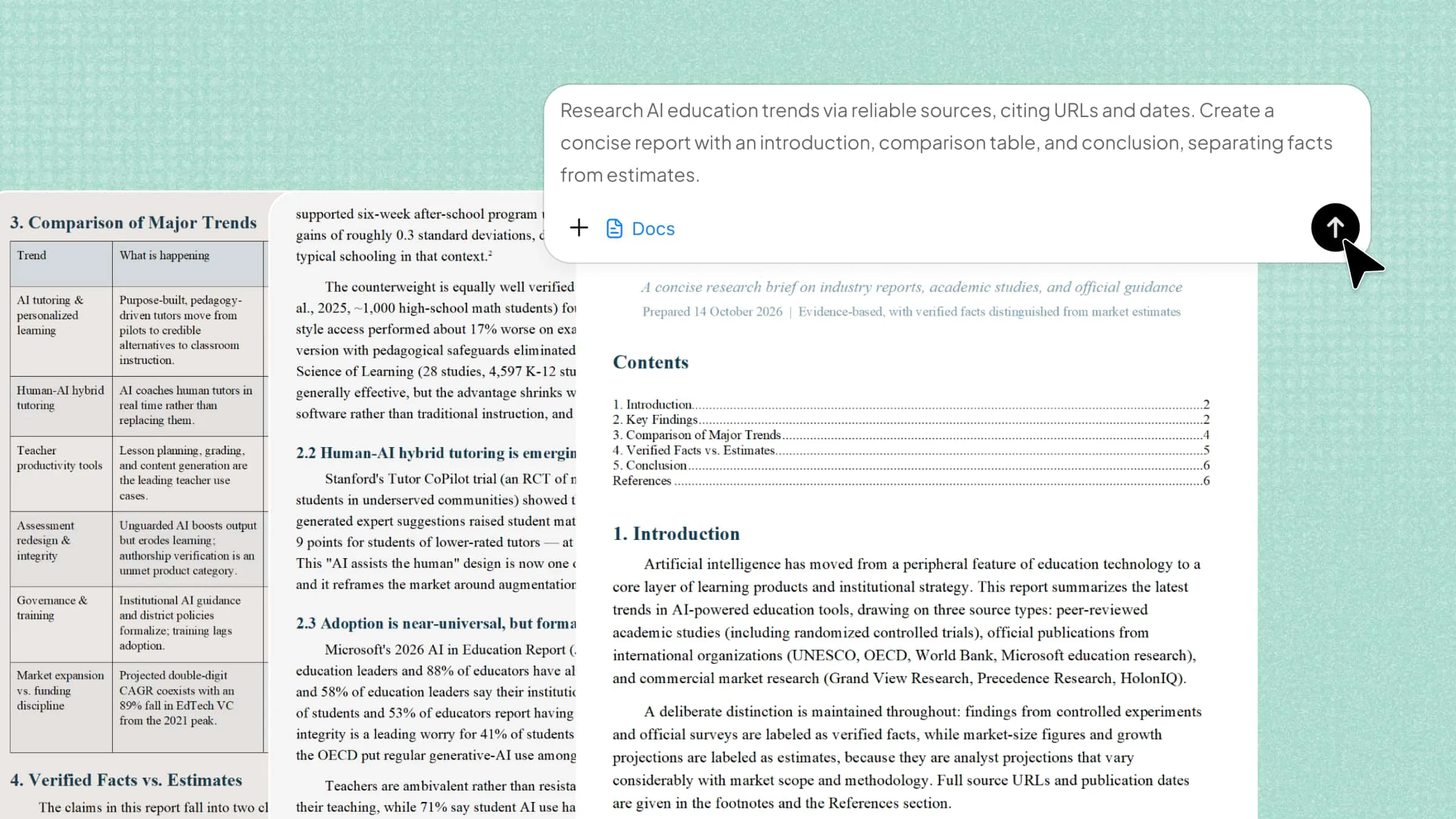
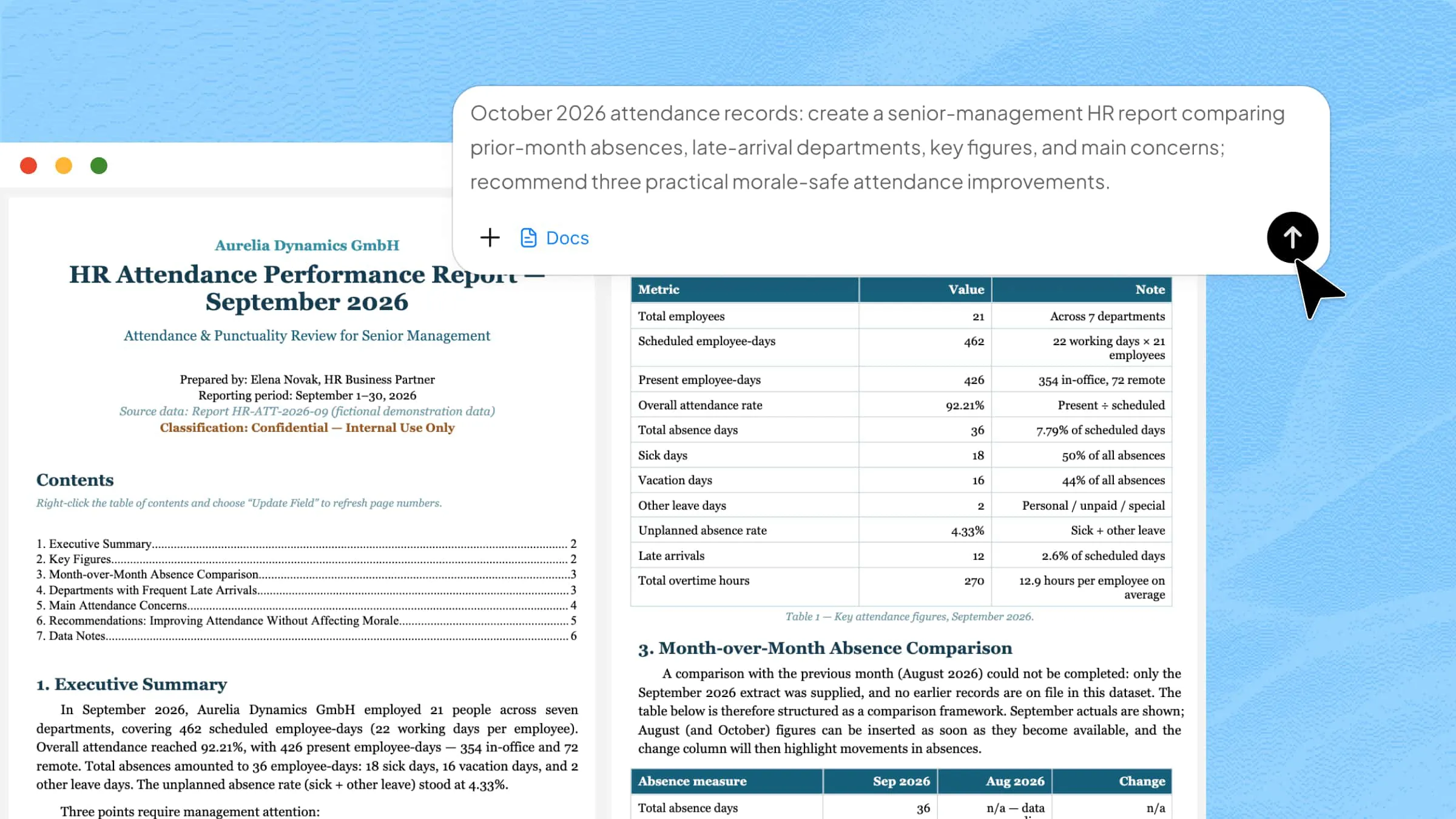
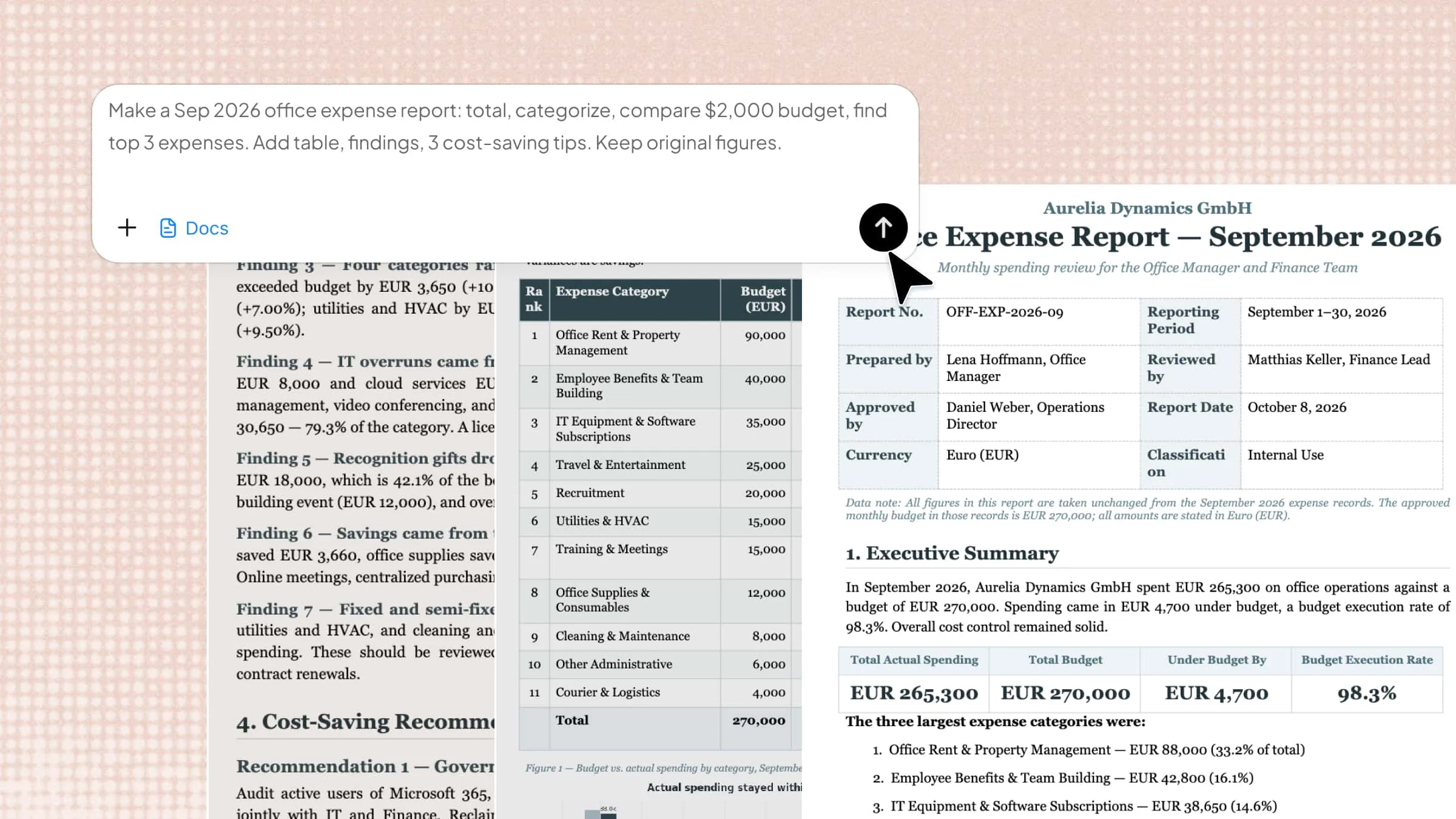
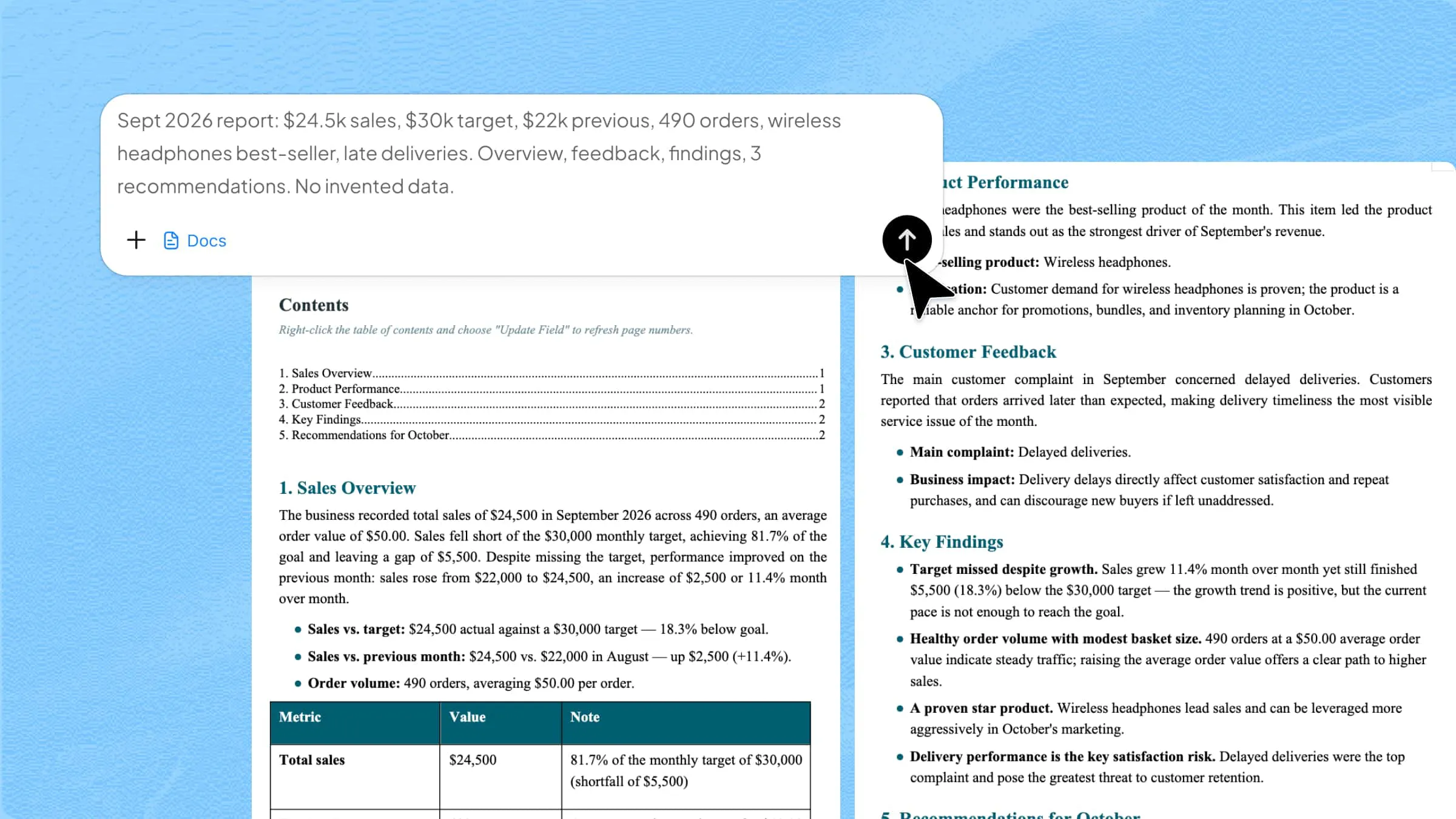
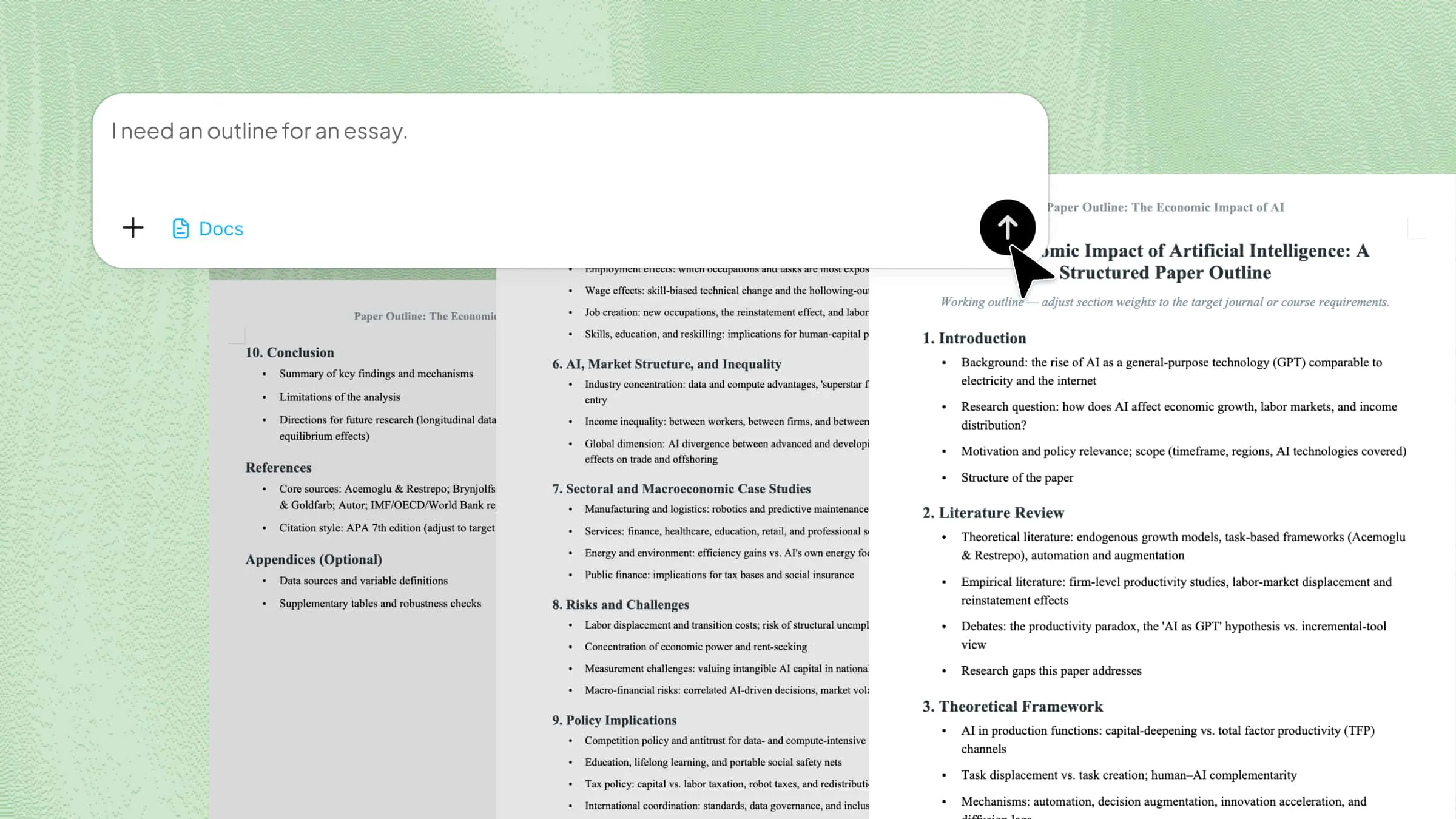
Kimi Docs is an AI document agent that can help you plan, organize, and draft speeches in one place. It can turn your ideas or notes into a structured outline, expand key points into a complete draft, and help refine the language for your audience and purpose. This makes it useful for working with different speech formats without starting from a blank page.
Follow the steps below to create and refine your speech with Kimi Docs.
Step 1: Share ideas with Kimi Docs for a draft
Start by giving Kimi Docs the topic, audience, purpose, tone, and key points you want to include. A specific prompt gives the AI enough context to create a speech that matches your needs.
Example prompt:
Step 2: Let AI generate a draft
Once you submit your prompt, Kimi Docs can turn your ideas into a structured speech draft. Review the generated content to make sure the main points, examples, and tone match your original requirements.
Step 3: Review and download the speech
Read the complete speech carefully and check its structure, facts, flow, and wording. Make any final edits you need, then download the finished speech so you can practice it or use it for your presentation.
Main features of Kimi Docs
Kimi Docs can make speech writing easier by helping you move from a simple idea to a clear, polished draft. Its AI features can support different speech needs, from planning and drafting to refining the final content. Here are some of its key features.
Generate speeches from simple prompts: Turn a topic, assignment requirement, or brief idea into a complete speech draft with a clear structure, including an introduction, main points, and conclusion.
Support different speech types and occasions: Create content for informative speeches, persuasive speeches, self-introductions, graduation speeches, special occasions, and other presentation scenarios.
Build a structured outline before writing: Organize your ideas into a logical speech framework, helping you develop key points and maintain a clear flow throughout the speech.
Adjust tone and style for different audiences: Rewrite speeches to match different needs, such as a formal academic presentation, a casual classroom talk, or an inspiring public speech.
Refine and improve your draft with AI assistance: Edit wording, strengthen transitions, improve clarity, and polish your speech until it is ready for delivery.
Tips for choosing the right type of speech
Choosing the right speech becomes easier when you first understand what you want to achieve and who will be listening. Considering the setting, tone, and time available can also help you narrow down the best option. Keep these tips in mind when choosing between different types of speech for your next presentation.
Identify your main purpose
Think about what you want your audience to learn, feel, or do after your speech. Your purpose can help you decide whether an informative, persuasive, entertaining, or motivational speech is the best fit for your topic, audience, and overall goal.
Consider your audience's needs
Think about who will listen to your speech and what they already know about the topic. Choose language, examples, and ideas that match their interests, knowledge level, expectations, and ability to follow the subject easily without feeling confused.
Think about the occasion or setting
The situation can strongly affect which speech type is appropriate for your audience and message. A wedding, classroom presentation, business meeting, debate, and award ceremony may each require a different approach, structure, tone, and level of formality.
Match the tone to the topic
Choose a tone that feels natural for both your subject and audience. A formal topic may need a professional tone, while a social event may work better with a friendly, warm, or humorous style that keeps listeners comfortable and engaged throughout.
Check the time you have available
Consider how much time you have to prepare and deliver the speech before choosing its structure. A short speaking slot may require fewer points and a simple structure, while a longer presentation gives you room to explain ideas in more detail and include useful examples.
Review examples of similar speeches
Looking at similar speeches can help you understand how they are structured and delivered effectively. Pay attention to their openings, main points, tone, transitions, and conclusions, then use those ideas to shape your own speech naturally while keeping your message original.
Conclusion
Writing a strong speech is less about using complicated words and more about having a clear message that connects with your audience. Once you know your goal and choose the right type of speech, putting your ideas together becomes much easier. A well-planned speech can help you communicate clearly, sound confident, and leave a lasting impression. Kimi Docs can make the writing process faster by helping you turn your ideas into a polished speech.