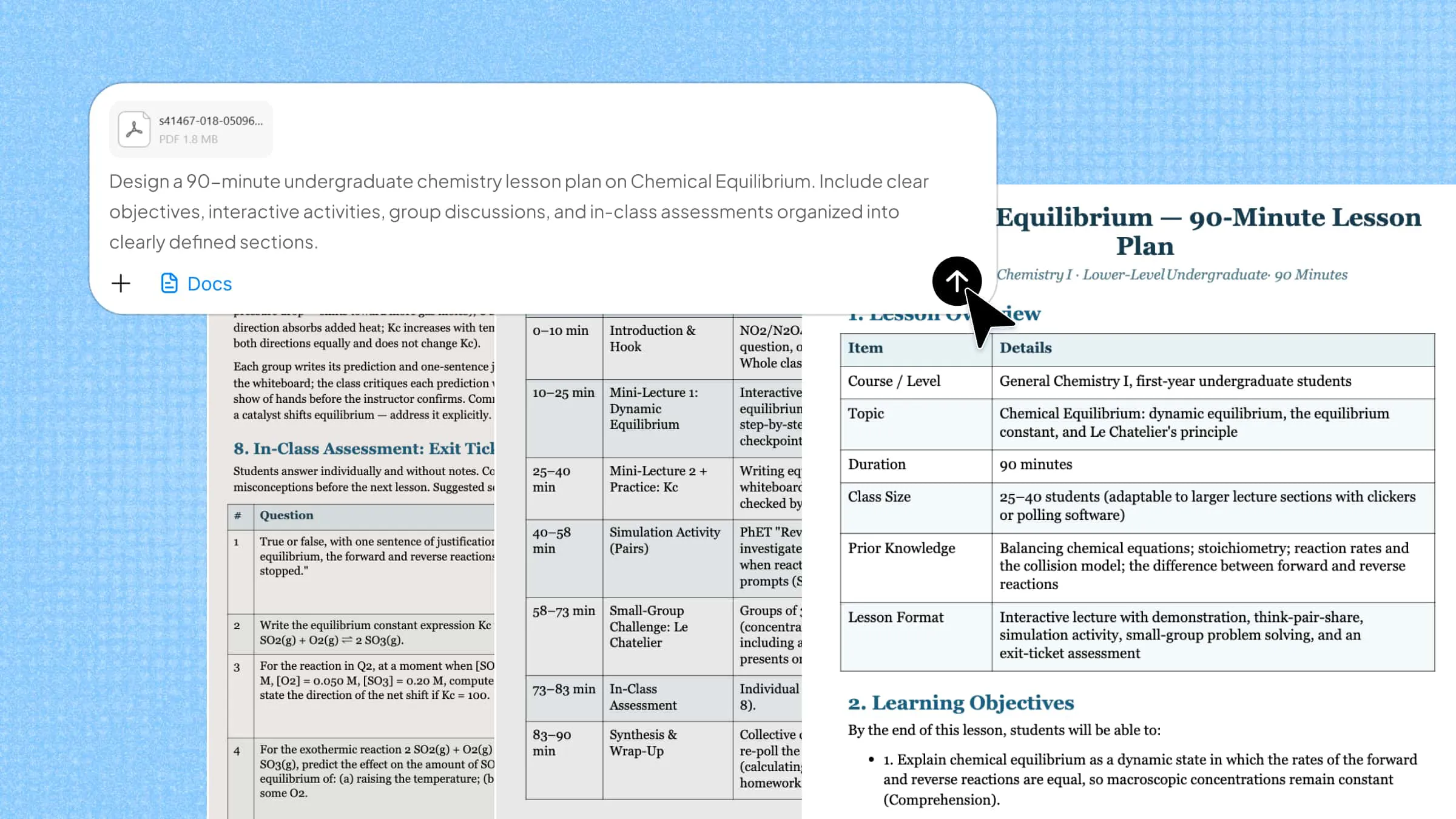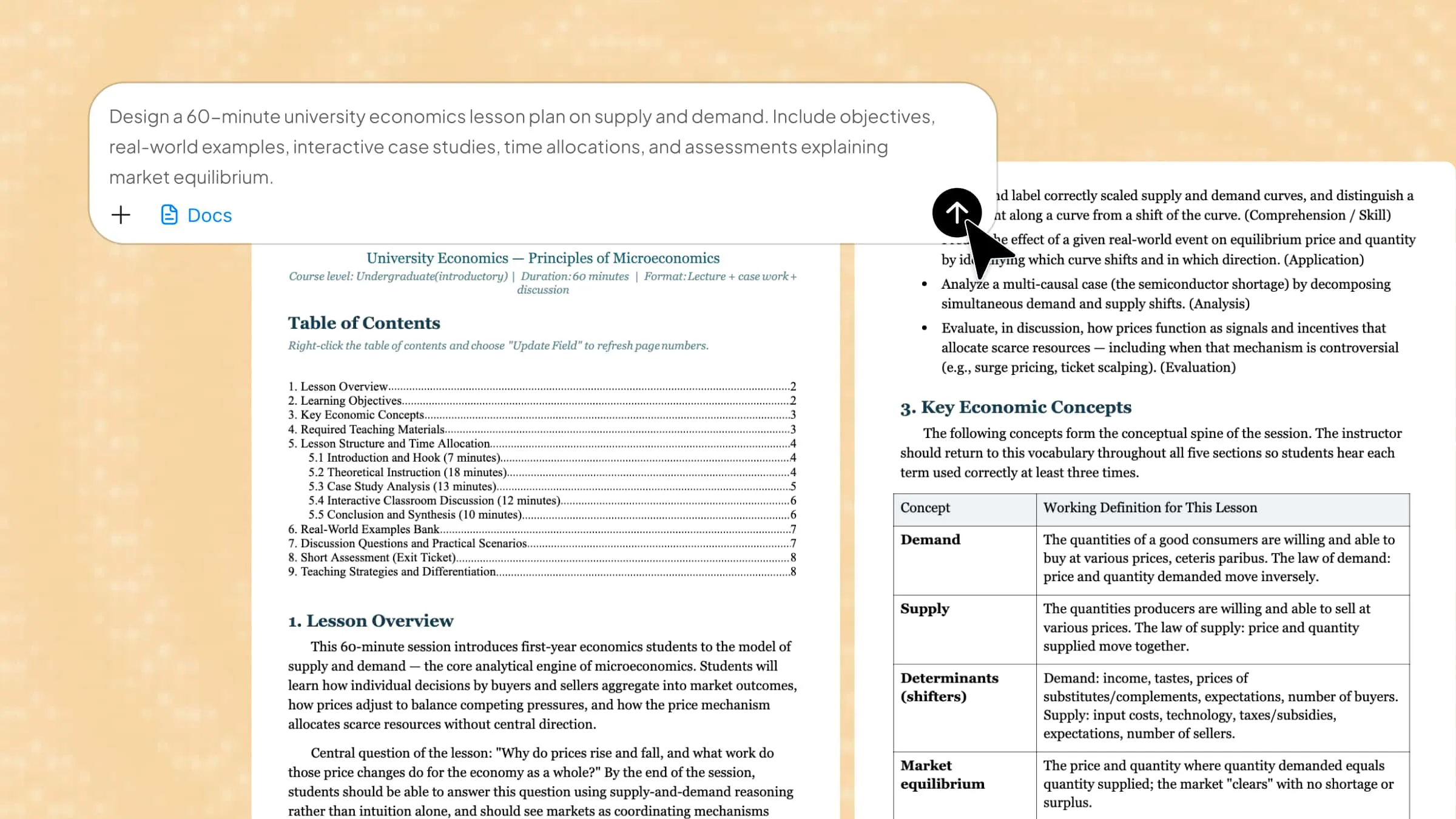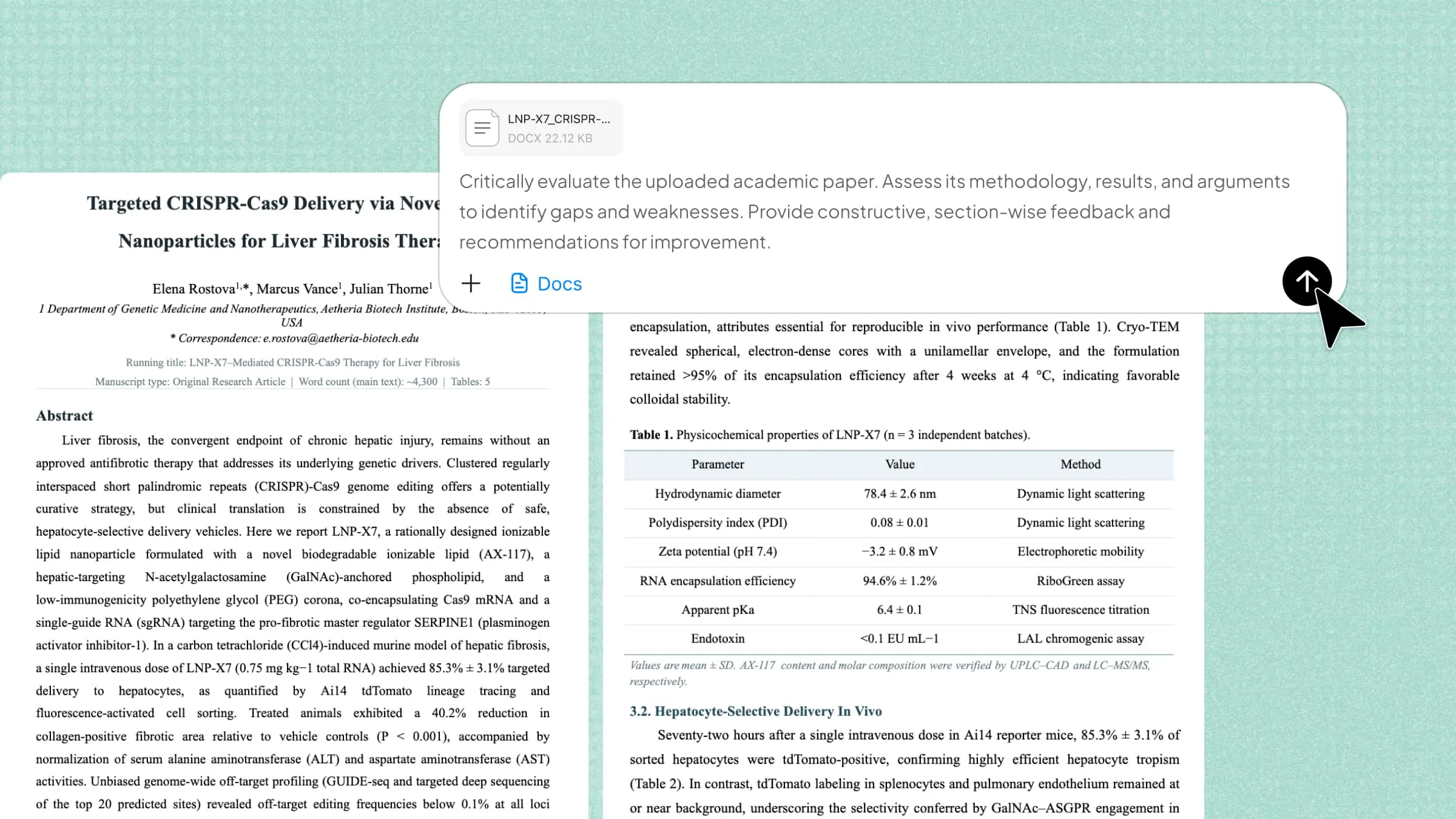
Reviewing academic papers can be time-consuming, especially when you need to evaluate research quality, identify methodological weaknesses, verify references, and understand complex findings. An AI paper reviewer can simplify this process by analyzing research papers, highlighting potential issues, and providing structured feedback. In this article, we explore 10 AI paper reviewers worth trying in 2026 to help you find the right tool for faster and more effective academic reviews.
Overview of 10 AI research paper reviewers
Here are 10 AI paper reviewers worth exploring, each offering different features for evaluating academic writing, checking research quality, and improving manuscripts. This comparison highlights their key capabilities, ideal users, and other important details to help you choose the right AI research paper reviewer for your academic needs.
| Tool | Primary focus | Key review capabilities | Writing & editing features | Suitable for |
|---|---|---|---|---|
| Kimi Docs | AI document analysis | Analyzes arguments, methodology, findings, and conclusions; searches online sources; compares documents | Academic rewriting, summarization, document organization, Word/PDF export | Students, researchers, and academic writers |
| Manusights | Pre-submission manuscript review | Evaluates methodology, statistics, research claims, and citations | Prioritized feedback and revision recommendations | Researchers preparing journal submissions |
| Reviewer3 | Technical peer review | Reviews study design, statistics, reproducibility, and research integrity | Detailed, section-specific review annotations | Researchers and journal editors |
| q.e.d. Science | Scientific claim evaluation | Assesses scientific claims, supporting evidence, research gaps, and novelty | Feedback on scientific reasoning and arguments | Scientists and academic researchers |
| SciSpace | Literature-based manuscript review | Reviews methodology, arguments, research gaps, and supporting literature | Structured reviewer feedback and research assistance | Students and researchers |
| Paperpal | Academic editing and manuscript review | Evaluates manuscript quality and submission requirements | Grammar correction, paraphrasing, and academic language enhancement | Researchers and non-native English speakers |
| Thesify | Academic writing feedback | Reviews manuscript sections, arguments, and supporting evidence | Structured feedback and actionable revision suggestions | Students and dissertation writers |
| Trinka | Academic proofreading | Checks technical writing, document consistency, and citation quality | Grammar correction, proofreading, and language refinement | Researchers and technical authors |
| Penelope.ai | Manuscript compliance checking | Checks document completeness, references, and ethical declarations | Limited language editing; focuses on technical corrections | Researchers and journal editors |
| PaperReview.ai | Automated AI peer review | Evaluates originality, research importance, experimental soundness, and clarity | AI-generated feedback and revision recommendations | Researchers seeking additional manuscript feedback |
| Writefull | Academic language enhancement | Supports manuscript content refinement | Grammar checking, paraphrasing, rewriting, and abstract generation | Academic writers and non-native English speakers |
10 AI paper reviewers for better academic writing
Choosing the right AI paper reviewer can make academic writing and research evaluation more manageable. The following tools offer different capabilities, from analyzing research arguments and checking manuscript quality to improving grammar, clarity, and academic structure.
Kimi Docs
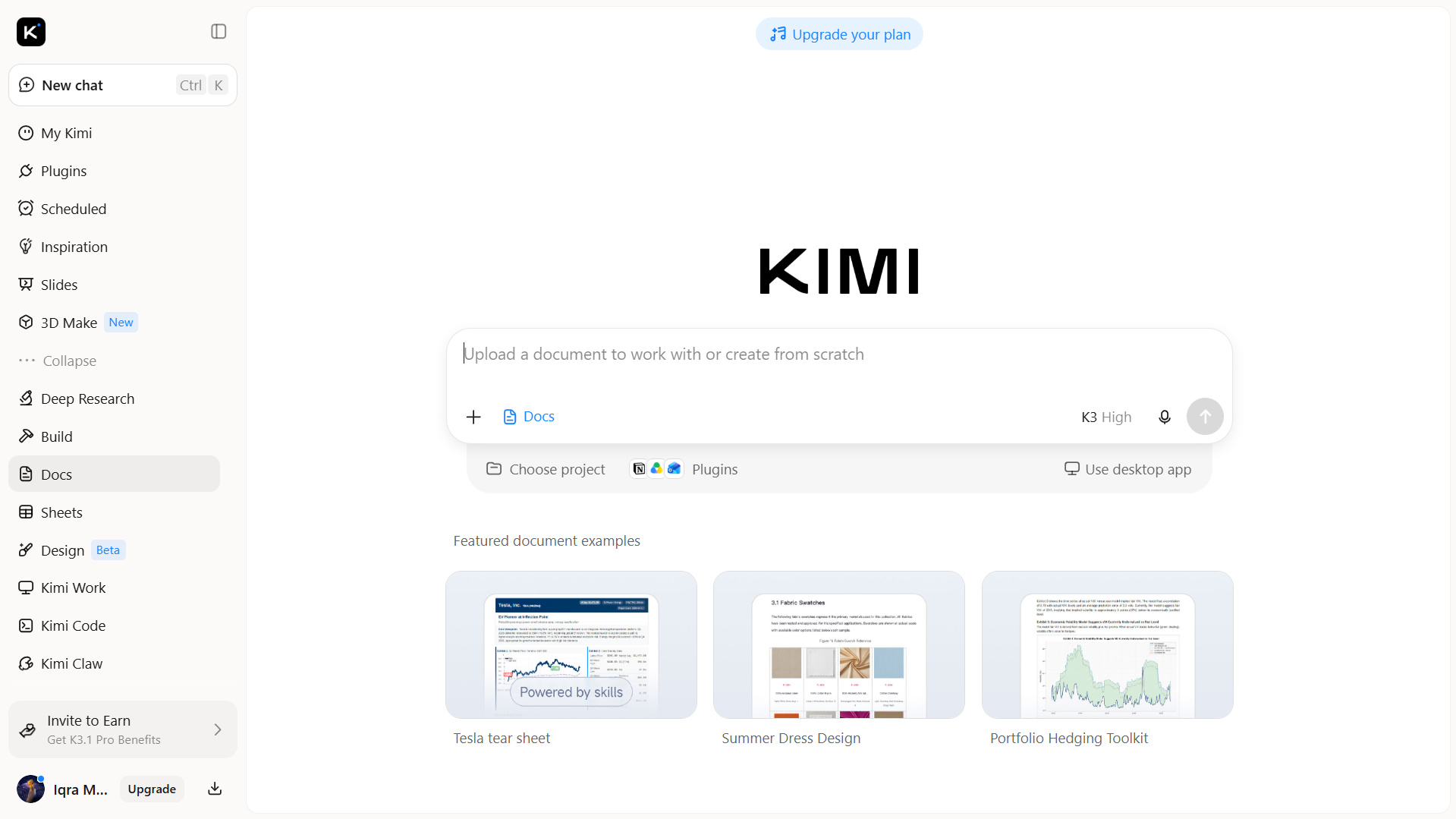
Kimi Docs is an AI document agent that helps students and researchers analyze academic papers. You can upload research documents and ask questions about their methodology, findings, arguments, and conclusions. It summarizes complex sections, extracts key information, and helps identify areas that may need further attention. Although it is not a dedicated peer-review platform, it can work as an AI paper reviewer for initial research analysis and document evaluation.
Main features
Analyze academic papers in multiple formats: Supports academic materials in PDF, DOCX, PPTX, XLSX, and TXT formats, recognizing document structures such as abstracts, literature reviews, methodologies, results, and references. Kimi Docs can also retrieve relevant academic information from online research sources and databases, helping researchers locate useful materials and examine scholarly content more efficiently.
Identify weaknesses in arguments and reasoning: Examine how ideas connect throughout a paper, assess whether conclusions are adequately supported by the presented evidence, and highlight potential gaps in reasoning that deserve closer attention.
Verify information with online research: Combine uploaded documents with online information to check relevant facts, explore supporting research, and examine whether claims align with available sources. Source references also make it easier to trace information during review.
Improve academic writing and clarity: Refine sentence structure, academic tone, word choice, and paragraph flow. Kimi Docs can help rewrite unclear passages, reduce unnecessary repetition, and make complex research findings easier to understand.
Organize and revise research documents: Create structured academic documents, reorganize sections, and incorporate feedback into revised drafts. Researchers can also review document changes and export polished versions in Word or PDF format for further editing and submission.
Suitable for
Students who need to understand and analyze academic research papers.
Researchers who want to extract key findings from lengthy documents.
Academics who need assistance reviewing research arguments and methodologies.
Writers who want to identify unclear sections and improve manuscript quality.
How to use Kimi Docs for AI paper review
You can use Kimi Docs to analyze a research manuscript, identify areas for improvement, and generate structured feedback. Follow these three steps to get started.
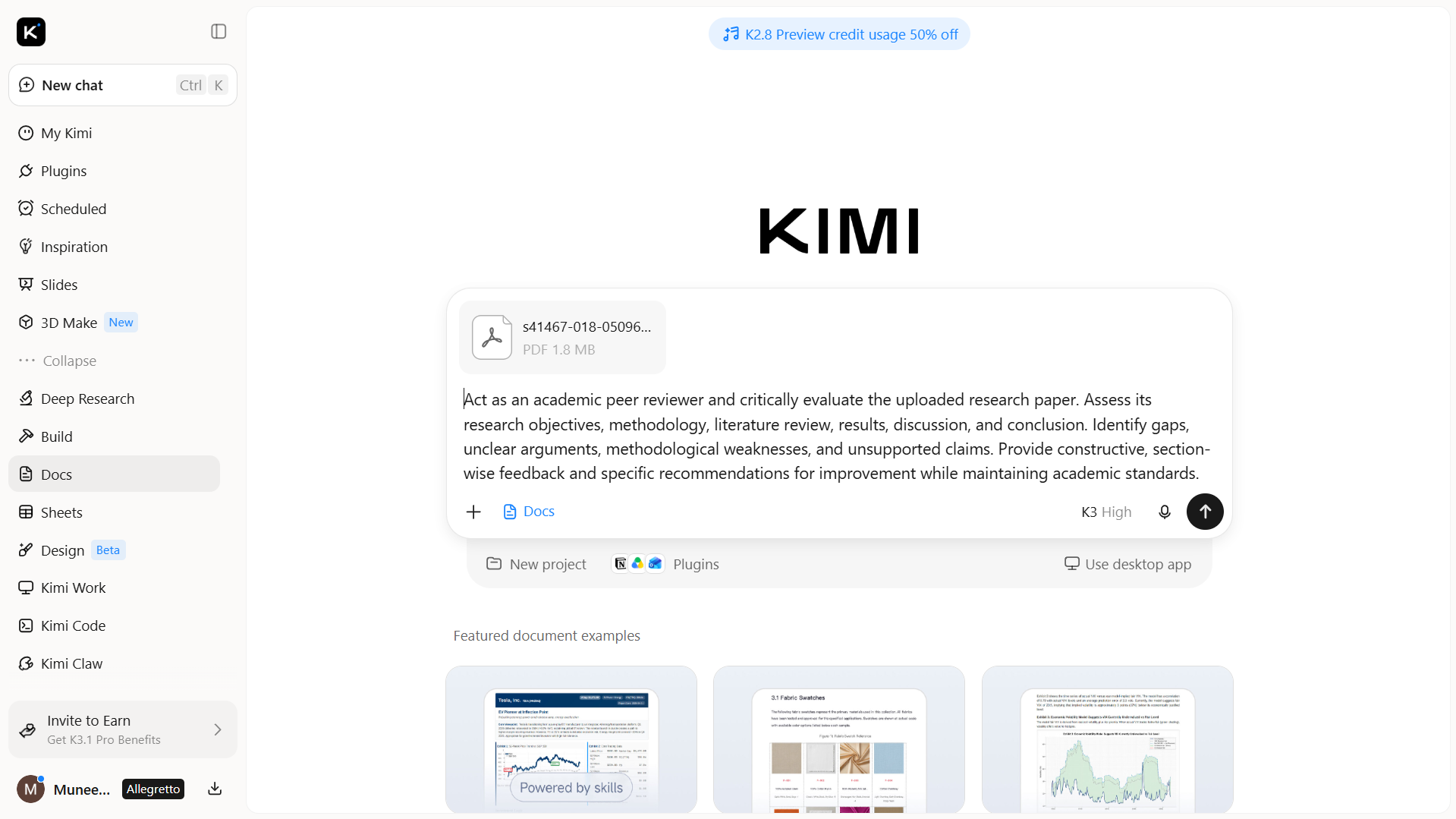
Step 1: Upload the document and write a prompt
Open Kimi Docs, upload your research paper in PDF or Word format, and enter a detailed prompt explaining what you want the AI to evaluate.
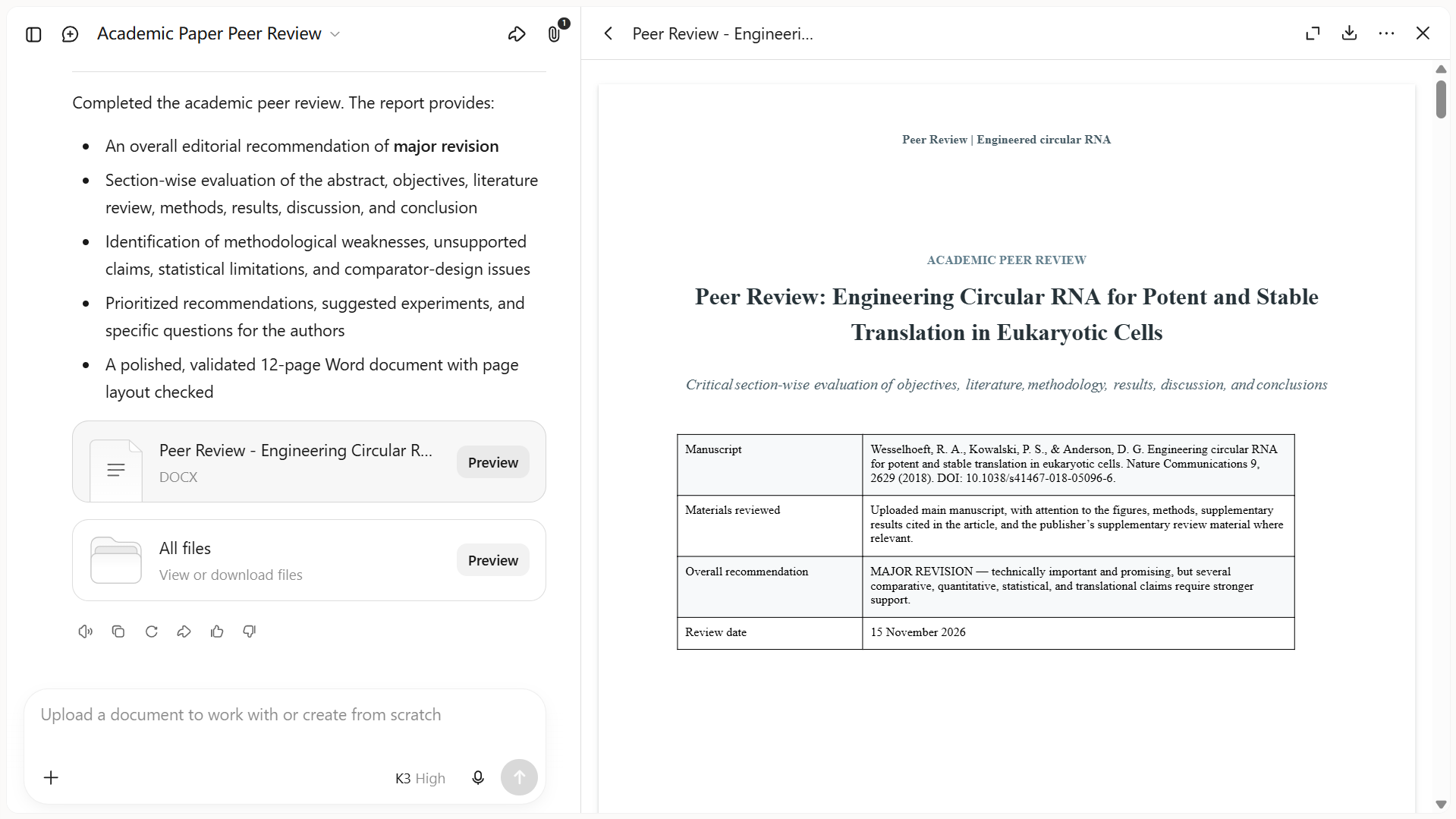
Step 2: Let AI review your paper
Submit your prompt and allow Kimi to analyze the document. It will generate feedback based on your instructions, highlighting potential weaknesses, research gaps, unclear explanations, and opportunities to improve the manuscript.
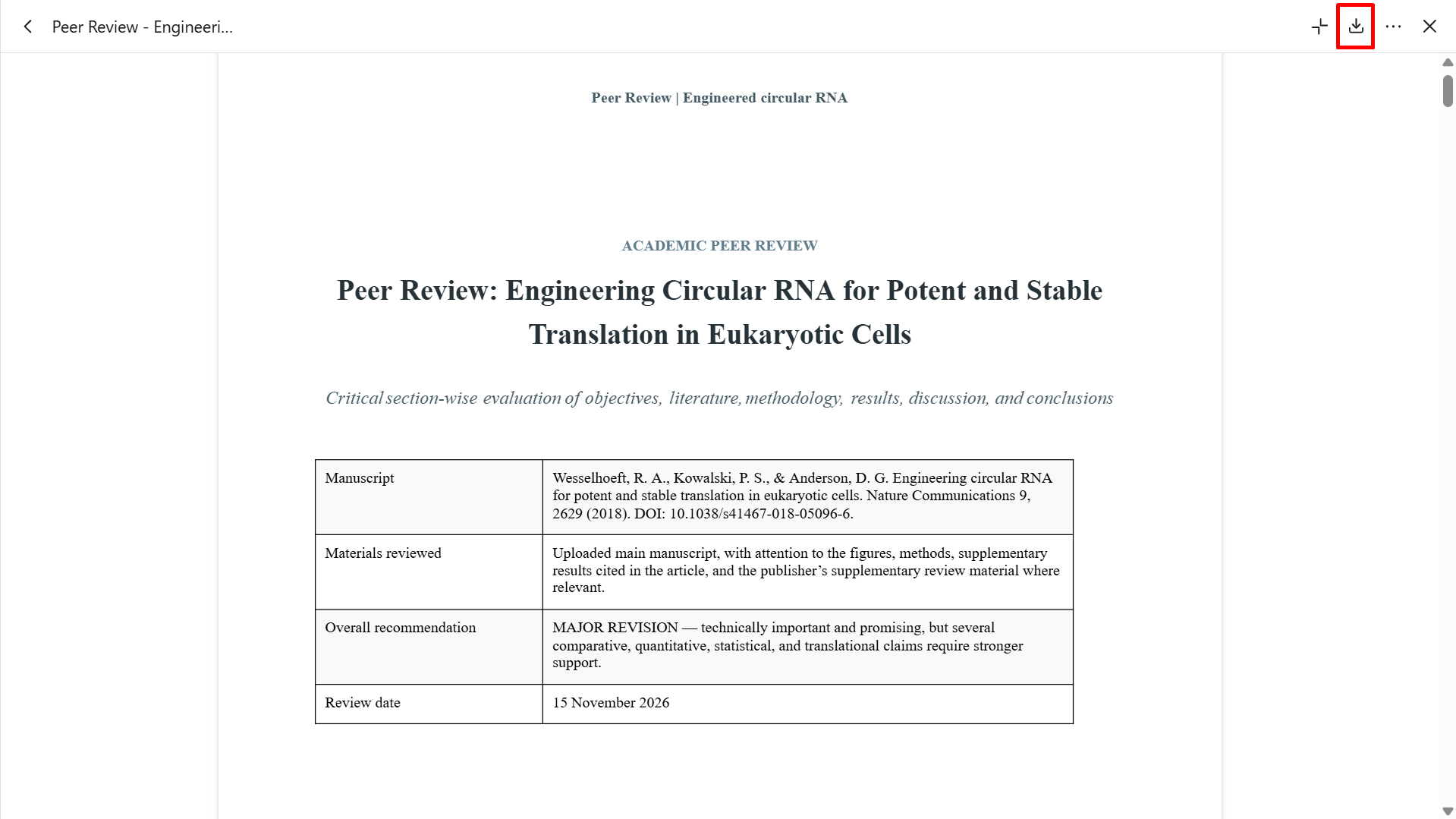
Step 3: Review the content and export your document
Examine the generated feedback and check the suggested improvements against your original research. You can ask follow-up questions to clarify specific comments or request revisions to selected sections. Once satisfied, organize the final content and export your document in a supported format, such as Word or PDF.
Manusights
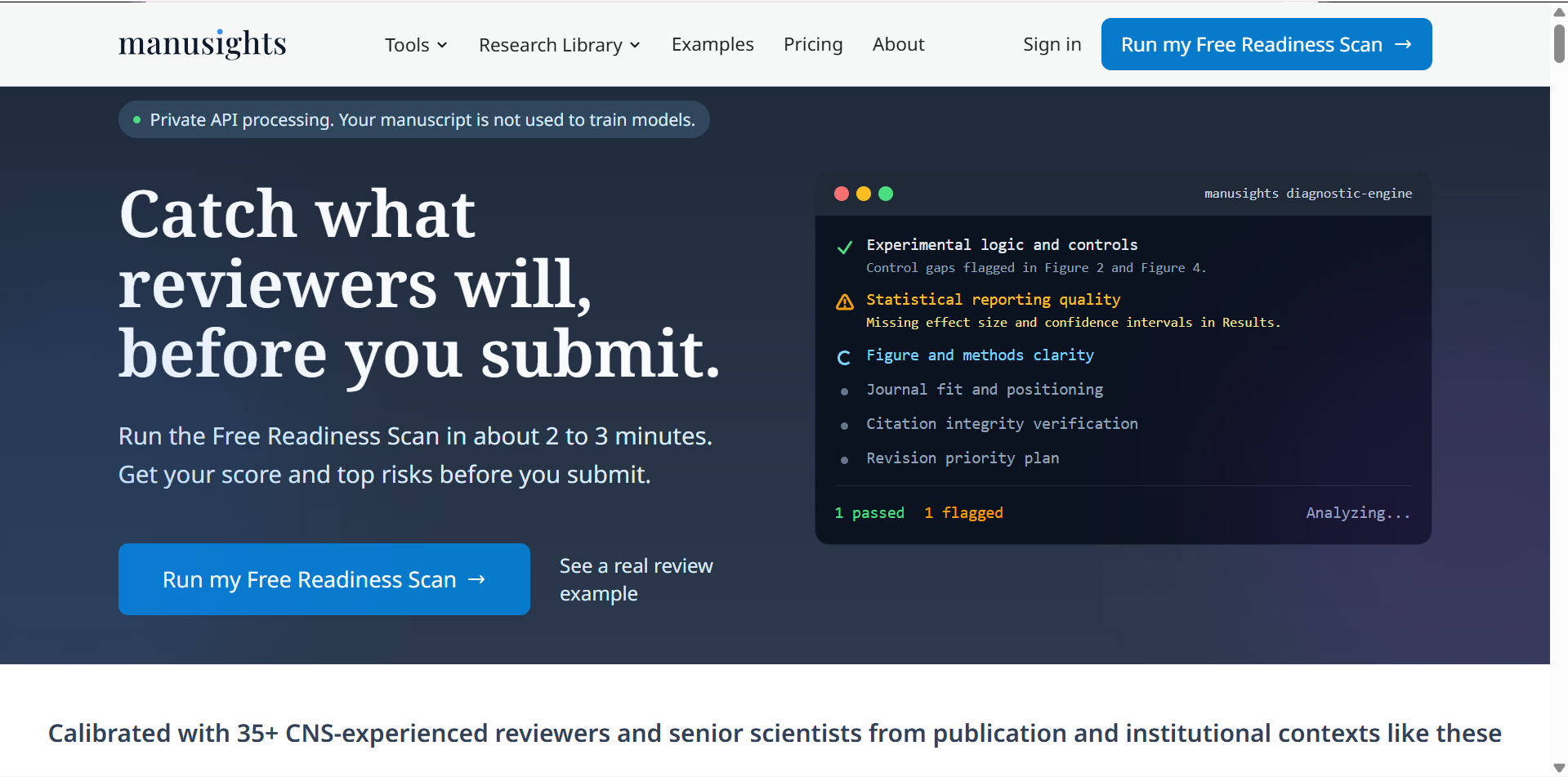
Manusights is an AI-powered pre-submission review platform designed to evaluate research manuscripts before journal submission. It examines research claims, methodology, evidence, figures, and citations to identify potential weaknesses. Its reviewer-calibrated assessment helps researchers anticipate concerns that journal reviewers might raise. This AI research paper reviewer is particularly useful for identifying scientific and structural issues before submitting a manuscript.
Main features
Manuscript readiness assessment: Evaluate your paper against reviewer-calibrated criteria and identify potential submission risks.
Methodology evaluation: Identify weaknesses in research design, statistical analysis, missing controls, and unsupported conclusions.
Citation verification: Check whether references support the claims made in your manuscript and identify potential citation problems.
Prioritized revision feedback: Receive severity-ranked findings with specific recommendations to help address important issues first.
Suitable for
Researchers preparing manuscripts for journal submission.
PhD students who need feedback before submitting their first research paper.
Academics who want to identify methodological and statistical weaknesses.
Authors seeking detailed, reviewer-style feedback on scientific manuscripts.
Reviewer3
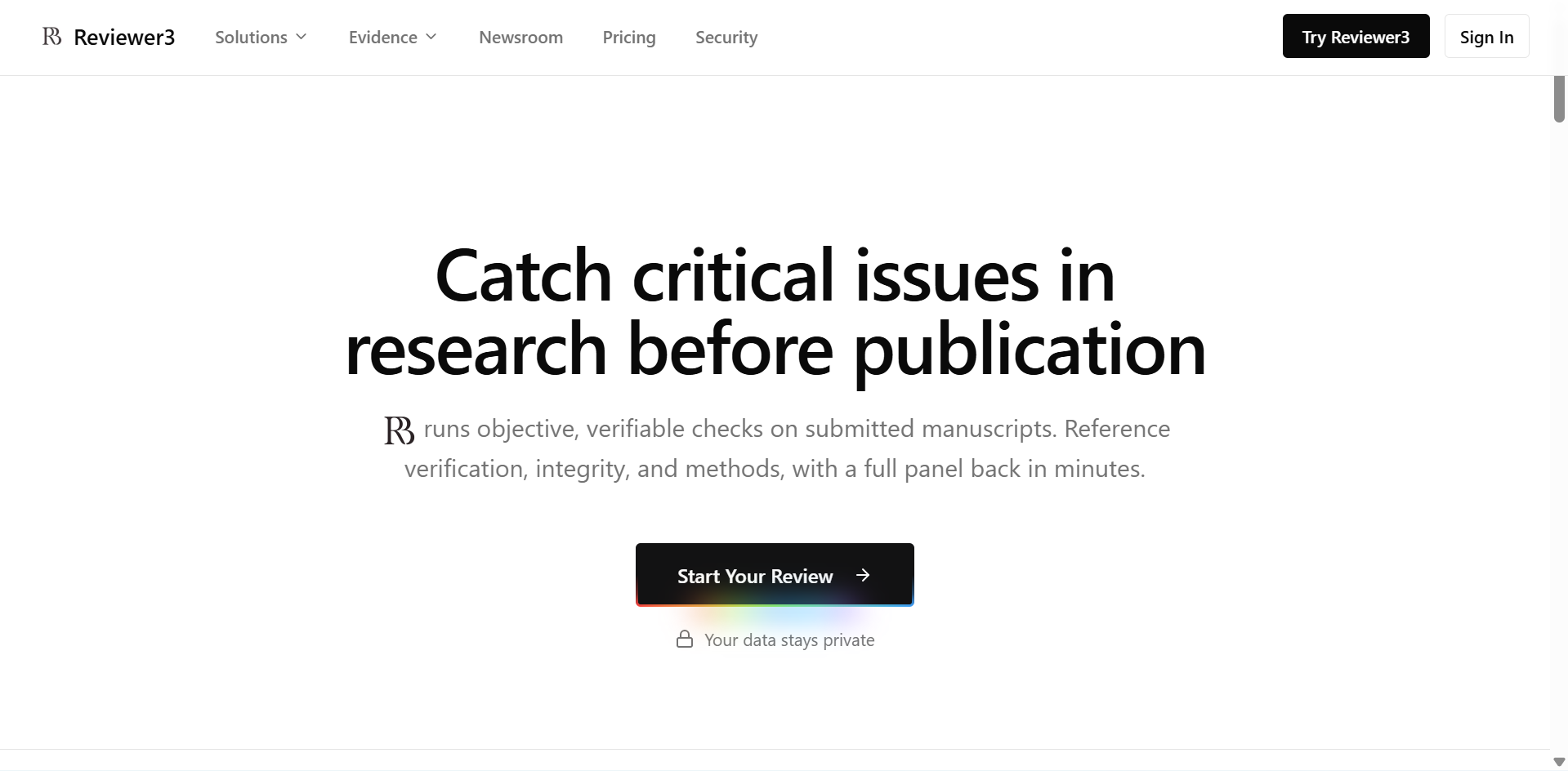
Reviewer3 is an AI-powered peer-review platform that uses multiple specialized agents to evaluate research manuscripts. It examines different aspects of a paper, including study design, statistics, reproducibility, research context, and limitations. Its review process also includes technical and research-integrity checks to help identify problems that could affect the reliability of findings. It works as an AI paper reviewer for researchers who want a technical assessment before publication.
Main features
Multi-agent manuscript review: Uses multiple AI reviewer agents to examine different aspects of a research paper and provide comprehensive feedback.
Research integrity checks: Identifies potentially fabricated, retracted, irrelevant, and self-cited references.
Technical evaluation: Examines research claims, statistical methods, data, code, and supporting evidence.
Detailed review annotations: Generates feedback linked to specific manuscript sections to help researchers understand and address identified issues.
Suitable for
Researchers who want technical feedback before publication.
Academics evaluating research methods and statistical findings.
Authors who need assistance identifying unsupported research claims.
Journal editors seeking additional support for manuscript screening.
q.e.d. Science
q.e.d. Science is an AI-powered research evaluation platform designed to assess the validity of scientific claims. Instead of focusing only on grammar or writing quality, it breaks research papers into individual claims and examines how well the available scientific evidence supports them. It also helps distinguish original contributions from previously established findings. This makes it a useful option for researchers seeking critical scientific feedback on their manuscripts.

Main features
Scientific claim evaluation: Breaks research papers into individual claims and assesses their validity against available scientific evidence.
Research gap identification: Highlights weaknesses and gaps in scientific arguments and suggests areas that need further investigation.
Novelty assessment: Helps distinguish new research contributions from findings that have already been established in the field.
Evidence-based feedback: Provides tailored suggestions to strengthen scientific arguments and improve research validity.
Suitable for
Scientists who need to evaluate the validity of research findings.
Life science researchers assessing scientific claims and evidence.
Academics investigating research gaps and novel contributions.
Researchers preparing scientific manuscripts and grant proposals.
SciSpace
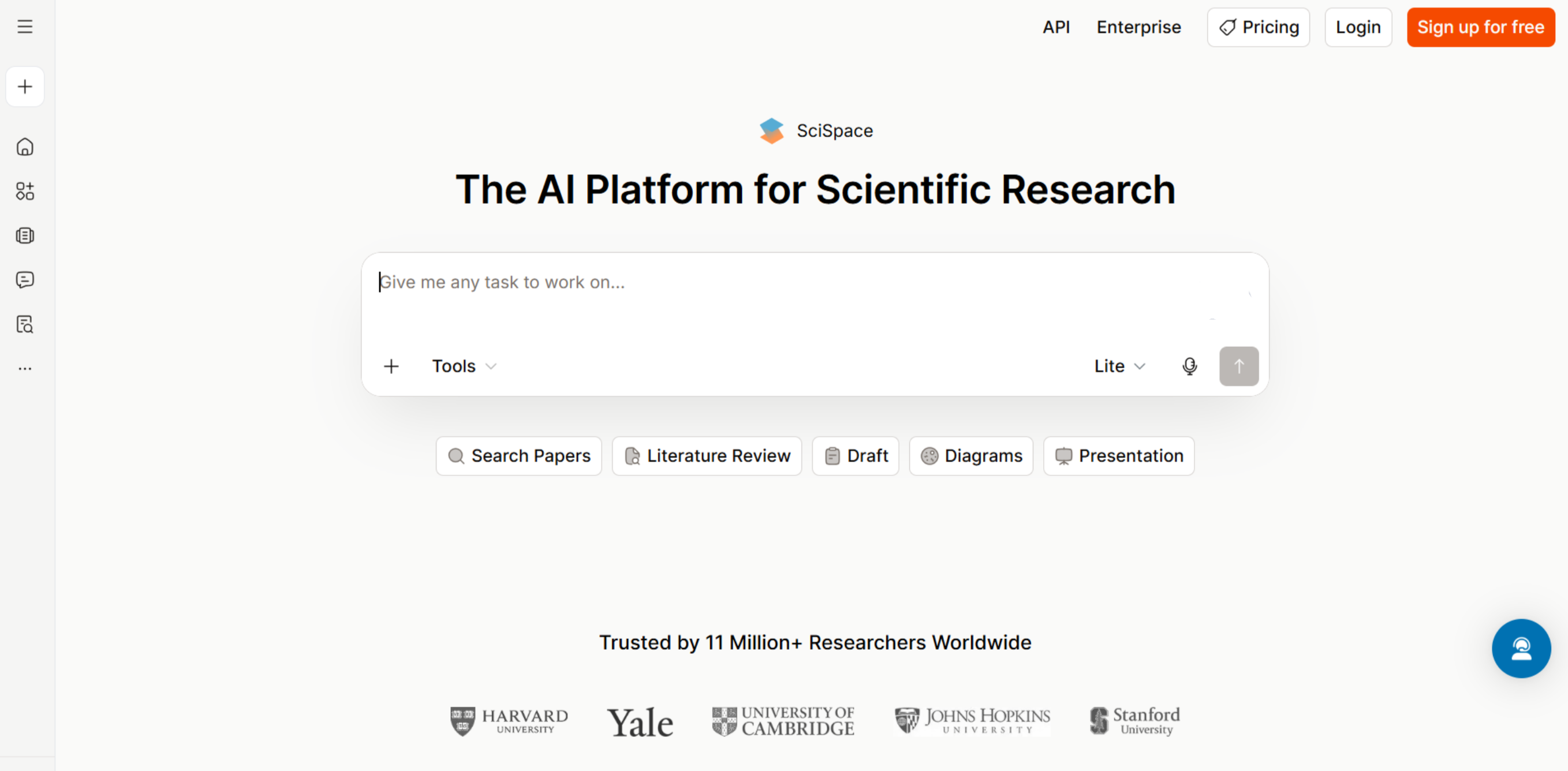
SciSpace is an AI-powered research platform that helps users discover, understand, and evaluate academic literature. Its AI Peer Review Assistant can analyze research manuscripts, identify methodological gaps, and generate structured reviewer-style reports. Researchers can also explore relevant publications and examine how existing studies support their arguments. As an AI research paper reviewer, SciSpace is useful for combining manuscript evaluation with literature-based research assistance.
Main features
AI peer review assistant: Evaluate research manuscripts and generate structured feedback on arguments, methodology, and supporting evidence.
Research gap detection: Explore existing literature to identify under-researched areas and potential research opportunities.
Literature analysis: Search and analyze academic publications to understand existing findings and research developments.
Citation and evidence support: Explore relevant research sources and connect findings with supporting academic literature.
Suitable for
Students who need help understanding complex academic publications.
Researchers preparing literature reviews and research manuscripts.
Academics looking for methodological feedback and research gaps.
Authors who want to connect manuscript reviews with relevant scientific literature.
Paperpal
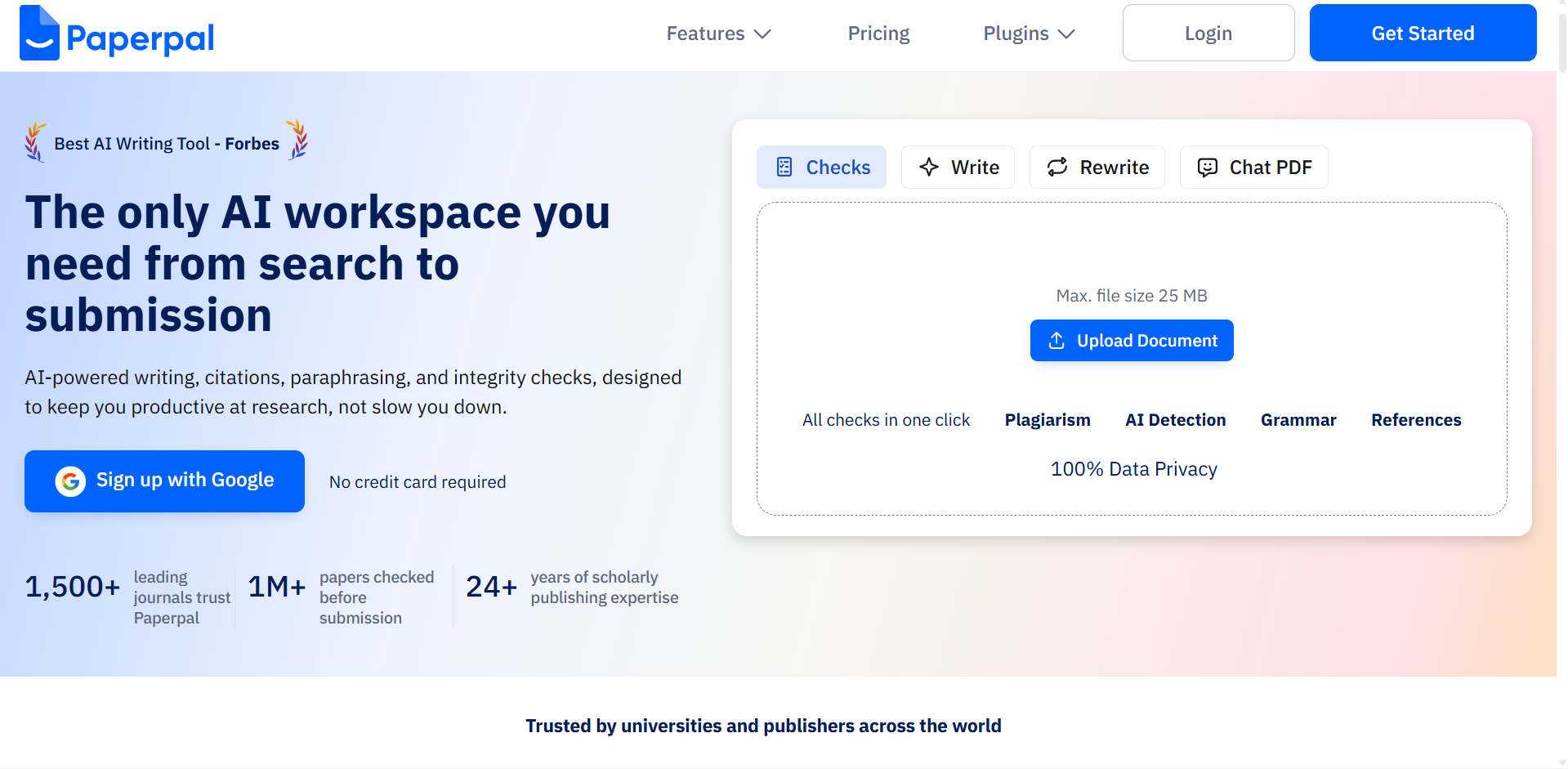
Paperpal is an AI academic writing assistant that helps researchers improve manuscript quality and prepare papers for journal submission. It offers grammar correction, paraphrasing, academic language enhancement, and AI-powered review features. Its manuscript checker also evaluates formatting, references, disclosures, and other submission requirements. It is particularly useful for researchers who want an AI paper reviewer alongside academic editing and proofreading tools.
Main features
AI manuscript review: Use AI-powered review assistance to receive feedback and identify areas that need improvement.
Academic grammar checking: Detect grammar, punctuation, vocabulary, and language issues to improve manuscript readability.
Journal submission checks: Examine references, manuscript structure, figures, tables, and required declarations.
Paraphrasing and language enhancement: Rewrite sentences, improve academic tone, and make research writing clearer without changing the intended meaning.
Suitable for
Researchers preparing manuscripts for journal publication.
Students who need help improving academic English.
Non-native English speakers writing scientific papers.
Authors who want to check manuscript quality and submission requirements.
Thesify
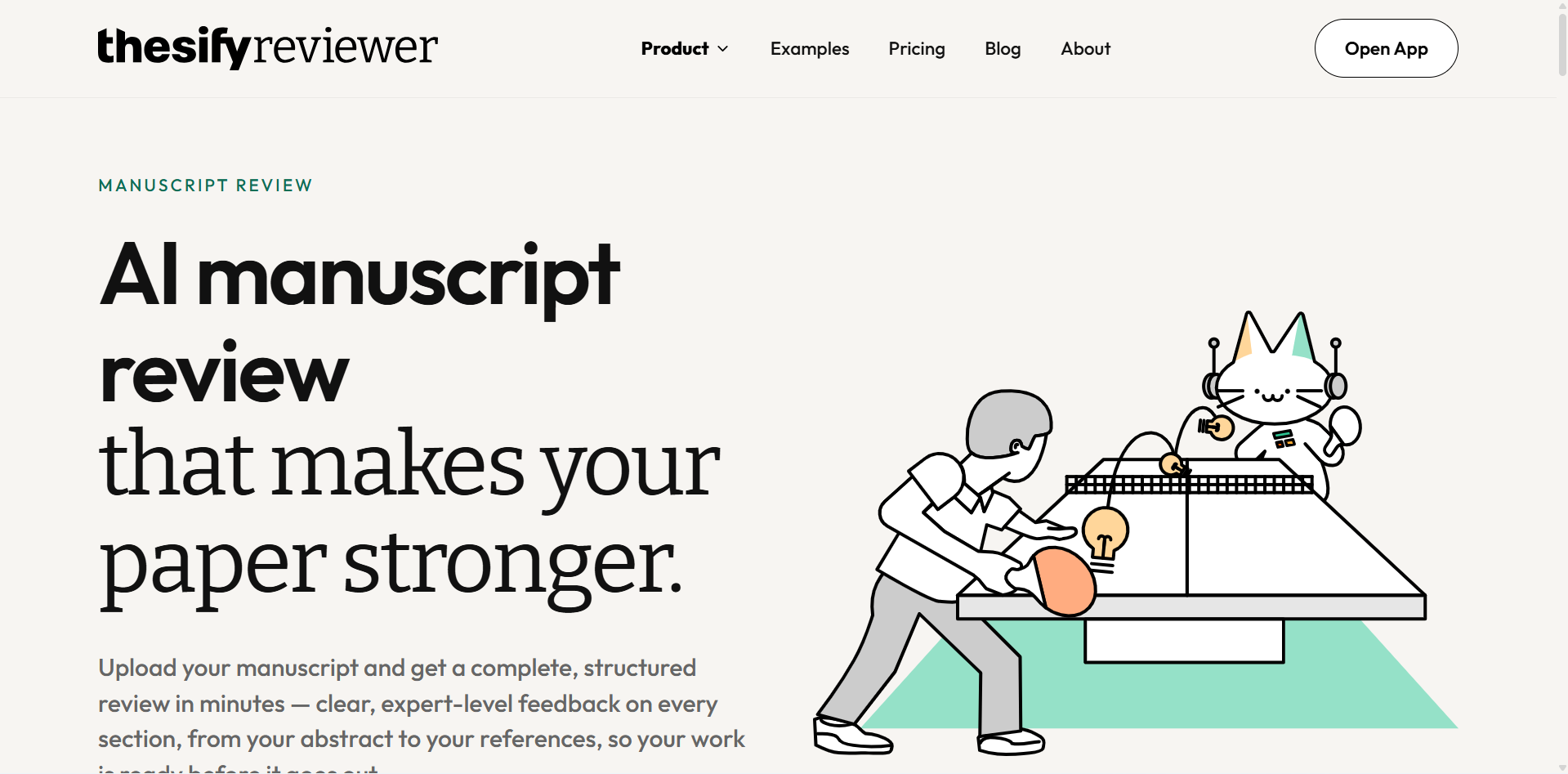
Thesify is an AI-powered academic writing and manuscript review platform that provides structured feedback on research documents. Its AI reviewer, Theo, evaluates different sections of a manuscript, including the abstract, introduction, methodology, results, and references. It also examines arguments, evidence, clarity, and academic structure to identify areas for improvement. This AI research paper reviewer is useful for researchers who need detailed feedback before submitting their work.
Main features
Section-by-section manuscript review: Evaluate individual sections of research papers and receive structured feedback on their content and organization.
Argument and evidence assessment: Identify unclear arguments, unsupported claims, and weaknesses in the use of research evidence.
Academic literature suggestions: Discover relevant publications from its research database to support manuscript development.
Actionable revision recommendations: Receive specific suggestions with severity levels to understand which issues need attention first.
Suitable for
Students working on dissertations and research assignments.
Researchers preparing journal articles and conference papers.
Academics who need feedback on research arguments and evidence.
Authors looking to improve manuscript structure and academic clarity.
Trinka
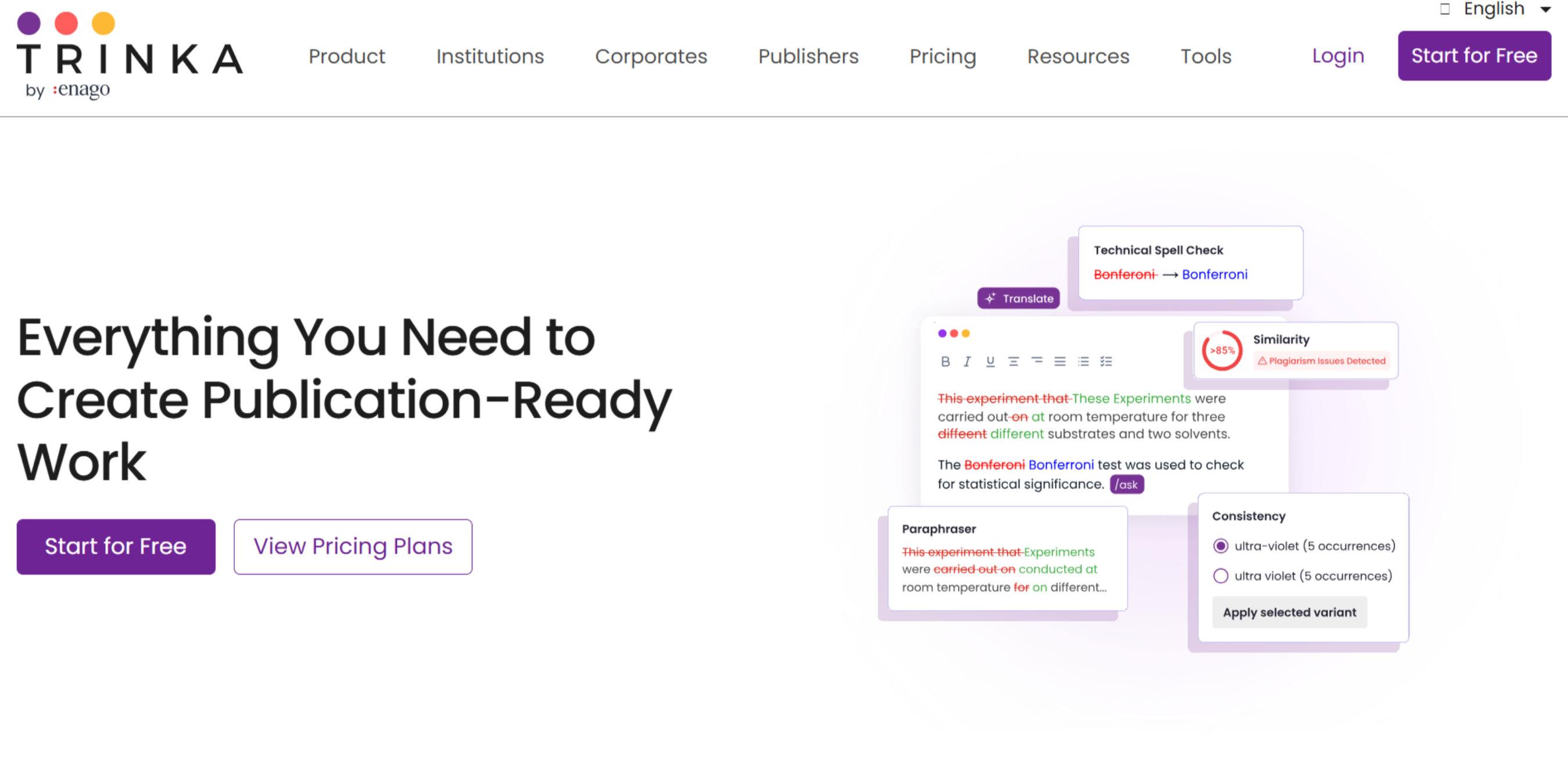
Trinka is an AI-powered academic and technical writing assistant designed to improve the language and quality of research documents. It provides grammar correction, academic proofreading, consistency checks, and technical writing suggestions. Researchers can also use its citation quality and technical checks to identify issues before submitting manuscripts to journals. Although it is not a dedicated scientific peer-review platform, it works as a useful AI paper reviewer for language and submission-readiness checks.
Main features
Academic grammar and language checking: Identify grammar mistakes, incorrect word choices, and language issues in scientific and technical documents.
Manuscript consistency checks: Detect inconsistencies in spelling, hyphenation, numbers, symbols, and formatting throughout a document.
Citation quality assessment: Flag potentially unreliable, retracted, and unverified references that may affect research credibility.
Technical submission checks: Examine figures, tables, ethical declarations, author information, and other journal submission requirements.
Suitable for
Researchers who need to proofread scientific manuscripts.
Students writing theses, dissertations, and academic assignments.
Authors preparing technical documents for journal submission.
Non-native English speakers who want to improve academic writing quality.
Penelope.ai
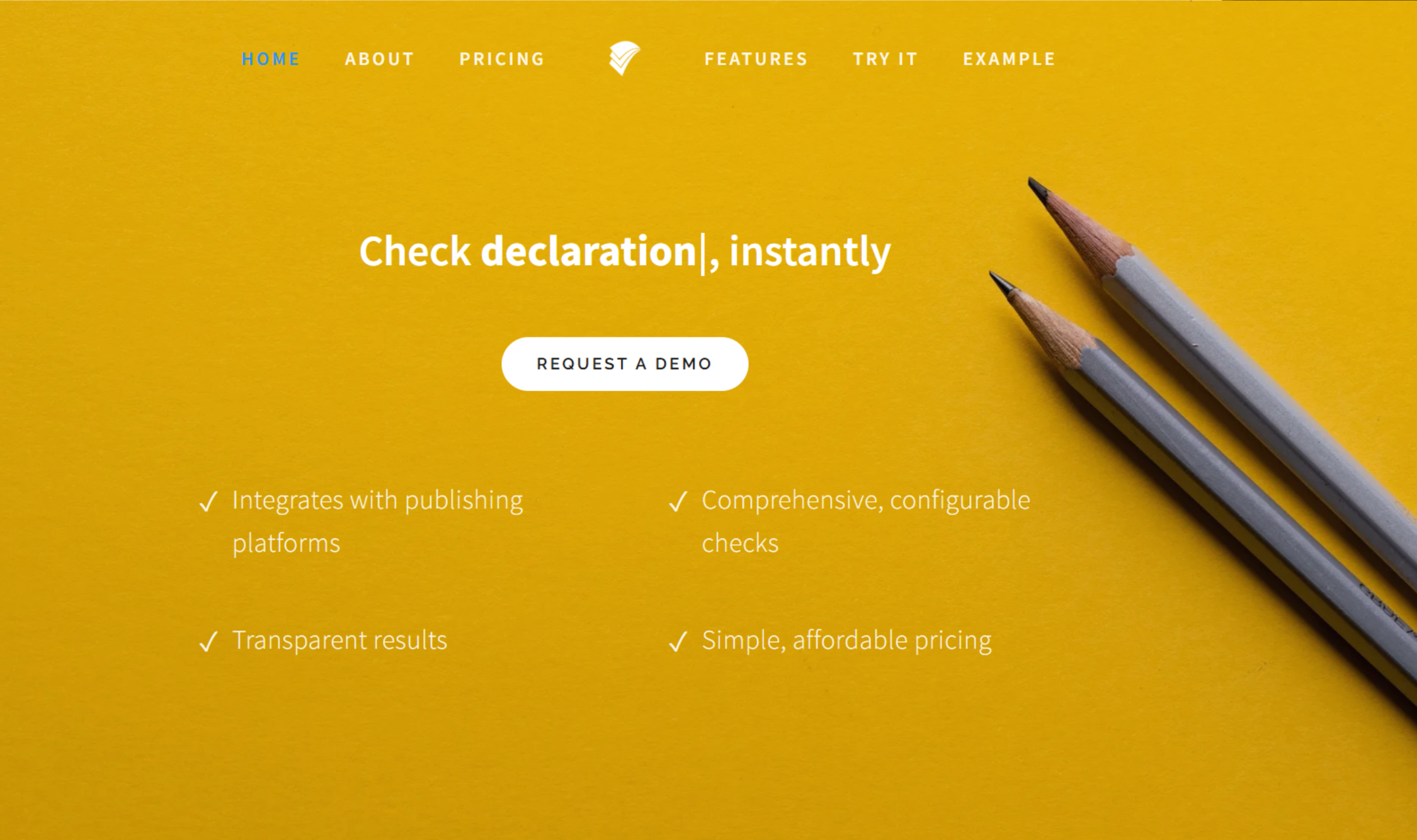
Penelope.ai is an automated manuscript-checking platform that helps researchers identify formatting and submission-related issues before sending papers to academic journals. It checks manuscripts against journal requirements, including reference consistency, section structure, declarations, and reporting guidelines. Rather than evaluating the scientific validity of research findings, it focuses on technical compliance and manuscript completeness. It is a useful supporting tool for researchers preparing publication-ready documents.
Main features
Journal guideline checks: Examine manuscripts against journal-specific formatting and submission requirements.
Reference consistency: Check whether in-text citations match the reference list and identify missing references.
Ethical compliance checks: Identify missing statements related to informed consent, research ethics, funding, and conflicts of interest.
Manuscript completeness: Check titles, abstracts, keywords, word counts, tables, figures, and other required document elements.
Suitable for
Researchers preparing manuscripts for journal submission.
Authors who need to verify formatting and document completeness.
Journal editors checking incoming research submissions.
Academics who want to identify missing declarations and reference inconsistencies.
PaperReview.ai
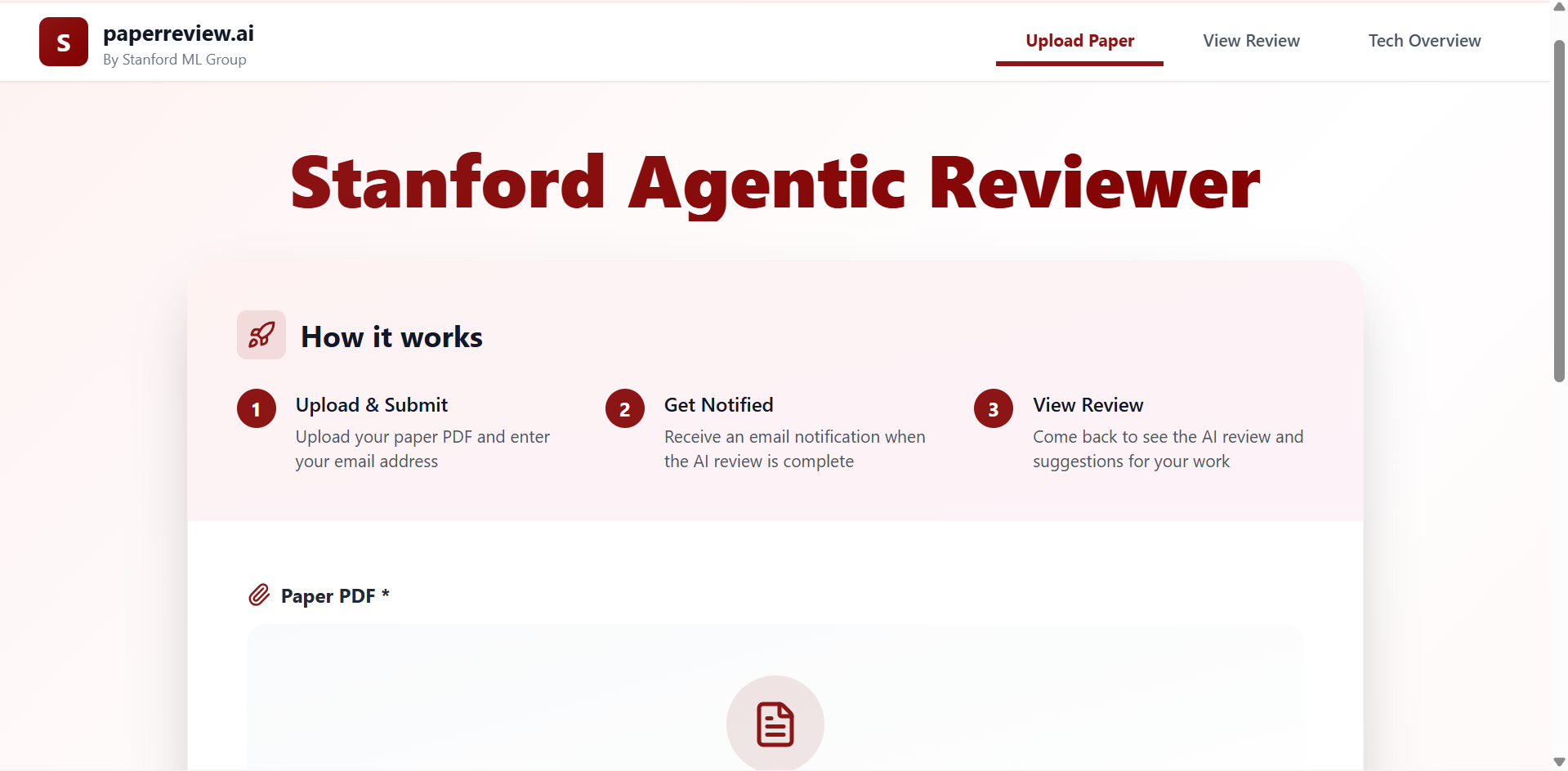
PaperReview.ai, also known as Stanford Agentic Reviewer, is an AI-powered platform that generates research paper feedback using an agentic review workflow. Users can upload a paper in PDF format and optionally specify a target journal or conference. The system examines research quality across multiple dimensions and uses relevant prior work from arXiv to ground its feedback. It is a useful AI research paper reviewer for researchers who want an additional perspective before revising their manuscripts.
Main features
Automated paper review: Upload a research paper and receive AI-generated feedback without manually preparing a detailed review prompt.
Literature-grounded assessment: Uses relevant prior research from arXiv to provide context for its evaluation.
Multidimensional scoring: Evaluates originality, research importance, experimental soundness, clarity, and other paper-quality dimensions.
Actionable recommendations: Generates constructive suggestions to help researchers identify weaknesses and improve their manuscripts.
Suitable for
Researchers seeking additional feedback before submitting papers.
Students who want to evaluate the quality of their research drafts.
Computer science and machine learning researchers.
Authors who need a quick, AI-generated second opinion on their work.
Writefull
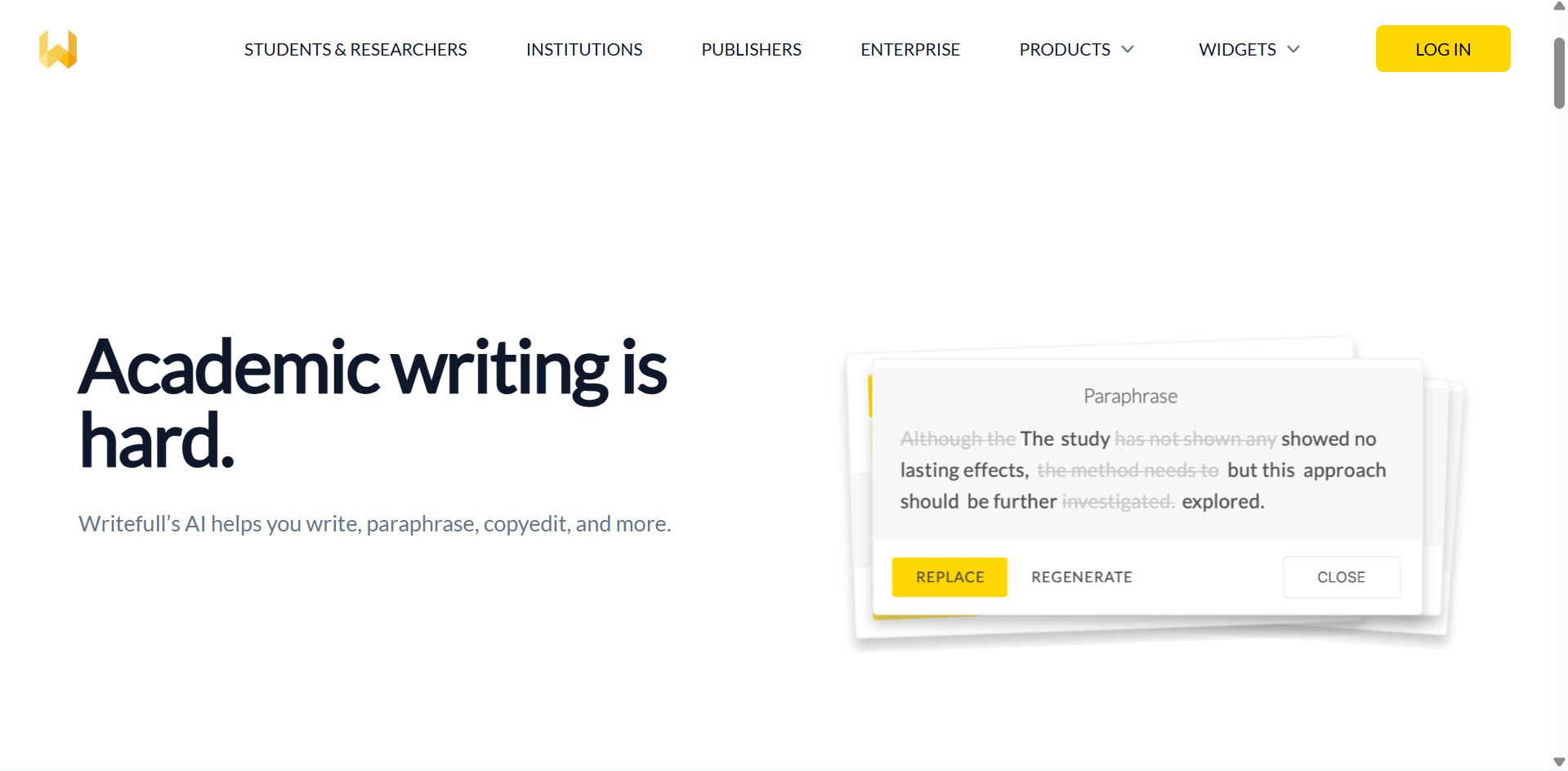
Writefull is an AI-powered academic writing assistant designed to improve the clarity, accuracy, and style of research documents. It uses language models trained on millions of published journal articles to provide suggestions tailored to academic writing. Its tools support grammar correction, paraphrasing, sentence rewriting, and abstract generation. While it focuses primarily on language quality rather than scientific peer review, it can complement an AI paper reviewer during the manuscript editing process.
Main features
Academic language feedback: Identify grammar, vocabulary, phrasing, and style issues using suggestions tailored to research writing.
AI paraphrasing: Rewrite sentences at different levels to improve clarity and academic expression while retaining the original meaning.
Title and abstract generation: Generate potential research titles and abstracts based on the content of a manuscript.
Word and Overleaf integration: Access academic writing suggestions and editing tools directly within Microsoft Word and Overleaf.
Suitable for
Students writing academic assignments and research papers.
Researchers preparing manuscripts for journal publication.
Non-native English speakers who need academic language support.
Authors who want to improve sentence structure and manuscript readability.
Tips to pick an ideal AI research paper reviewer
Choosing the right tool depends on your research goals, manuscript type, and the kind of feedback you need. Before selecting an AI research paper reviewer, consider the following factors to ensure it provides useful and reliable academic support.
Check research analysis capabilities
Choose a tool that can evaluate research objectives, methodology, results, and conclusions rather than simply summarizing content. A capable AI paper reviewer should help identify research gaps, unsupported claims, and potential methodological weaknesses.
Evaluate academic writing feedback
Look for tools that assess grammar, sentence clarity, academic tone, argument structure, and overall readability. Detailed writing suggestions can help improve your manuscript while preserving its original meaning.
Look for citation and reference checks
Select a reviewer who can identify missing citations, inconsistent references, and potentially unreliable sources. Citation verification is particularly important for maintaining research accuracy and academic credibility.
Consider supported document formats
Check whether the platform accepts common academic formats such as PDF and DOCX. Support for multiple formats makes it easier to upload manuscripts, review different document versions, and export revised content.
Assess feedback quality and specificity
Prefer tools that provide section-specific comments, explain identified problems, and suggest practical improvements. An effective AI research paper reviewer should offer actionable feedback rather than vague recommendations or generic scores.
Conclusion
AI paper review tools can simplify academic research by summarizing papers, analyzing research methods and findings, identifying key arguments, and organizing relevant literature. Choosing a suitable tool depends on your research topic, review objectives, and academic workflow. For flexible document analysis, Kimi Docs is worth considering, with features for reviewing lengthy papers, extracting key insights, comparing research findings, and organizing information into structured summaries. Always verify AI-generated insights against the original academic sources to ensure accuracy and maintain research integrity.