AI can help businesses work smarter, but many companies struggle to find the right ways to use it while managing time, costs, and daily challenges. AI tools can simplify tasks, improve decisions, and create new opportunities for growth. Understanding the benefits of AI in business helps companies discover how technology can support their goals. Explore the seven ways AI can transform business growth and turn new ideas into real results in this article.
How is AI used in business?
AI can support a business at many levels, from handling routine daily work to helping teams plan and make smarter decisions. By applying AI across different functions, businesses can save time, work with data more effectively, and improve how they serve customers. Here are some practical ways companies can use AI.
Automating repetitive tasks
AI can handle routine tasks such as data entry, sorting information, and updating records. This reduces manual work and gives employees more time for important responsibilities. It can also help lower errors caused by repetitive processes.
Analyzing business data
AI can quickly process large amounts of business data and identify useful patterns or trends. Teams can use these insights to understand performance, customer behavior, and market changes. This supports faster and more informed business decisions.
Conducting research
AI can gather and organize information from different sources to speed up business research. It can help teams study markets, competitors, customer needs, and industry trends. This makes it easier to find useful information without spending hours on manual research.
Creating business content
Content such as emails, reports, product descriptions, and social media posts can be created more quickly with AI. It can provide useful drafts that teams can review, adjust, and personalize. This makes content production easier across marketing, sales, and other departments.
Supporting customer interactions
With AI, chatbots and virtual assistants can answer common questions and respond to customers around the clock. They can handle simple requests while directing more complex issues to the appropriate employee. This helps businesses provide quicker and more consistent support.
7 benefits of AI in business: From efficiency to growth
The value of AI goes beyond simply automating routine work. When applied thoughtfully, it can help businesses make better decisions, improve daily operations, serve customers, and find new ways to grow. The following benefits of using AI in business show how AI can create practical value in various sectors.
Improve business decision-making
AI can bring together information from sales, marketing, finance, and other areas to give decision-makers a clearer picture of performance. Instead of relying only on guesswork, managers can use current data to spot trends and compare possible outcomes. For example, a marketing team can identify which campaigns are performing well and adjust its budget accordingly.
Increase productivity and operational efficiency
Repetitive work such as data entry, scheduling, document processing, and routine reporting can be automated with AI. Employees can then spend more time on tasks that require creativity, judgment, and problem-solving. AI can also connect different steps in a workflow to reduce delays and unnecessary manual work. As a result, teams can complete more work in less time.
Reduce business costs
Lower costs can come from reducing wasted time, minimizing errors, and using resources more efficiently. For example, AI can help a manufacturer identify quality problems earlier, reducing defective products and material waste. It can also automate routine support tasks that would otherwise require many hours of employee effort. Over time, these improvements can lead to meaningful savings.
Enhance customer experience
Customers often expect quick answers and personalized service, even outside normal business hours. AI chatbots can handle common questions, provide product information, and guide customers through simple requests instantly. Businesses can also use customer data to recommend relevant products or tailor marketing messages. This creates faster, more convenient, and more personalized interactions.
Strengthen risk management
AI can examine large volumes of information to identify unusual patterns and potential risks that may be difficult to notice manually. Financial teams, for example, can use it to flag suspicious transactions, while insurers can analyze customers and claims data to assess potential risks. Continuous monitoring also allows businesses to respond to warning signs earlier. This can reduce losses and support more reliable risk decisions.
Accelerate innovation and creativity
AI can help teams generate ideas, explore different concepts, and test possibilities much faster. Product teams can use it to brainstorm features, analyze customer feedback, or develop early concepts before investing heavily in development. Marketing teams can also create and compare different campaign ideas quickly. This gives businesses more room to experiment and turn promising ideas into practical solutions.
Enable data-driven forecasting and predictive analytics
Businesses can use AI to study historical data and identify patterns that may indicate what is likely to happen next. A retailer, for example, can forecast product demand based on past sales, seasonal changes, and customer behavior. This helps the company maintain suitable inventory levels instead of overstocking or running out of popular products.
Turning these benefits into real results requires more than simply adding AI tools to a business. Companies need practical ways to connect AI with everyday tasks, team needs, and existing workflows. This is where Kimi Work can help, making it easier to turn AI capabilities into useful workflows that support real business goals.
AI for Business: How Kimi Work helps turn AI into practical workflows
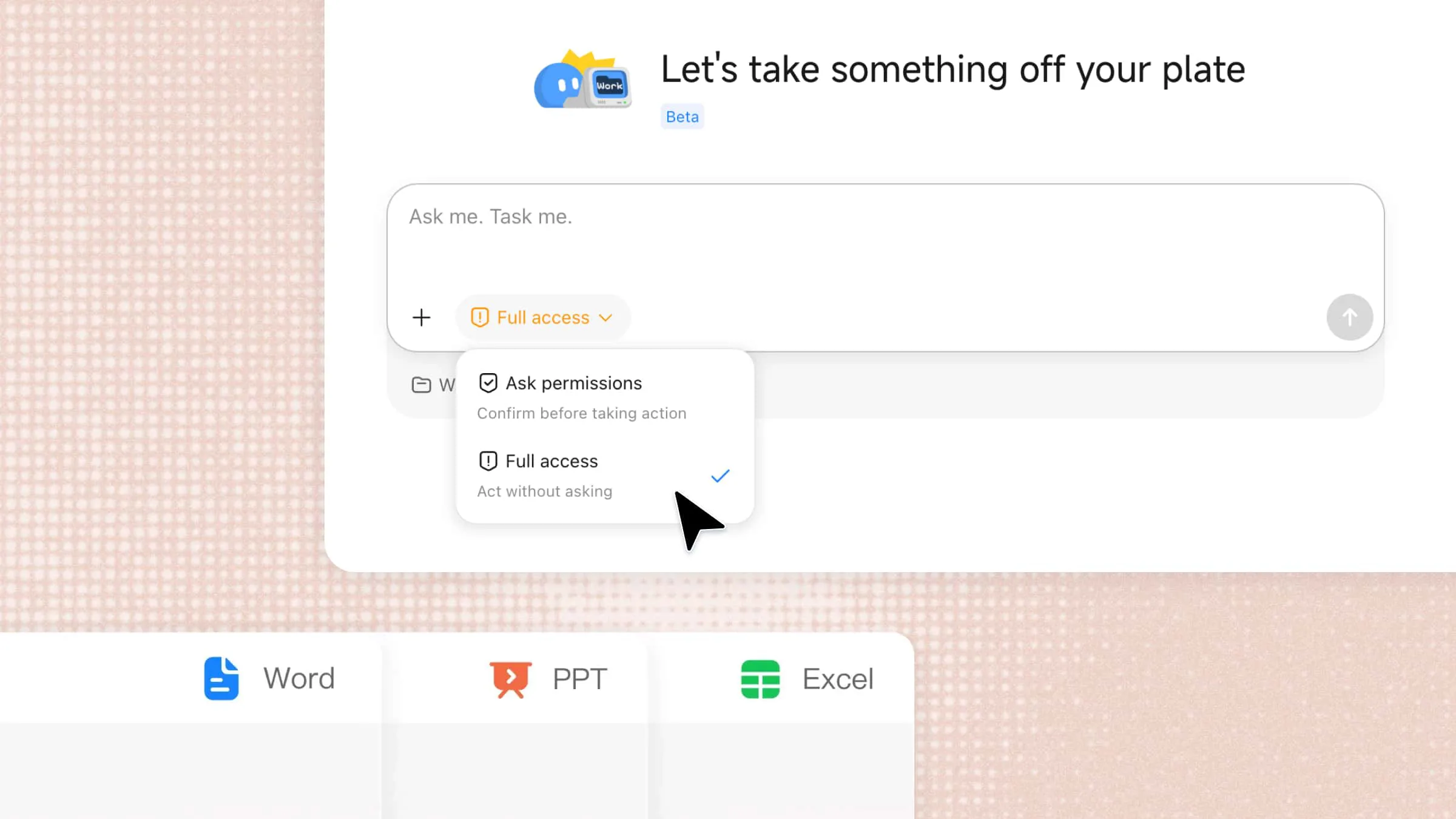
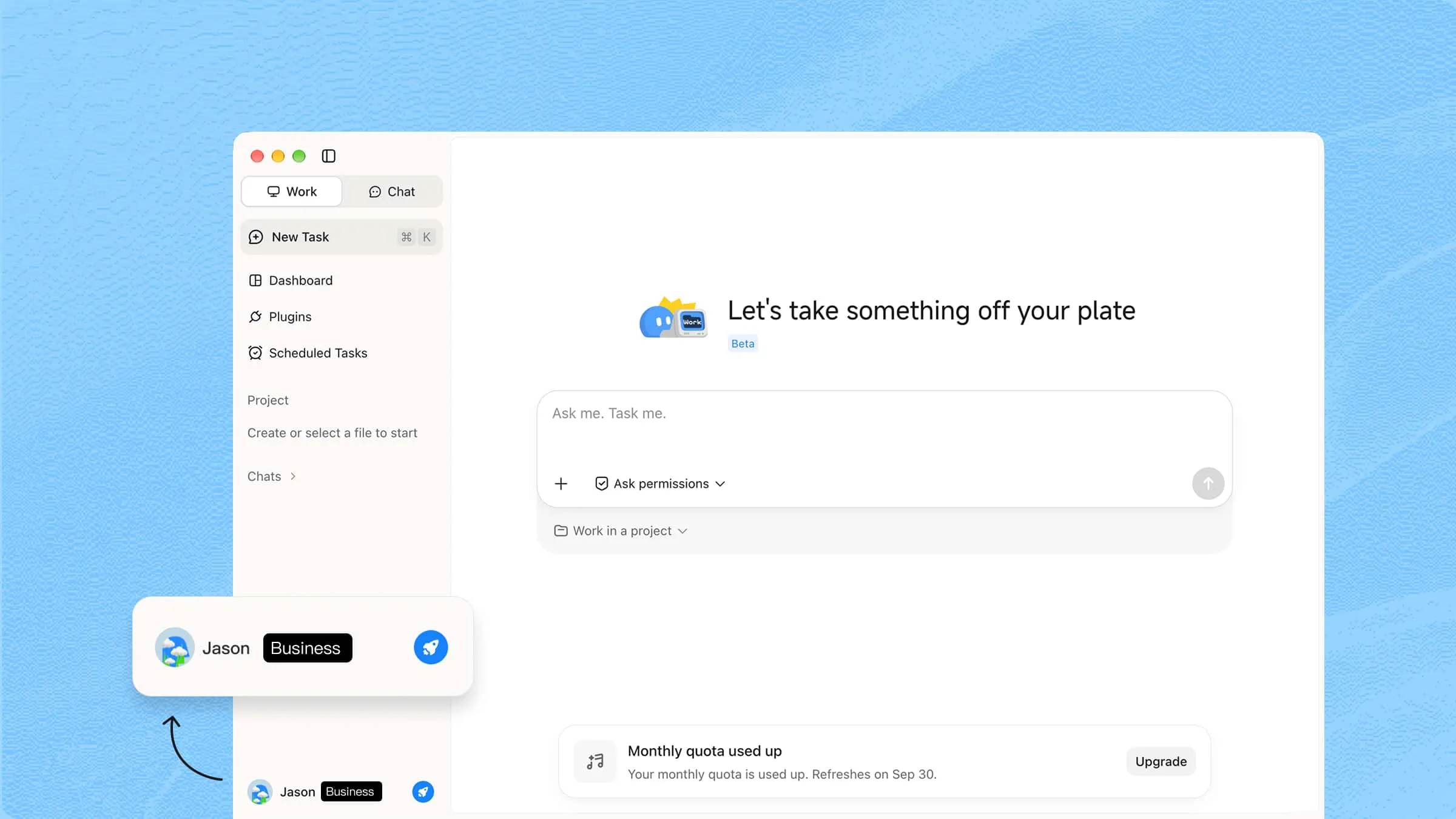
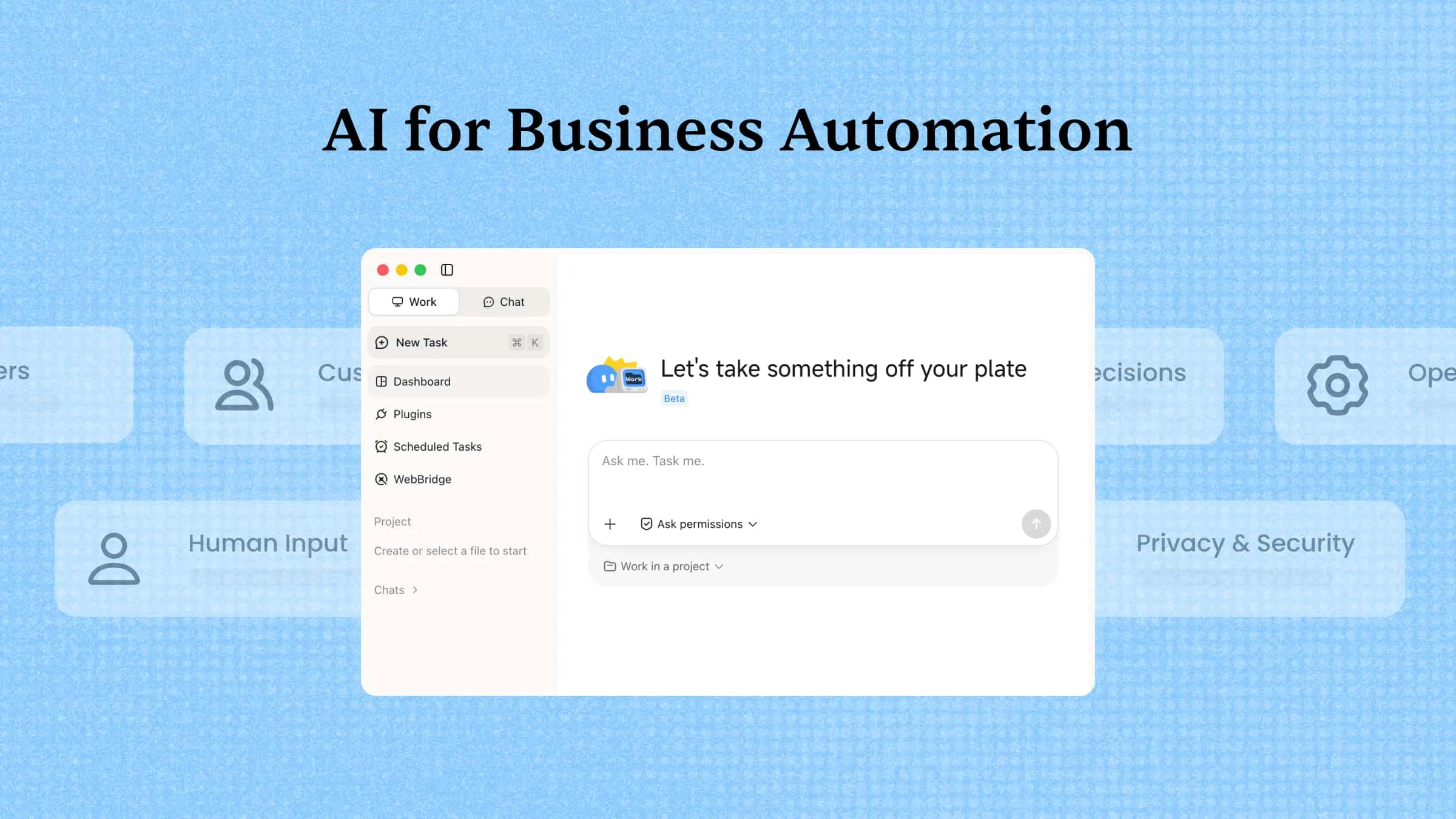
Kimi Work is an AI workspace designed to support knowledge-intensive business tasks such as research, planning, and analysis. Unlike tools that only answer individual prompts, it helps users work toward goals by managing multi-step tasks and organizing information more effectively. By connecting different parts of a workflow, Kimi Work helps businesses turn AI assistance into practical solutions for everyday operations.
Key features
Kimi Work is built to support more than simple question-and-answer interactions. Its features are designed to help businesses manage complete workflows, handle complex projects, and turn ideas into structured outcomes. Below are some key capabilities that make it useful for everyday business tasks.
Goal Mode for continuous task execution
Define a goal, expected outcomes, and constraints, and Kimi Work can continue working toward the objective across multiple steps. It can research information, process files, generate deliverables, and iterate on results without requiring you to restart the task at every step.
Scheduled tasks for recurring workflows
Automate repetitive business processes with scheduled tasks. Kimi Work can run recurring workflows at set times, such as generating industry briefings, monitoring competitors, or processing routine business data.
Agent Swarm for complex tasks
Coordinate multiple AI agents to work on different parts of a complex task in parallel. This can help teams handle large-scale research, analysis, and other knowledge-intensive workloads more efficiently.
Kimi Browser Extension (formerly Kimi WebBridge) for browser-based tasks
Connect AI agents with real web pages so they can research information and perform repetitive browser tasks. Kimi Work can navigate websites, collect information, fill out forms, and work with pages that require an authenticated browser session.
Local file access for business documents
Work directly with files and folders stored on your computer. Kimi Work can incorporate local business documents and other resources into broader workflows, combining them with web research and AI analysis.
Multi-source research and structured business reports
Research complex business questions across multiple sources, compare findings, and synthesize the results into structured reports. This supports use cases such as market research, competitive intelligence, industry analysis, and business strategy.
Beyond these features, you can also use different agent modes for different workplace needs. Users can choose options such as Deep Research for detailed analysis, Kimi Sheets for working with data and generating data-driven spreadsheets, Kimi Slides for presentations and business pitch decks, and Kimi Docs for document creation such as business proposals or marketing plans. These tools help teams handle different business tasks within one AI-powered workspace.
Tips for realizing the benefits of AI in business
Getting value from AI requires more than simply adopting new tools. Businesses need a clear approach that connects AI with real goals, existing processes, and team needs. The following tips can help companies apply AI effectively and achieve meaningful results.
Start with clear business goals
Define the specific business outcome you want AI to improve, such as reducing costs, speeding up operations, or improving customer service. Clear goals help you select the right AI solutions and focus efforts on areas that create real business value with measurable long-term results.
Prioritize repetitive, time-consuming tasks
Look for workflows that involve large amounts of manual work, such as data processing, content creation, customer inquiries, or report generation. These tasks are often ideal for AI because automation can save time and improve efficiency across different business functions.
Integrate AI into existing workflows
Add AI where it can support current processes rather than rebuilding your entire workflow around a new tool. This allows teams to adopt AI more smoothly while improving the way they already work without major operational changes.
Keep humans in the loop
Let AI handle routine tasks while employees review important outputs, make decisions, and handle situations that require judgment. Human oversight ensures better accuracy and helps businesses use AI responsibly while maintaining quality standards.
Train teams and measure AI impact
Help employees learn how to use AI effectively and track metrics such as time saved, productivity, accuracy, and cost reduction. Measuring results shows how AI is improving business performance and where further changes are needed over time.
Conclusion
AI is becoming a valuable support system for businesses that want to improve the way they work, make decisions, and adapt to changing needs. Understanding how artificial intelligence helps businesses allows teams to use technology more effectively without losing the value of human expertise. The right approach is to combine AI with clear goals, strong workflows, and thoughtful implementation. Explore Kimi Work to bring AI-powered solutions into your daily business processes and turn ideas into practical results.